Bullseye Fireplaces: What Is A Regency Bullseye Fireplace?
30 January 2026
Anthony Bridgman
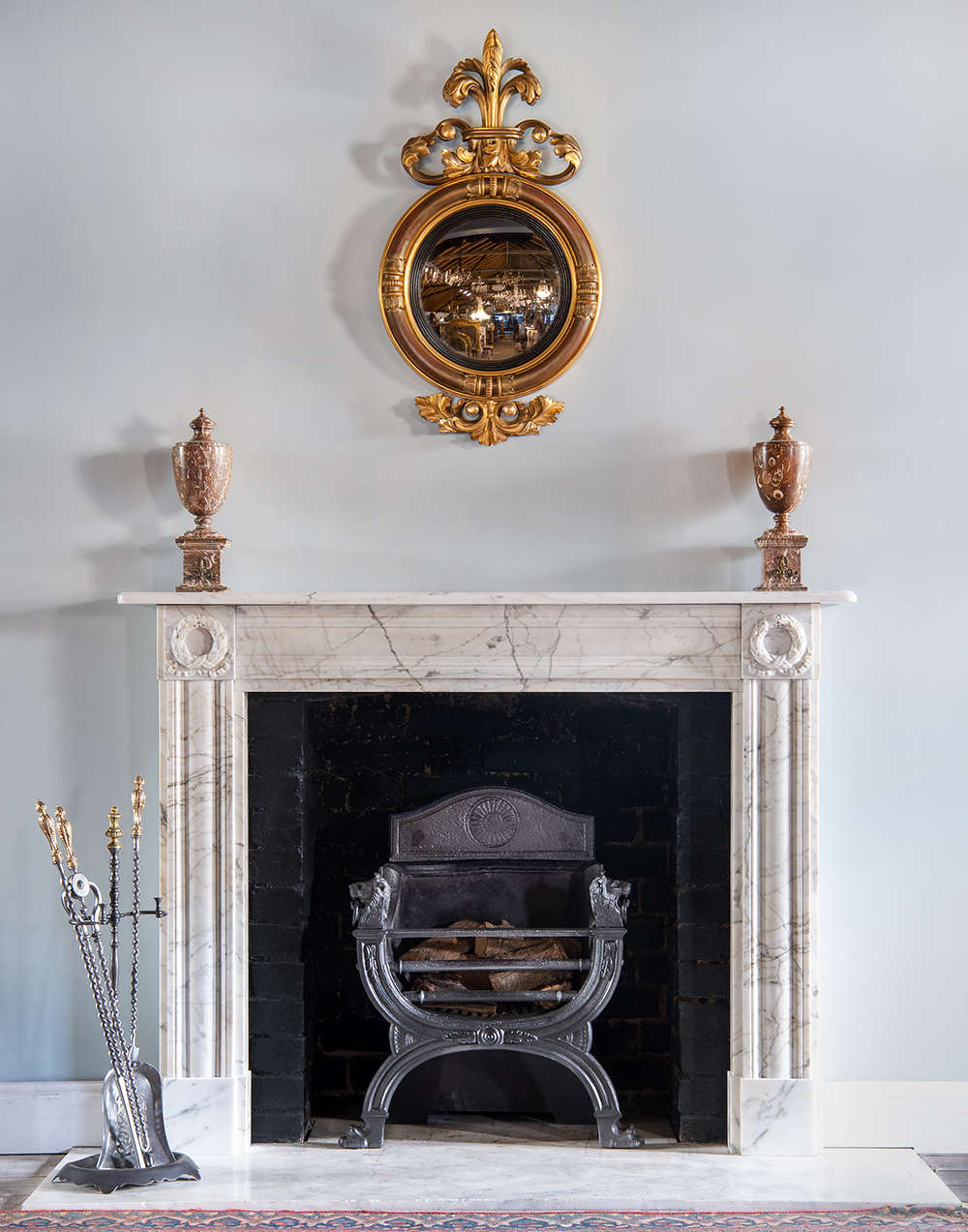
The bullseye fireplace is a notable trait of the Regency style and era, a relatively short period spanning from 1811 to 1830 during the latter part of the reign of King George IV.
Summary: Bullseye fireplaces
Regency bullseye fireplaces (circa 1810-1830) have a refined, neoclassical English mantel design with symmetrical proportions and minimal ornamentation.
The signature detail is the circular bullseye roundel or paterae, one on each end of the frieze above the fire opening.
Typically crafted from marble or stone, these fireplaces reflect the light and convey a sense of luxury.
Design elements include flat or reeded friezes, moulded or reeded jambs and balanced lines, contrasting with the ornate Victorian aesthetic that followed.
By the 1830s, the simpler geometric Regency look gave way to the more decorative Victorian fireplace, with arched inserts, corbels and patterned tiles.
What is a Regency bullseye fireplace?
Regency bullseye fireplaces have a classic English mantel design that emerged in the early 19th century.
Regency bullseye fireplaces have a classic English mantel design that emerged in the early 19th century in the late Georgian era.
The style has clean, architectural lines and a specific decorative and slightly neoclassical motif – the bullseye. Usually, there are a pair of bullseyes, one on each end of the horizontal frieze above the opening.
The appearance is more minimalist compared with later Victorian designs.
They were usually made of marble or stone, helping to reflect light and convey a sense of luxury in the room.
The fireplaces tend to have plain moulded jambs or pilasters and very restrained neoclassical detailing. Therefore, the appearance is more minimalist compared with later Victorian designs.
The Regency style emphasised symmetry and balance, rather than intricate decorative carving.
Typical features include:
The bullseye roundels: Circular, turned ornaments or paterae at the top of each leg (jamb) where they meet the horizontal frieze. These resemble a bullseye or a simple target.
Moulded or reeded jambs: The vertical legs tend to have rounded edges or they are reeded (carved with parallel vertical grooves).
Flat frieze: The frieze across the top is usually flat and uncluttered, though it may sometimes be reeded to match the legs.
Strict proportions: Unlike the highly ornate Victorian fireplaces that followed, the Regency style emphasised symmetry and balance, rather than intricate decorative carving.
The design was a departure from the grand, elaborate styles of the late 18th century (such as those by Robert Adam, a genius contribution to the neoclassical and Palladian style in antiques).
As the Regency period progressed, there was a shift toward ‘Greek revival’ aesthetics which favored sturdier, simpler architectural forms.
Regency bullseye fireplaces in marble
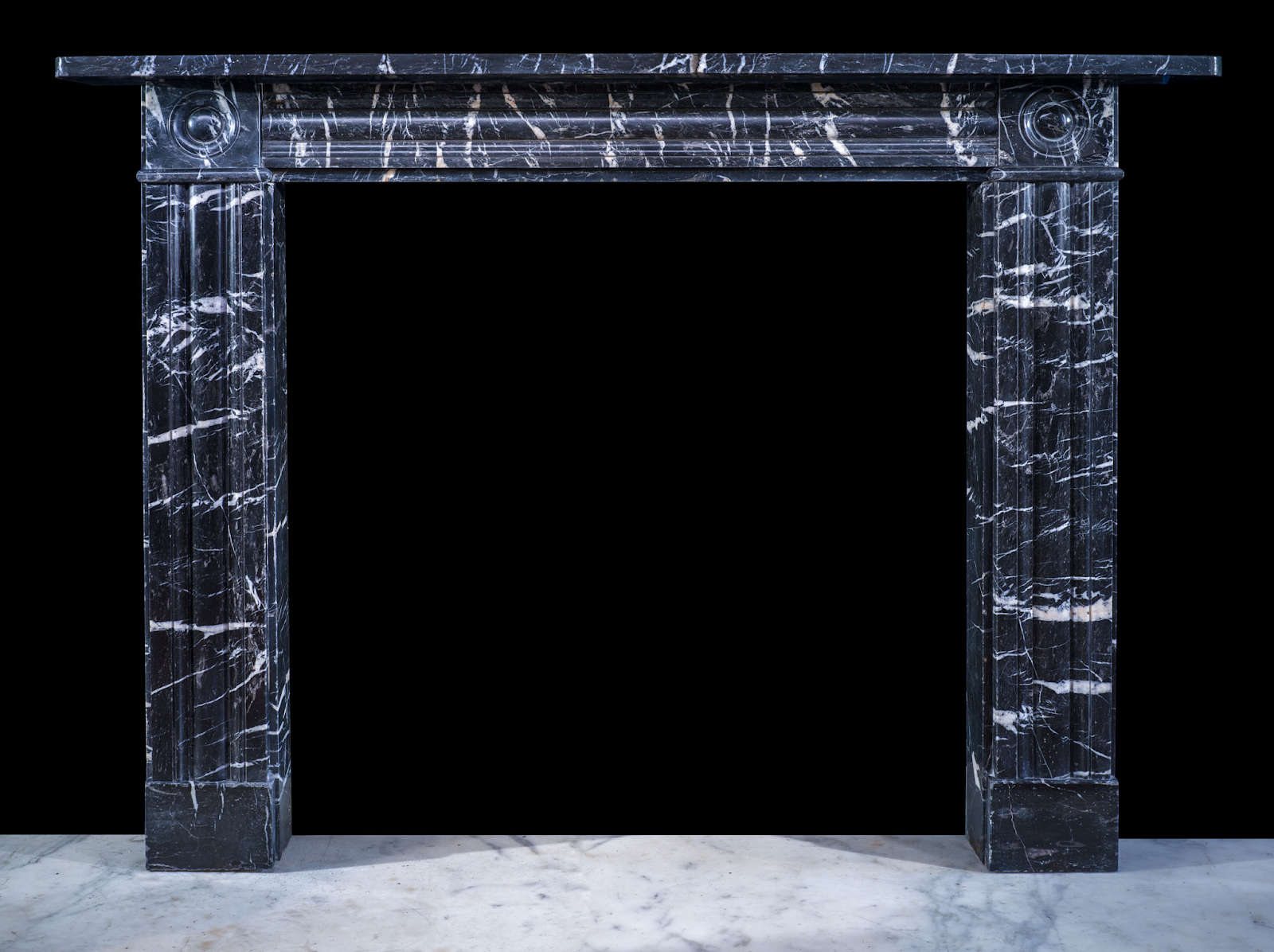
This stunning St Anne marble Regency bullseye chimneypiece from circa 1820 has a plain shelf sitting on a crisply reeded frieze. The bullseye endblocks rest above fluted jambs.
St Anne marble is a sought-after material with its striking tones and distinctive white veining.
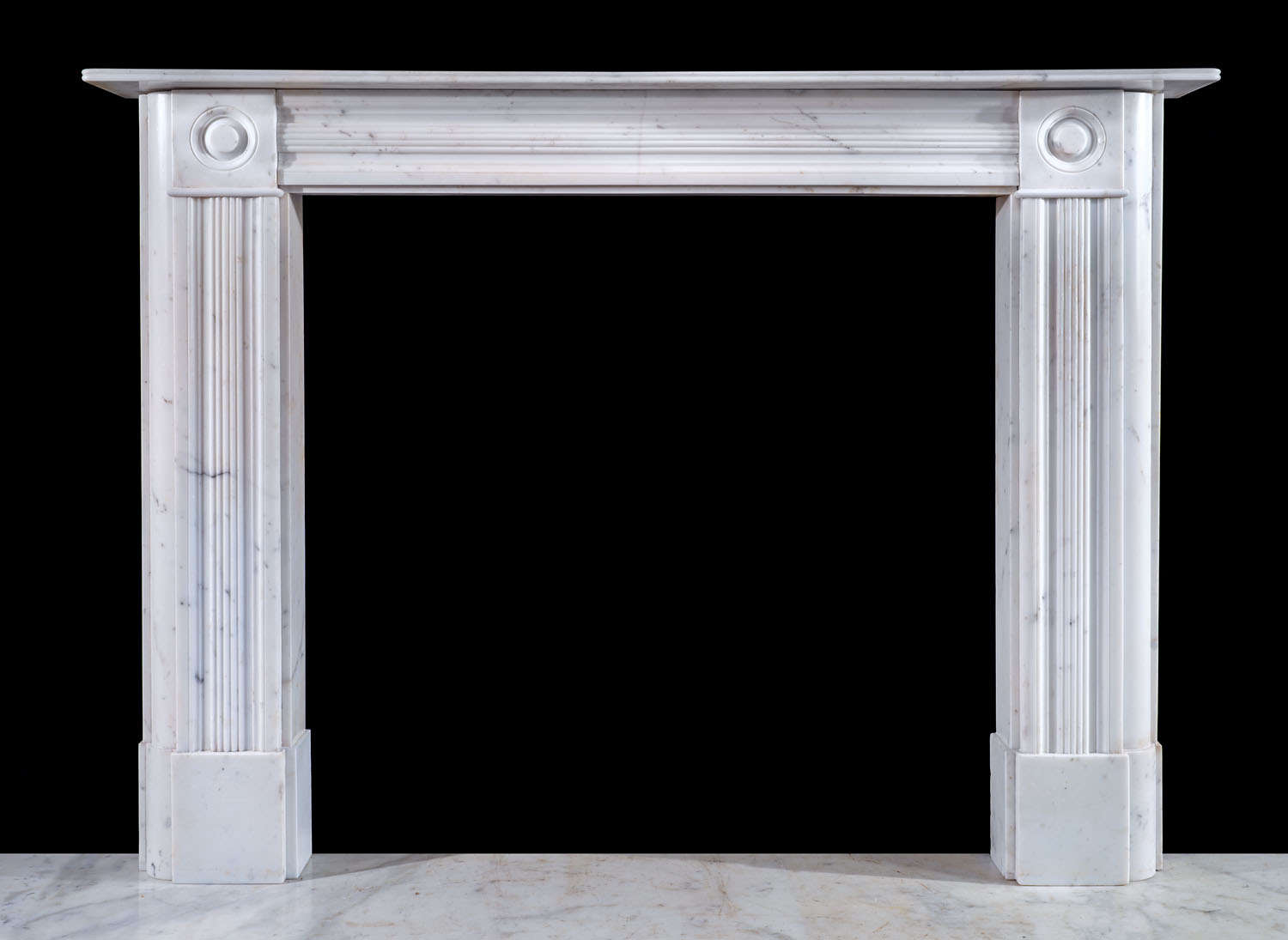
This fine Regency bullseye in white statuary marble from circa 1815 is timelessly elegant.
The slender shelf rests over the reeded frieze, framed by the bullseye endblocks and supported by reeded jambs with angled returns.
Regency bullseye fireplaces in slate

This charming Regency slate bullseye fireplace from circa 1820 has been cut across the grain to make a feature of the natural striations in the stone. The slender, moulded shelf sits over a cushion moulded frieze and jambs.
Ordinarily slate fireplaces of this period were painted, but this one was carefully made to showcase the beauty of the stone.
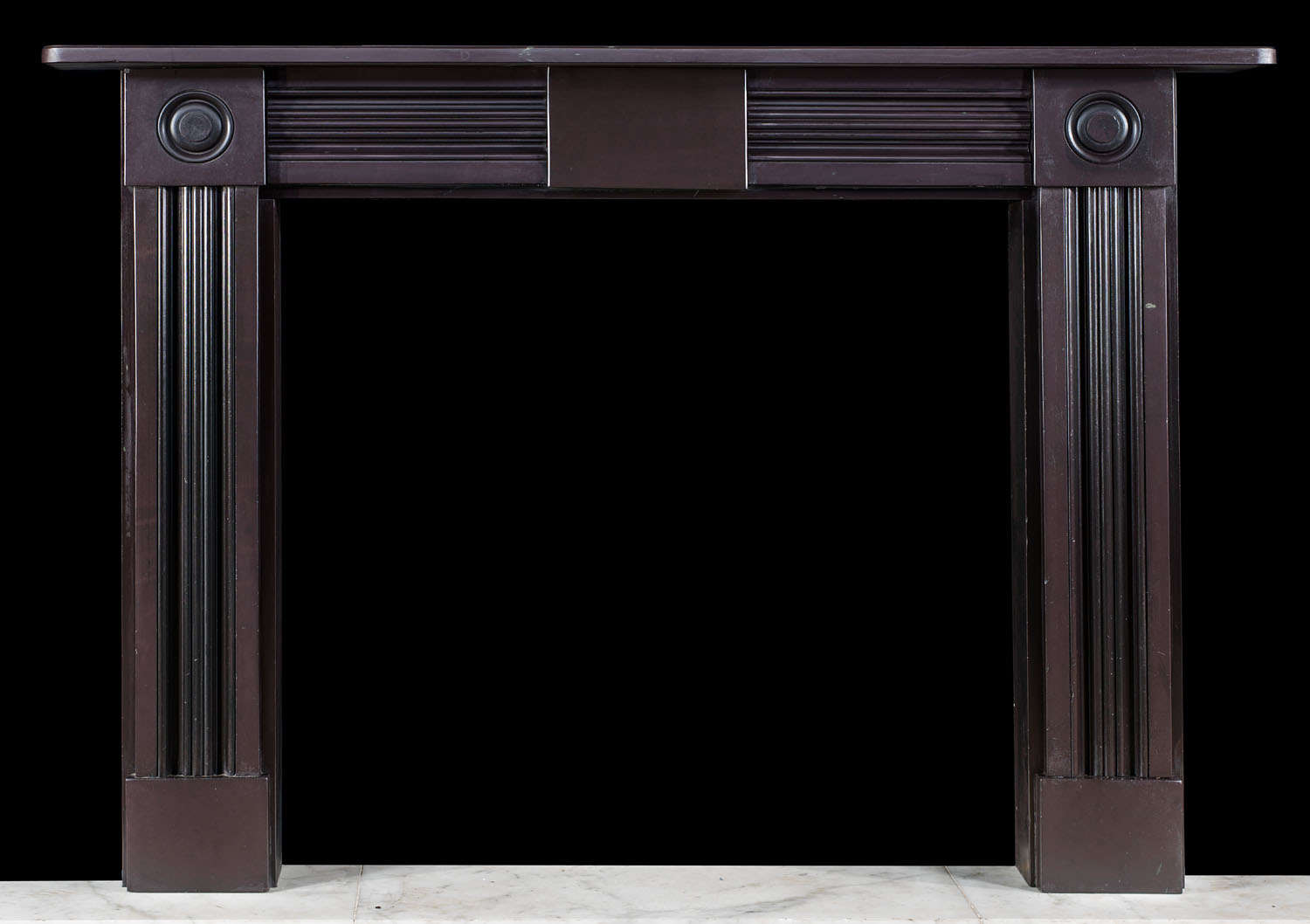
Here is a Regency style Heather slate chimneypiece from circa 1830. It is an aubergine hued, almost black bullseye fireplace.
The moulded shelf rests above a reeded frieze which is centred by a plain rectangular panel, flanked by bullseye endblocks above reeded, panelled jambs supported on sturdy footblocks.
Other bullseye fireplaces
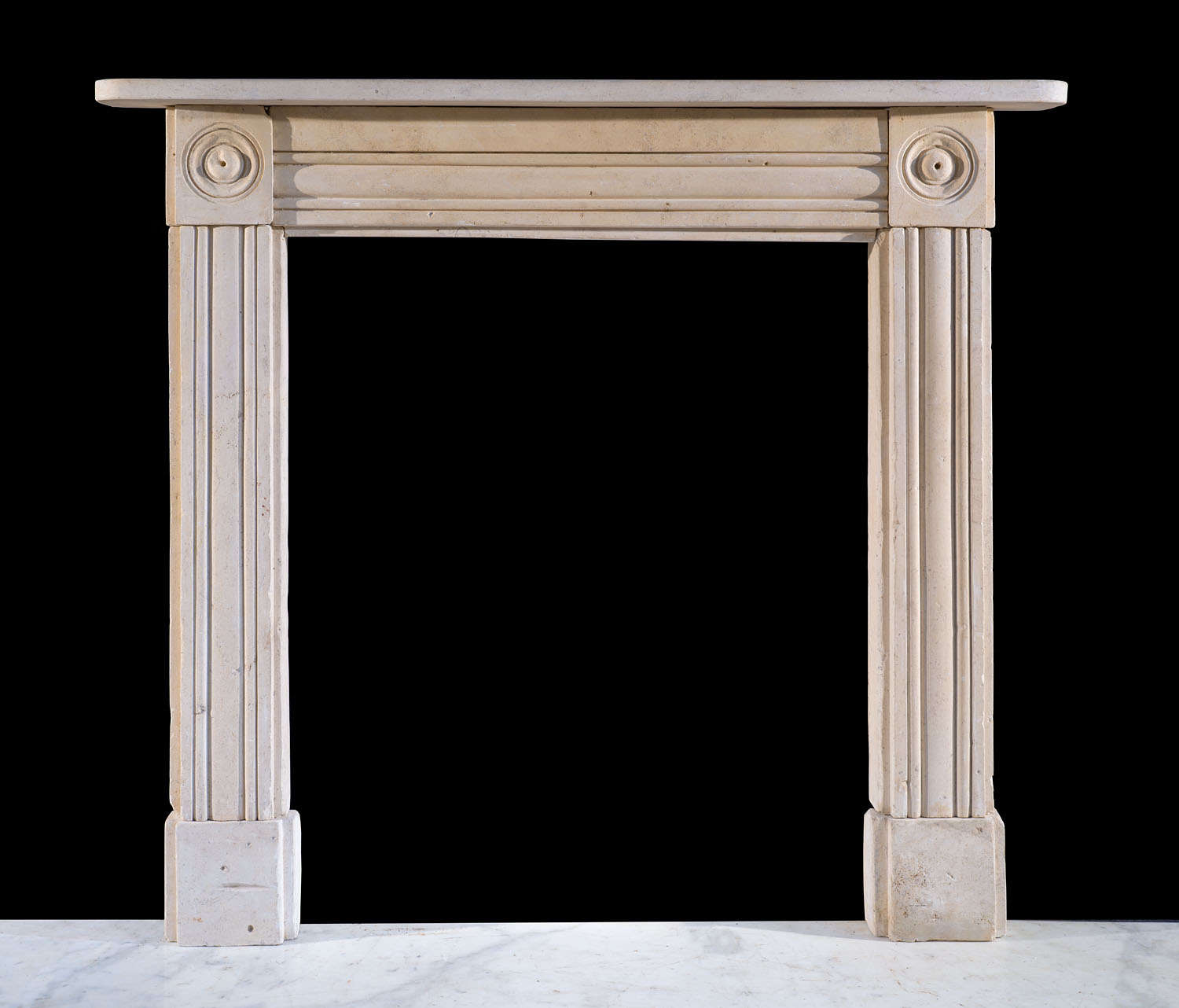
This is a fine stone Regency bullseye chimneypiece carved from a soft and warm hued Bath stone from circa 1810.
Bath stone is a sedimentary limestone consisting of granular fragments of calcium carbonate first laid down during the Jurassic period, 135 to 195 million years ago. The stone is used in much of Bath, a UNESCO World Heritage City in England.
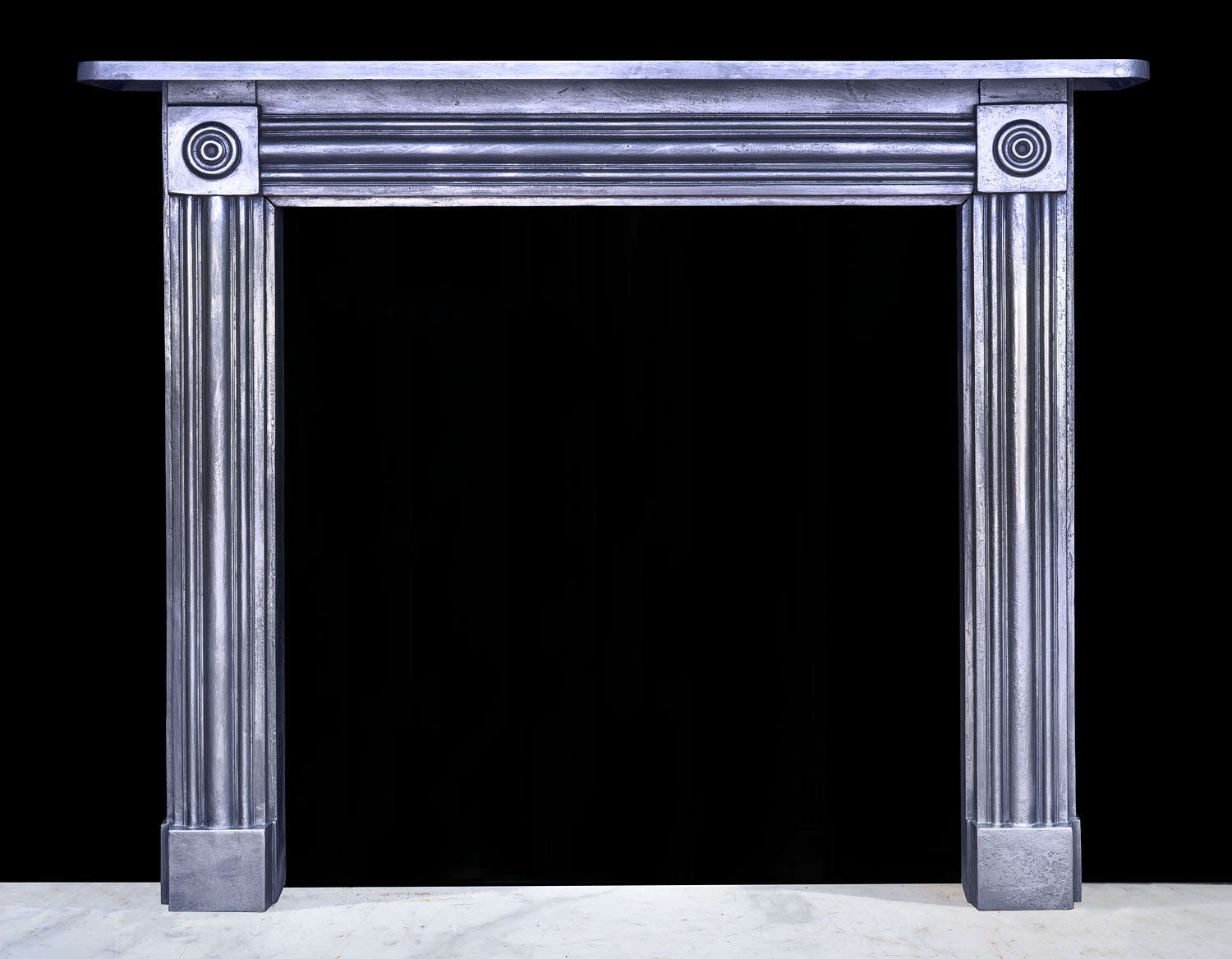
A cast iron Regency bullseye fireplace, also from circa 1830, this fireplace epitomises the restraint and elegance of the period. There is a reeded frieze and jambs with two bullseye endblocks.
Beyond the Regency bullseye fireplace
While the bullseye pattern survived into the Victorian years, deep arched cast‑iron inserts and decorative tilework changed the typical appearance substantially.
From the 1830s onwards, Victorian fireplaces increasingly used cast‑iron inserts with arched openings or patterned panels. These were often framed by more substantial mantels and corbels, giving a denser, more vertical look.
Over the period there is a clear shift from earlier, ornate marble or slate surrounds to later, simpler and more geometrical cast‑iron designs, especially in late Victorian and early Edwardian houses.
While the bullseye pattern survived into the Victorian years, deep arched cast‑iron inserts and decorative tilework changed the typical appearance substantially.
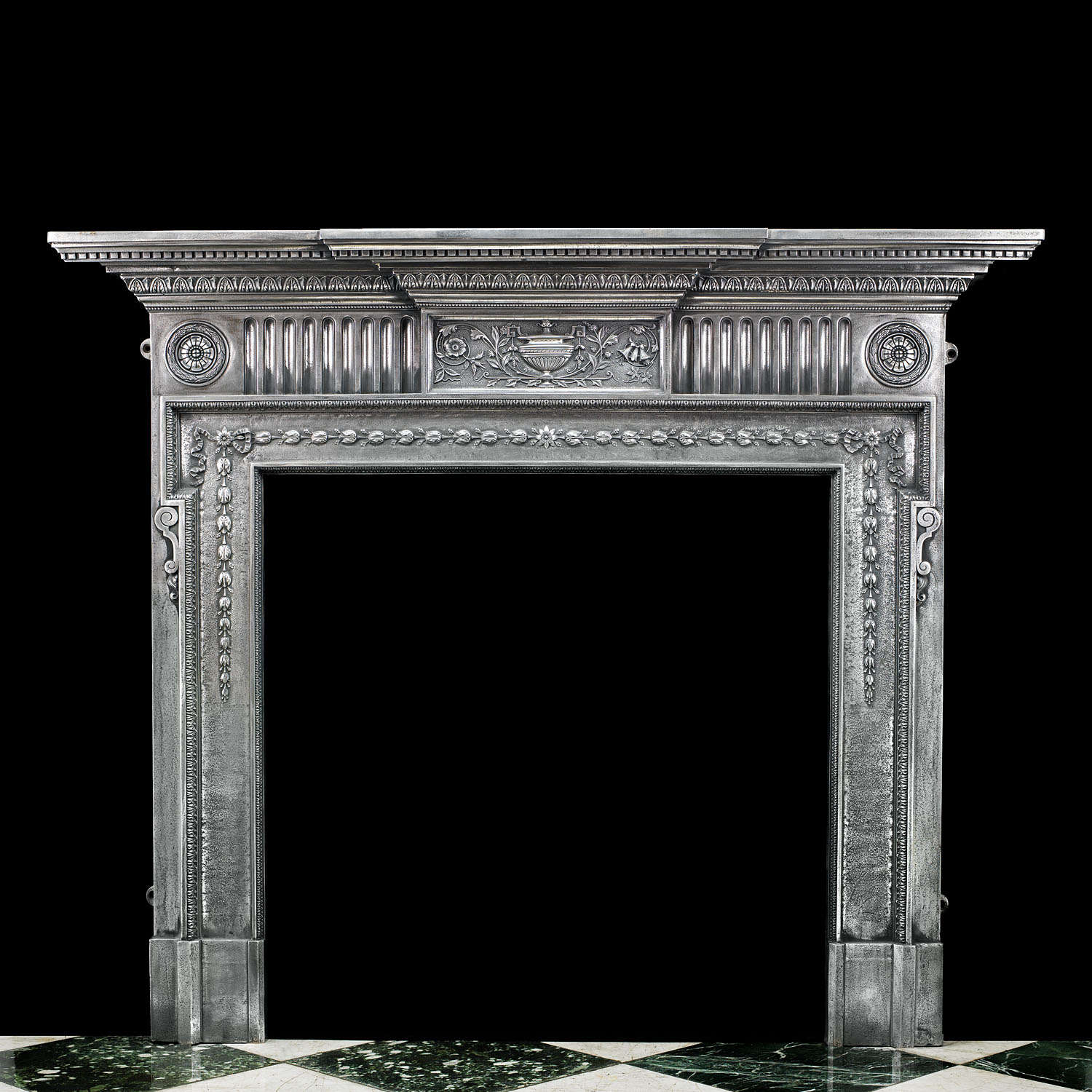
Around half a century later, from 1880, this Georgian style cast iron fireplace mantel is actually a burnished Victorian piece in the neoclassical style.
It has a break front shelf above an egg and dart fringe. The stop fluted frieze is centred by a pretty urn and a foliate decorated plaque, flanked by bullseye end blocks and with trailing bell flowers surrounding the opening.
Following the Victorian era, the Aesthetic Movement and Arts and Crafts Movement were reactions against Victorian ideas.
In terms of fireplaces, Aesthetic designs tended to be less bulky but kept a strong focus on patterns, while Arts and Crafts ones moved further away from the industrial cast iron Victorian style.
Final thoughts: Aesthetic Movement antiques
If you enjoyed this guide, you may like some of our other most popular articles, such as:
For more than 50 years, Westland London has specialised in period chimneypieces, fireplace accessories, furniture, lighting, decorations and other architectural antiques.
If you have any queries about our antique fireplaces or anything else in our collection, please don’t hesitate to contact us.