Aesthetic Movement Antiques: Our Guide
18 December 2025
Anthony Bridgman
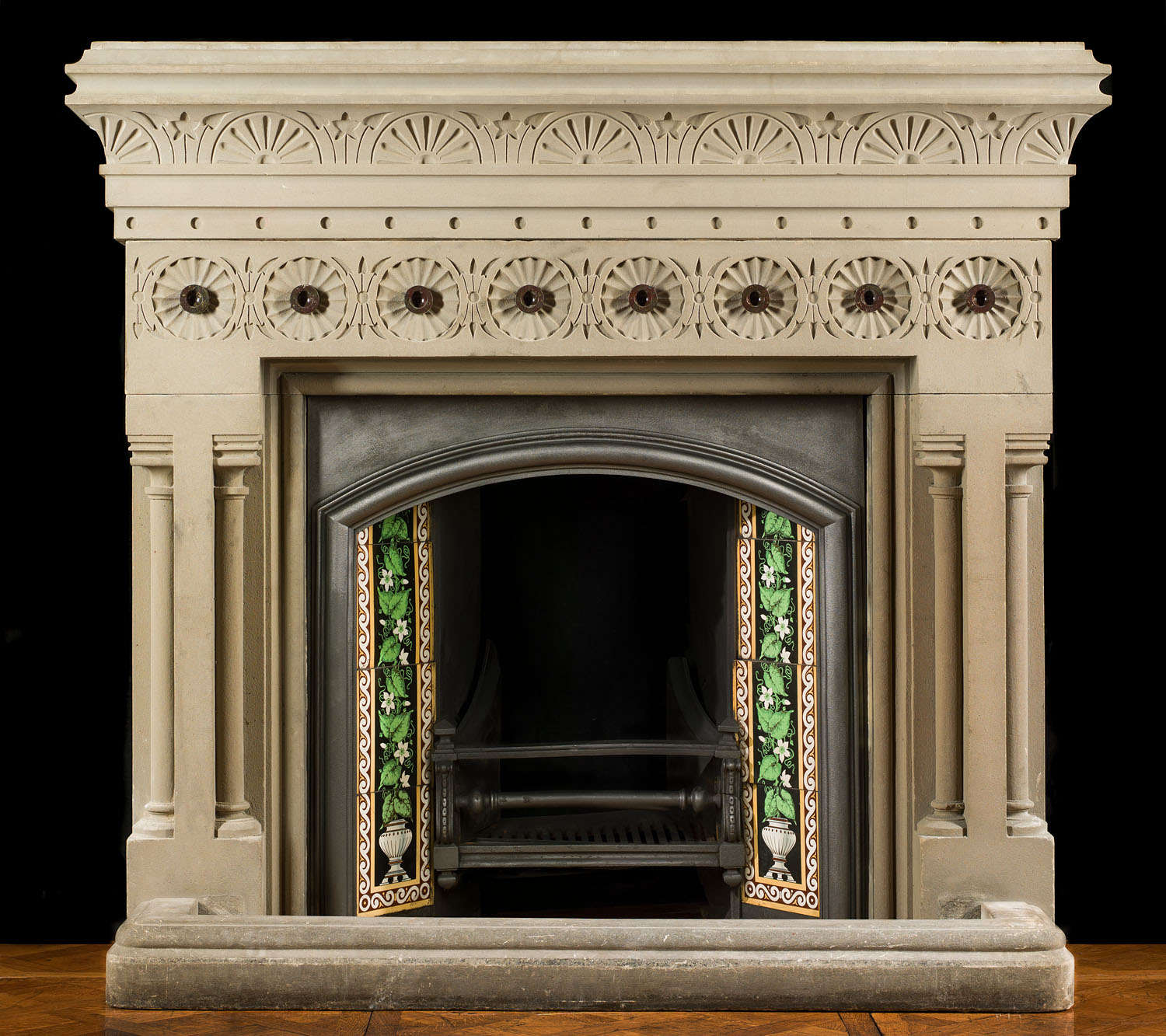
There is renewed interest in the Aesthetic Movement – with interior design trends moving away from white, grey or beige areas, light on decoration, towards rooms with more colour and personal touches.
There is renewed interest in the Aesthetic Movement – with interior design trends moving away from white, grey or beige areas, light on decoration, towards rooms with more colour and personal touches.
That’s according to a recent article from House & Garden, covering some of the many things we can learn from Aestheticism’s rise in the late 19th century for today’s interiors.
In this guide, we explore the typical traits of Aesthetic Movement furniture using examples from our collection.
Summary: Aesthetic Movement antiques
Similar to the later Arts and Crafts Movement, practitioners of the Aesthetic Movement favoured beauty and craftsmanship, but there were several differences between the two styles.
-
The Aesthetic Movement was a reaction against Victorian ideas that art should be moral or instructive.
-
It promoted “art for art’s sake” suggesting that art’s primary purpose is to be beautiful and give sensory pleasure, rather than teach lessons.
-
Similar to the later Arts and Crafts Movement, practitioners of the Aesthetic Movement favoured beauty and craftsmanship, but there were several differences between the two styles.
-
In furniture, Aestheticism often used ebonised wood with gilt, Far Eastern motifs and natural imagery such as flowers, birds and peacock feathers.
When was the Aesthetic Movement exactly?
It reached its height in the 1870s and 1880s, led by literary figures such as Oscar Wilde and artists who championed an "art for art's sake" idea.
The Aesthetic Movement emerged In the late 19th century as a counter-cultural force against Victorian artistic principles.
It reached its height in the 1870s and 1880s, led by literary figures such as Oscar Wilde and artists who championed an "art for art's sake" idea.
This stance directly opposed the prevailing Victorian belief that art should provide an ethical or didactic purpose.
They asserted that the sole purpose of art – whether literature, music, or visual arts – was to be beautiful, prioritising its appearance and form over any instructive or moral function.
This stance directly opposed the prevailing Victorian belief that art should provide an ethical or didactic purpose.
Aestheticism traits
Practitioners of the Aesthetic style maintained that art should offer sensory enjoyment, rather than deliver moral or sentimental content.
They therefore rejected the prevailing views of figures such as the writer John Ruskin, who championed the idea of "art for truth's sake"-- insisting that it should be moral or useful as a priority.
Characteristics of the style included ‘suggestions’ rather than statements, sensuality and the use of symbols.
Aesthetic style furniture typically has several common themes:
-
Ebonised wood, often accented with gilt highlights
-
Strong influence from Far Eastern design motifs
-
Natural imagery – particularly flowers, birds, leaves and peacock feathers
The Movement had plenty in common with the slightly later Arts and Crafts Movement (c.1880-1920) in that they both responded to the perceived mass production of the Industrial Revolution. Both also shared a similar commitment to beauty and craftsmanship.
However, the core philosophy of Arts and Crafts was closer to “design for social reform” rather than “art for art’s sake” – with beauty and utility in harmony rather than the former taking sole priority.
Aesthetic Movement antiques in our collection
There is a wide range of Aesthetic Movement antiques in our collection, ranging from small decorative pieces to elegant fireplaces. Here are a few examples.
Fireplaces
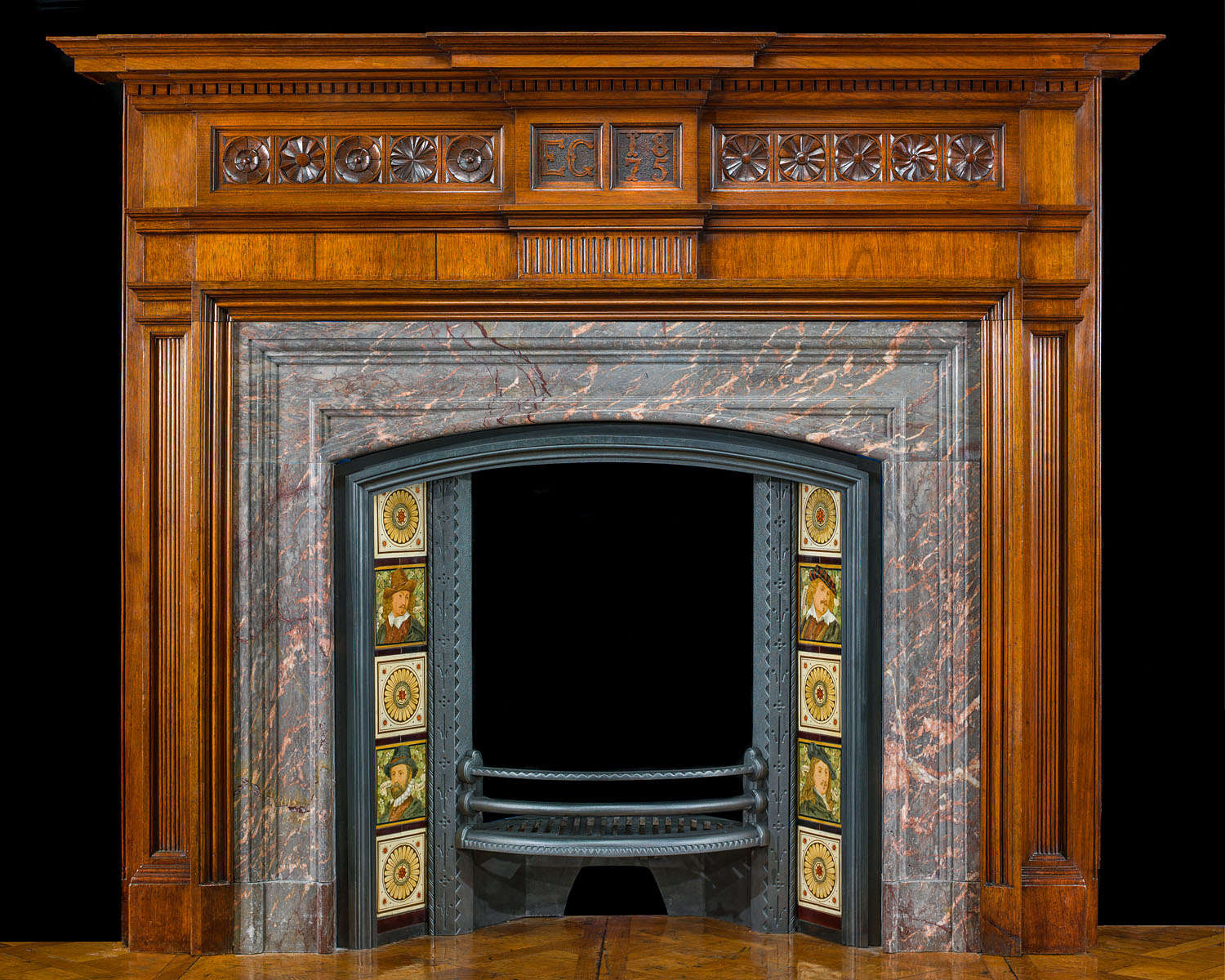
This stunning Aesthetic Movement walnut fire surround has an integral register grate with ten hand painted tiles.
Four of these depict 17th century Dutch painters, two from the School of Delft, known of course for inspiring the rise of the distinctive blue and white Delftware pottery.
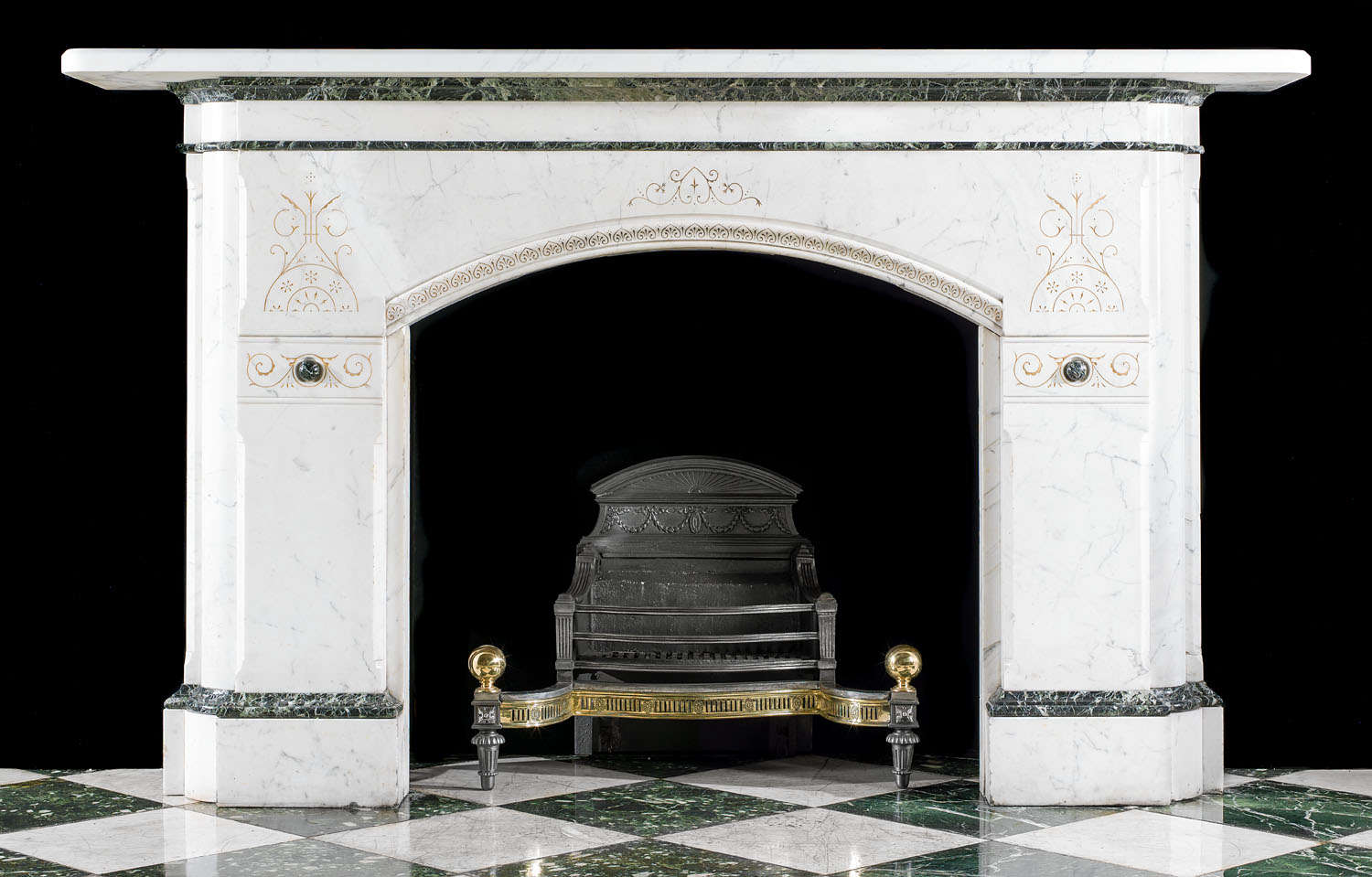
This is a large Aesthetic Movement marble fireplace, bordering on reformed Gothic, in pencil statuary marble from c.1870.
Finely cut and gilded motifs complement the main body of the fireplace and stylised floral, leaf anthemion detail borders the gently arched opening.
Fire baskets
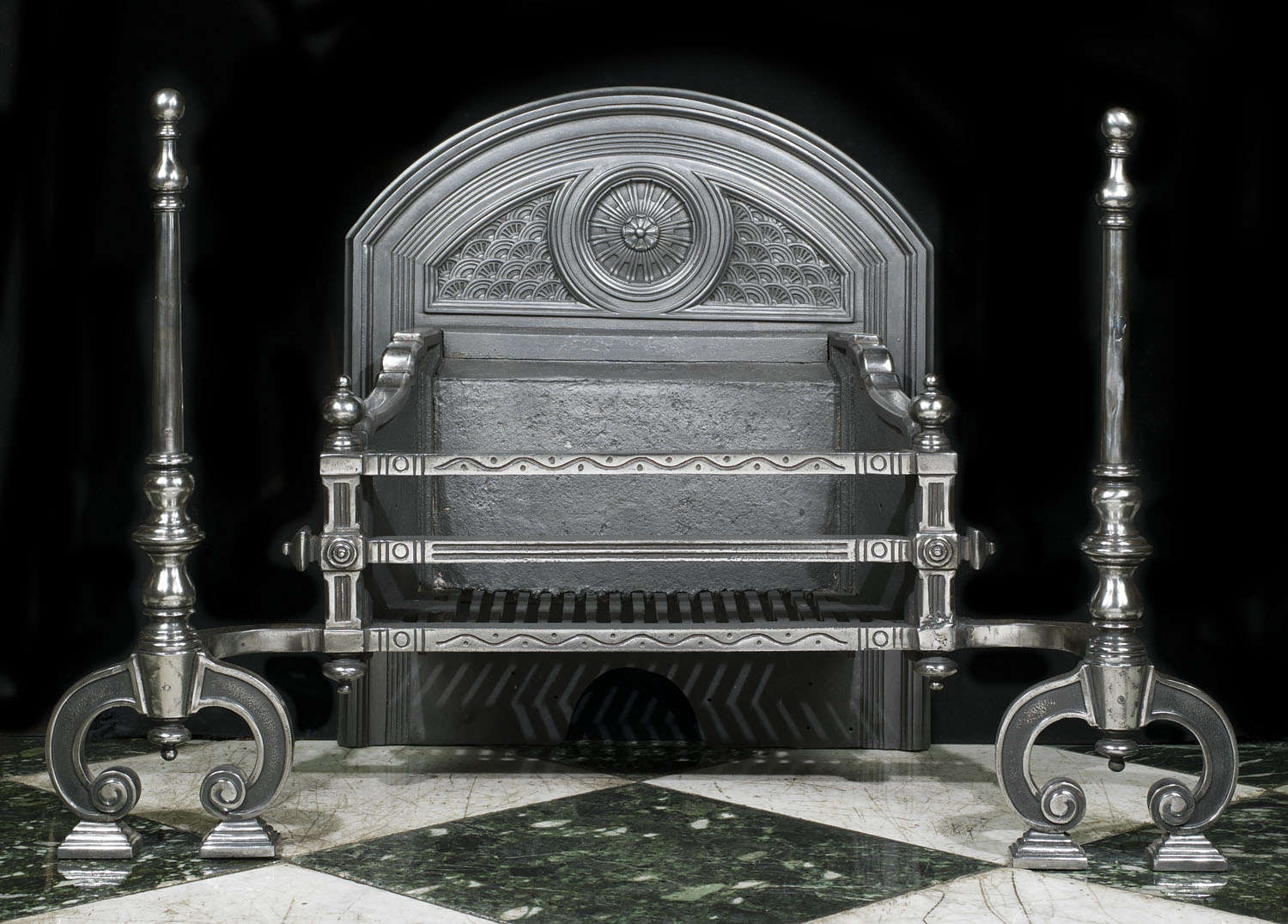
The arched back of this steel fire grate is cast with a Japanese style fish scale decoration, with a floral roundel to the centre.
A pair of very tall steeple standards above sturdy scrolled feet support the two-barred grate, which is cast with Aesthetic Movement motifs.
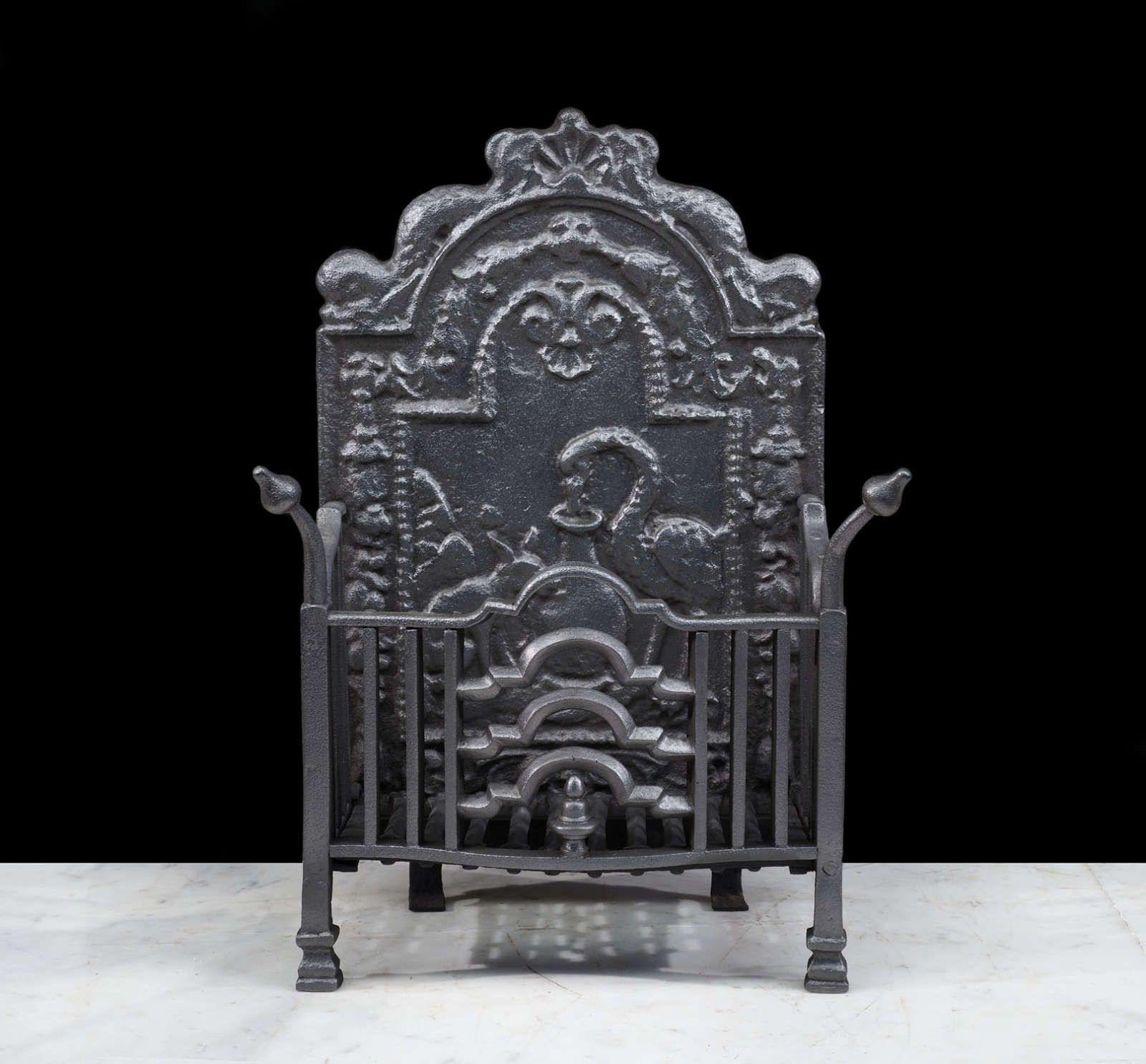
This small, charming Aesthetic Movement fire basket with fox and stork, one of Aesop’s fables, has ornate front bars and allium bud form finials.
Decorative items
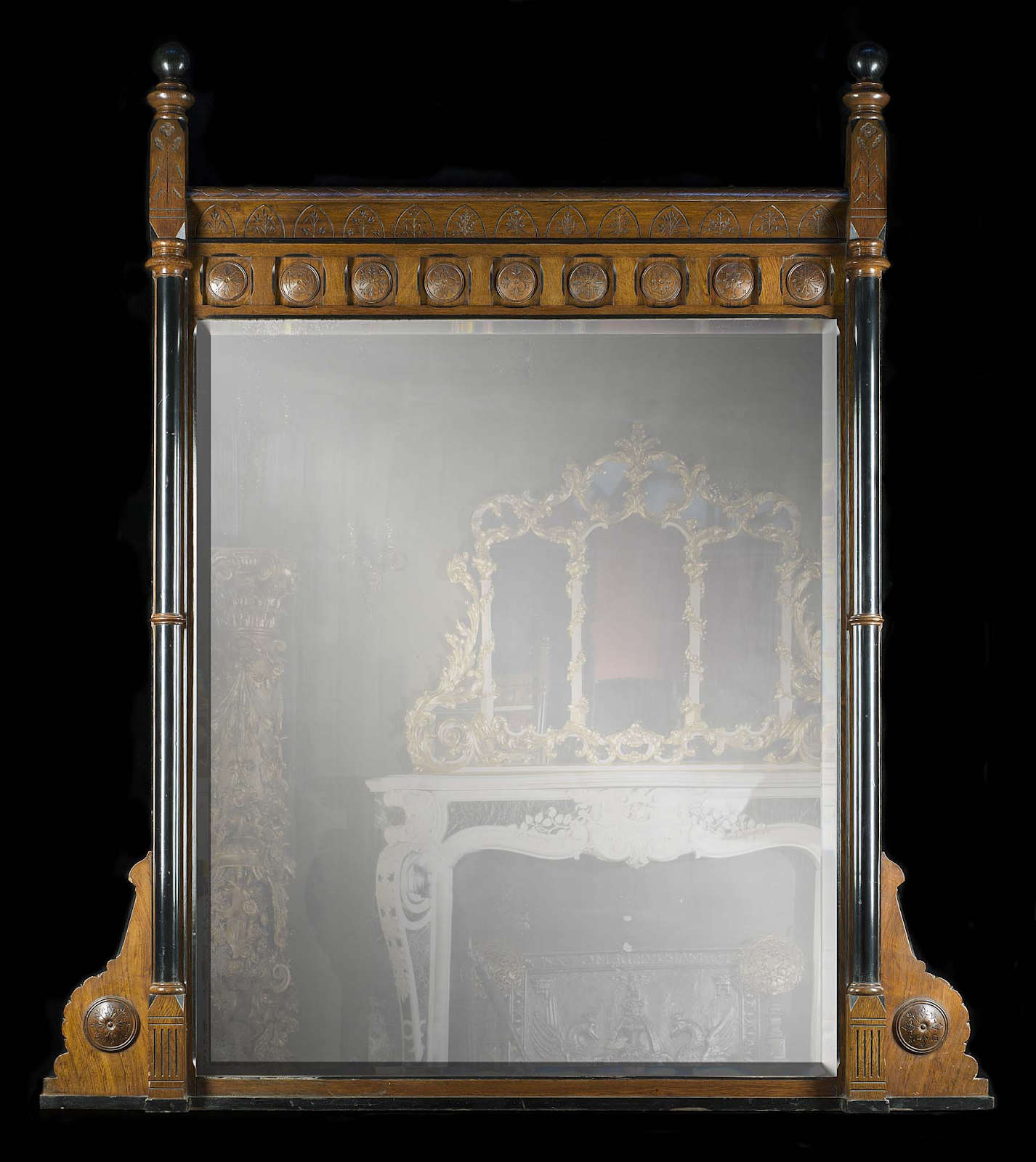
This c.1870 Aesthetic Movement overmantel mirror has carved foliate detail and florally carved bosses on the oak frame – a pair of ebonised columns flank the mirror.
It is a stunning accompaniment to many fireplaces and helps to add a sense of depth, light and style to the room.
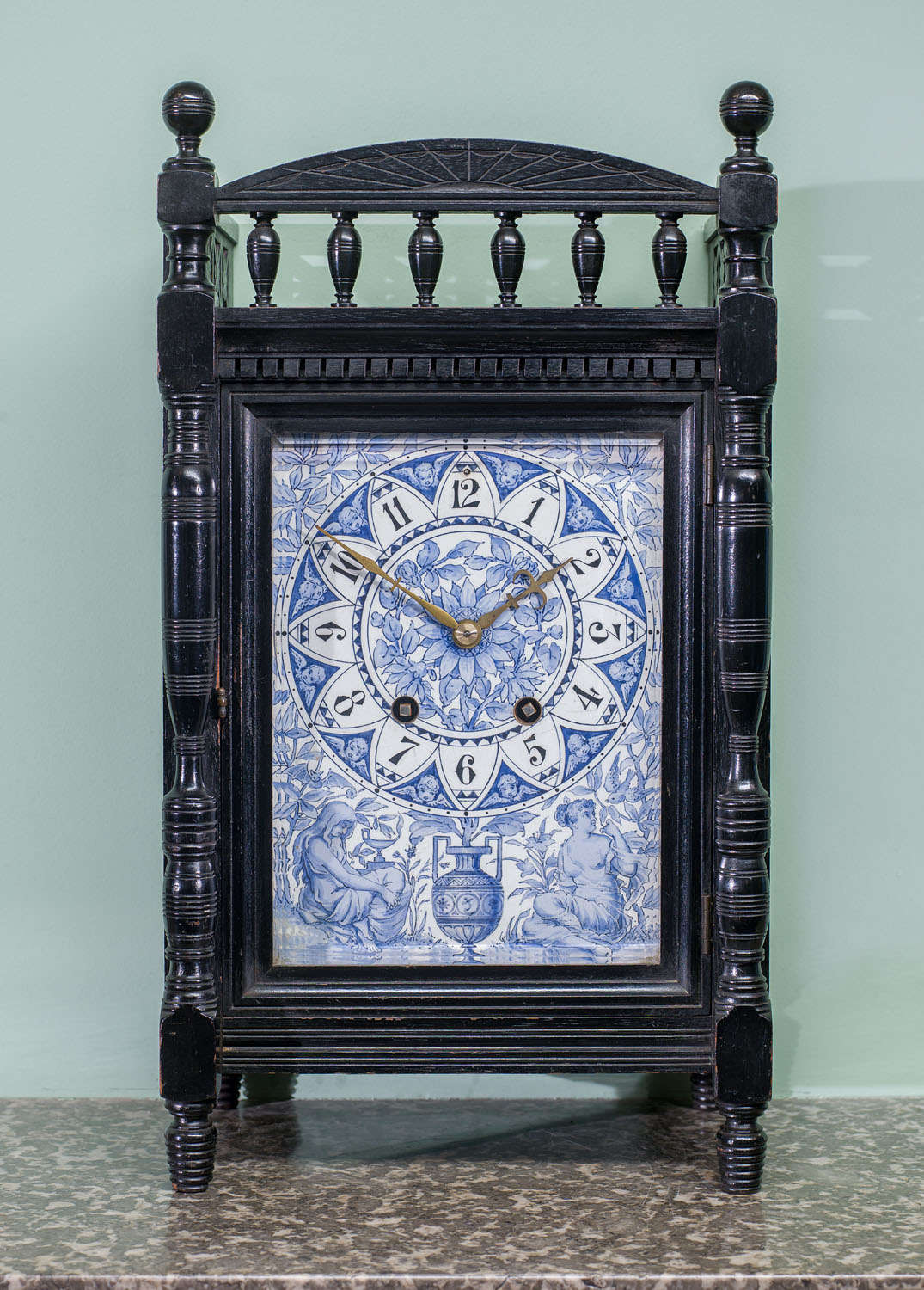
A magnificent Aesthetic Movement mantel clock, this piece has an ebonised mahogany case and an exquisitely painted dial. The chapter ring takes the form of a sunflower, each petal frames a number.
The blue and white hand-painted and glazed porcelain dial depicts allegories of night and day within a floral and foliate design. Night appears as a sleeping woman with a bat flying above her, while Day gazes up at a swift as it flies past.
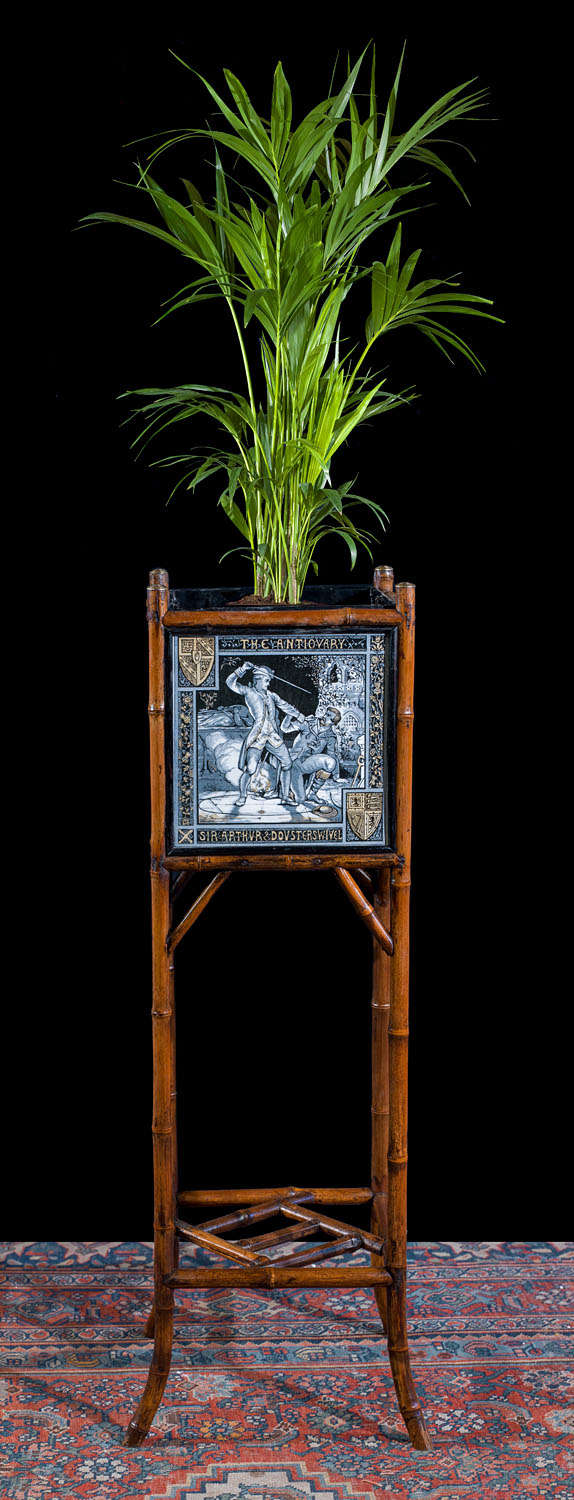
From c.1880, this Aesthetic Movement Moyr Smith jardiniere planter inset is made of bamboo, with Minton tiles printed using the Waverley pattern.
It includes illustrations for Old Mortality, Fortunes of Nigel, Ivanhoe and The Antiquary – printed in black, grey and pale yellow on white, with japanned tin liner.
Final thoughts: Aesthetic Movement antiques
If you enjoyed this guide, you may like some of our other most popular articles, such as:
For more than 50 years, Westland London has specialised in period chimneypieces, fireplace accessories, furniture, lighting, decorations and other architectural antiques.
If you have any queries about our antique fireplaces or anything else in our collection of antiques, please don’t hesitate to contact us.