Grand Tour of Europe: Grand Tour Inspired Antiques In Our Collection
18 November 2025
Anthony Bridgman
Summary
-
From the 17th to the 19th century the romance and adventure of the Grand Tour grew as a phenomenon in Europe among the upper class.
-
Apart from the voyage or journey itself this was an adventure into antiquity, the ancient culture and traditional heritage that were to be seen through northern Europe.
-
Tours were seldom solo journeys; most young men were accompanied by a guide, called a bear-leader, with extensive knowledge of the arts and languages they would encounter.
-
Grand Tourists brought back artistic influence, with several notable names leaving a lasting impact on architecture and taste back in England.
What was a Grand Tour?
Richard Lassels coined the term in his 17th century work A Voyage of Italy, having traveled through Italy five times.
The Grand Tour was a traditional, multi-year journey through Europe, popular from the 17th to early 19th centuries, typically for wealthy young men especially from Britain and Northern Europe.
It was a prestigious, educational rite of passage. The Grand Tour completed the education of the upper-class youth, exposing them to classical antiquity and Renaissance culture and art not available at home.
The journey served as a cultural finishing school, broadening the traveller’s world view, language skills, and social network.
Richard Lassels coined the term in his 17th century work A Voyage of Italy, having traveled through Italy five times.
However, the tradition existed earlier, with architects like Inigo Jones among its first practitioners – read more about him in our recent article Palladian architecture: Palladian meaning and style in antiques.
There was no fixed route, but by the 18th century, a standard pattern emerged. Paris was often the first stop, followed by Italian cities such as Venice, Florence, and Rome – the latter often considered the climax of the tour.
Grand Tourists were usually accompanied by tutors, called a bear-leader, or family. In the later 19th century, wealthy Americans and sometimes women took part as well.
Tourists studied local art, architecture and customs. They brought home souvenirs and artistic influence, with some leaving a lasting impact on architecture and taste in their home country.
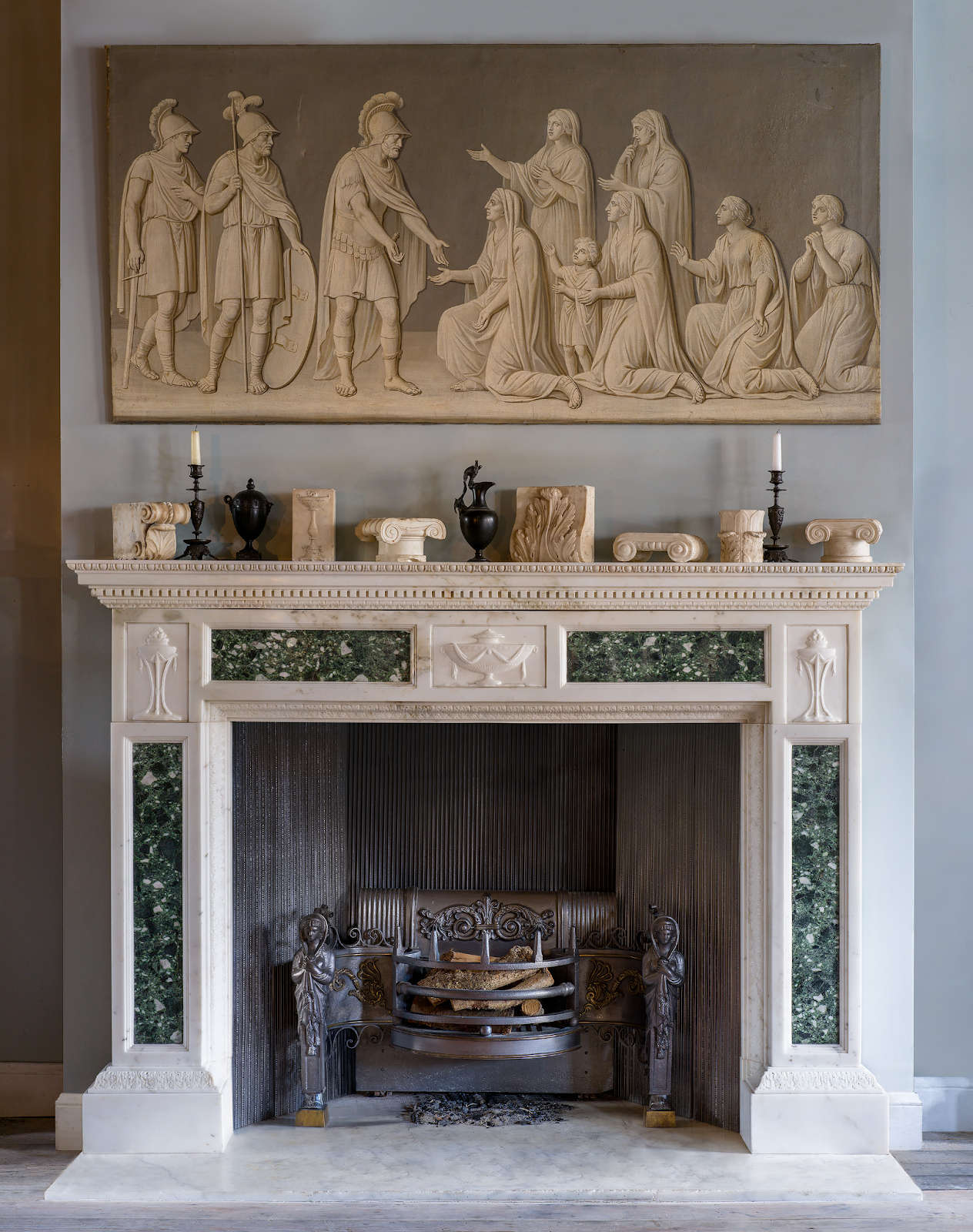
Exceptionally rare chimneypiece by Robert Adam
One of the most influential architects of all time, Robert Adam traveled Europe in 1755-57 and spent a significant amount of time admiring Roman ruins in Italy.
One of the most influential architects of all time, Robert Adam – a genius contribution to the neoclassical style, traveled Europe in 1755-57 and spent a significant amount of time admiring Roman ruins in Italy.
Above is an exceptionally rare chimneypiece by Robert Adam. Commissioned by General John Burgoyne for the dining room of his London residence 10 Hertford St in Mayfair, Adam embraced the Neoclassicism both had enjoyed during their time in Italy.
They met in Aix-en-Provence, then again in Florence and Rome several times. Once in Rome, Adam also met Giovanni Battista Piranesi, an established architect and printmaker known for his fantastical drawings of ancient ruins and precise interpretation of classicism.
Undoubtedly, this chimneypiece shows an association and stylistic similarities with Piranesi, who shared a close friendship with Adam. We know for certain that this chimneypiece was designed after Adam’s time in Rome, having been commissioned by Burgoyne in 1769.
This chimneypiece is not only Italian in design, it is also constructed in the Italian manner, using four large blocks of marble hewn into shape. In contrast, English chimneypiece construction of this period was more aligned with cabinetmaking, using sheets of marble joined together.
The carving is exquisite and bears many similarities to a design Piranesi published in his volume. Simple in form, the shelf features a small egg and dart moulding above crisply carved mouldings.
It is a truly innovative piece of 18th century design and a striking departure from other English chimneypieces of the same date.
Grand Tour inspired sculptures
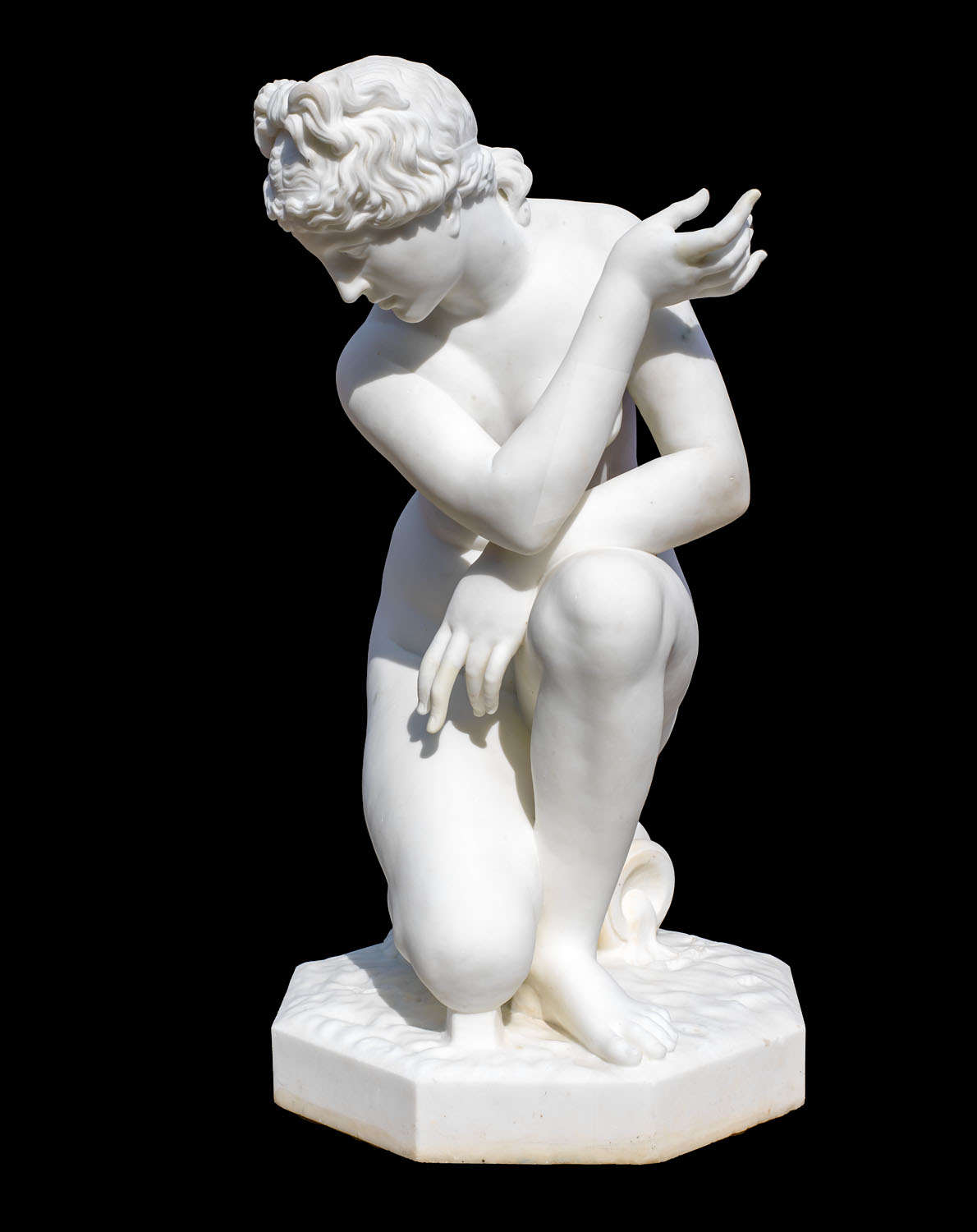
Italian in origin, this stunning c.1890 statue was likely made for a wealthy buyer enjoying their Grand Tour.
A near life size marble Crouching Venus, based on the one permanently displayed in the British Museum, it is originally based on the Hellenistic statue of the same subject attributed to Doidalsas (200-100 B.C.).
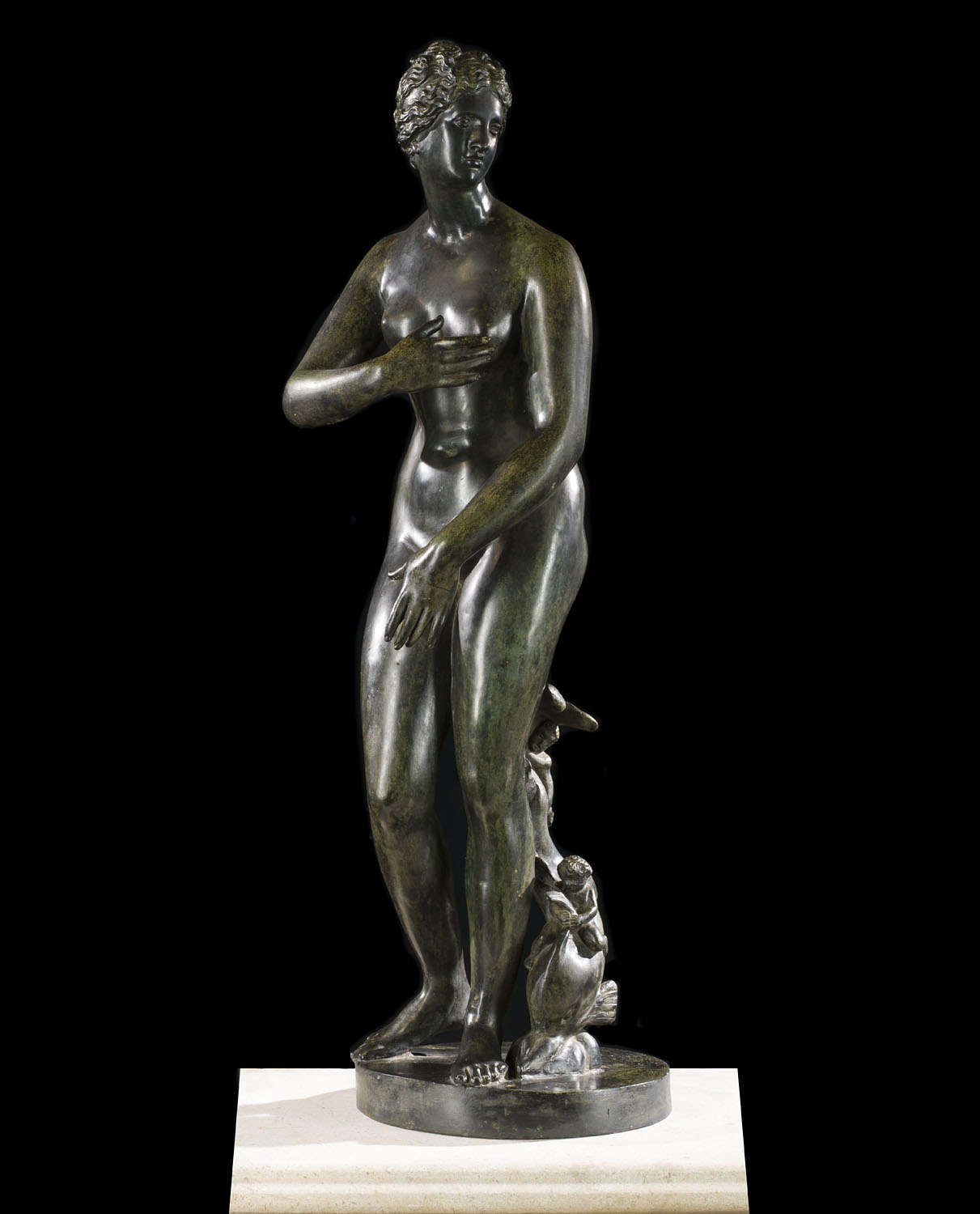
This is a fine late 19th century Neapolitan patinated bronze figure of the Venus de Medici.
The Venus de' Medici or Medici Venus is also a Hellenistic marble sculpture, this time depicting the Greek goddess of love Aphrodite, dating from the 1st-century BC. The sculpture was originally recorded in 1638 at the Medici Villa, Rome and is now in the Uffizi in Florence, Italy.
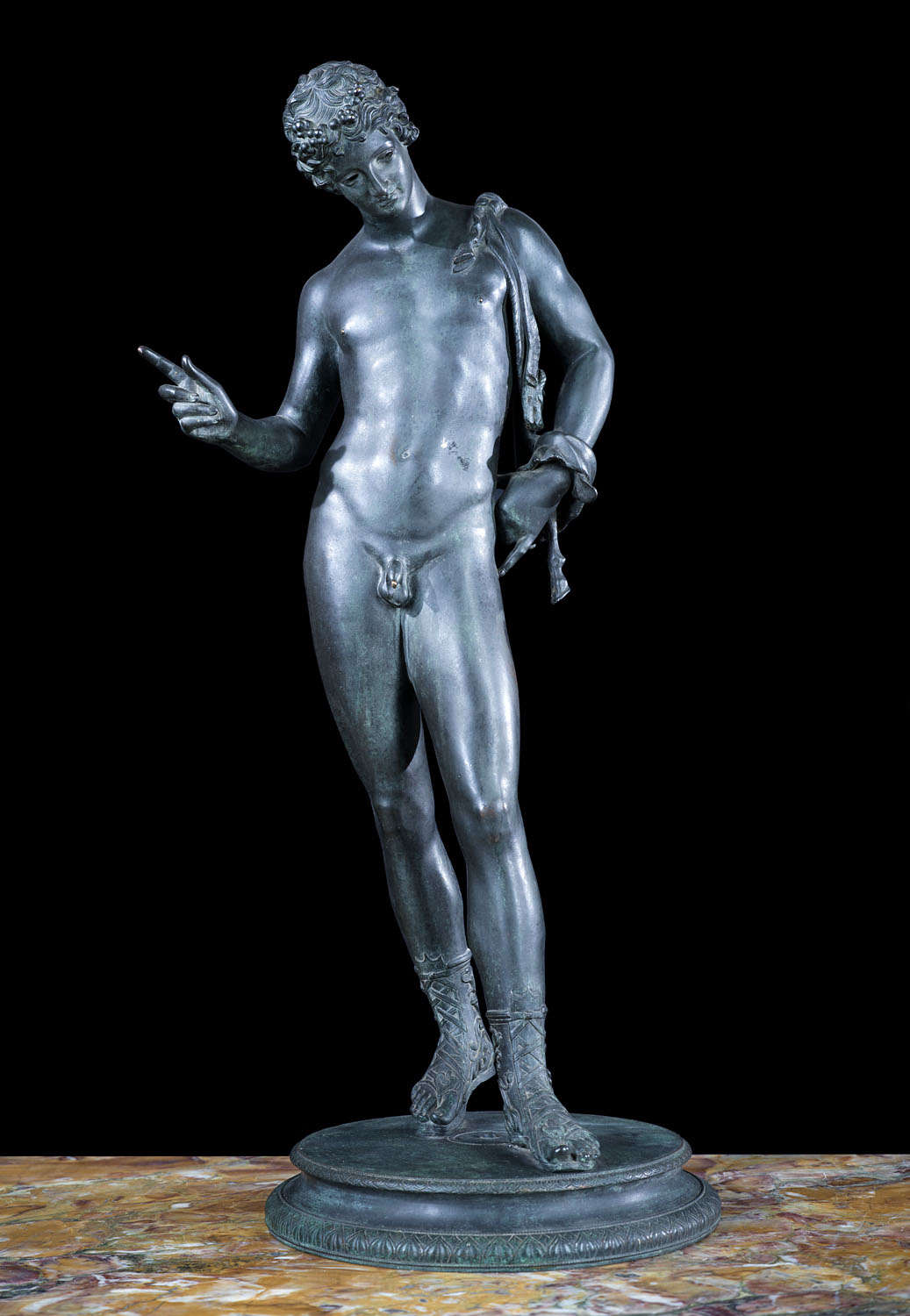
It was likely cast by the Naples-based Sommer Foundry, which manufactured many Grand Tour bronzes, including this incredible large Grand Tour Bronze of Narcissus, below.
Grand Tour inspired urns
Piranesi produced an engraved volume solely dedicated to the designs of urns in the antique style. He then manufactured urns in his Italian workshops.
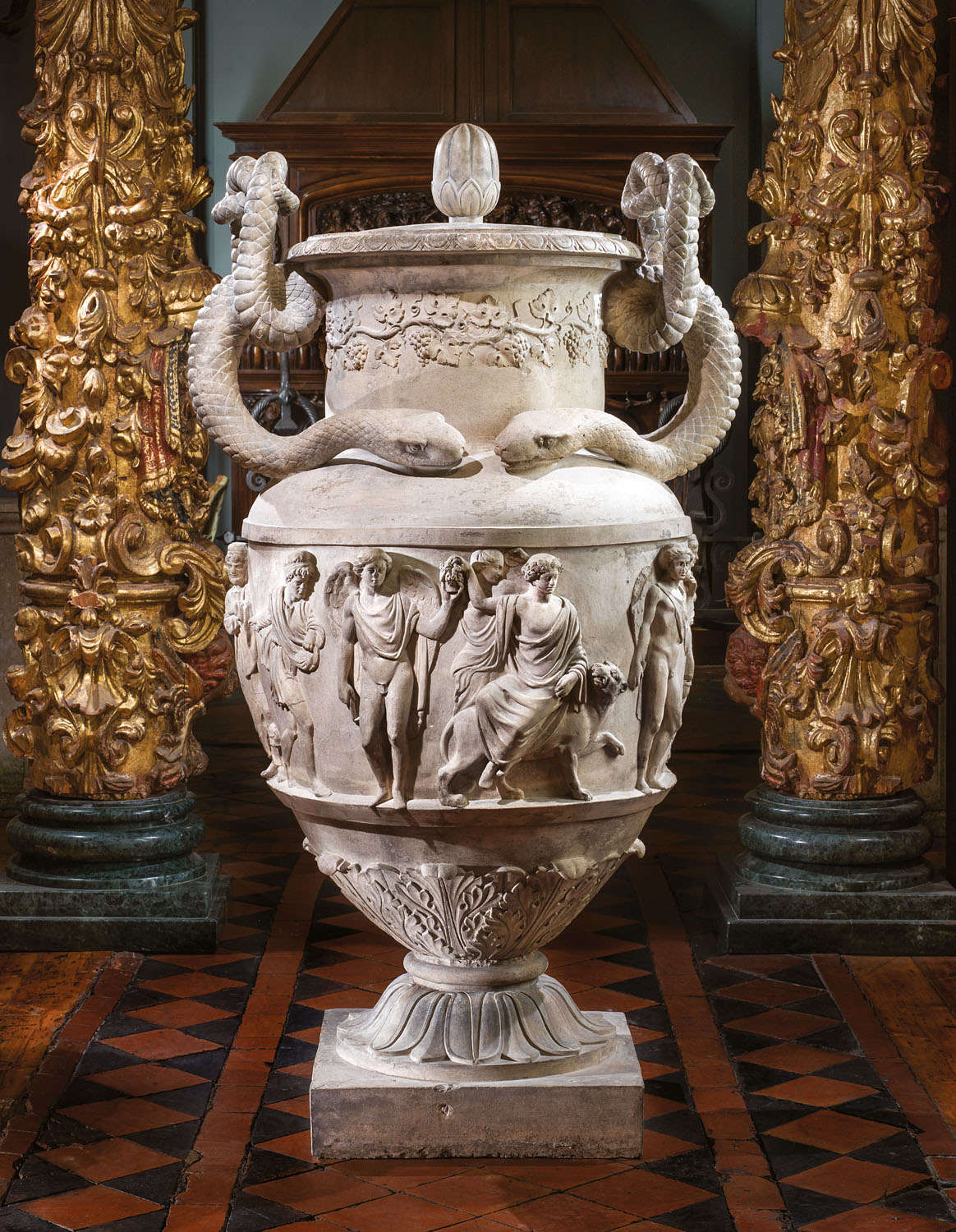
The large and rare Regency stoneware urn below is unlike any other we have come across, but echoes the popularity of themes from classical antiquity, made even more popular by the Grand Tour.
The aforementioned Piranesi produced an engraved volume solely dedicated to the designs of urns in the antique style. He then manufactured urns in his Italian workshops.
Back in England, the famous manufacturer Eleanor Coade also produced urns in the antique manner for an eager public. The urn is made from a weather-impervious stoneware, similar to the famous Coade stone.
The urn is dedicated to the god of wine Bacchus (Dionysus in Greek). It features a band of fruiting vines up to the neck, underneath which is high-relief frieze depicting a procession or thiasus, with revellers carrying cups of wine, bunches of grapes and the other trappings of a hedonistic feast.
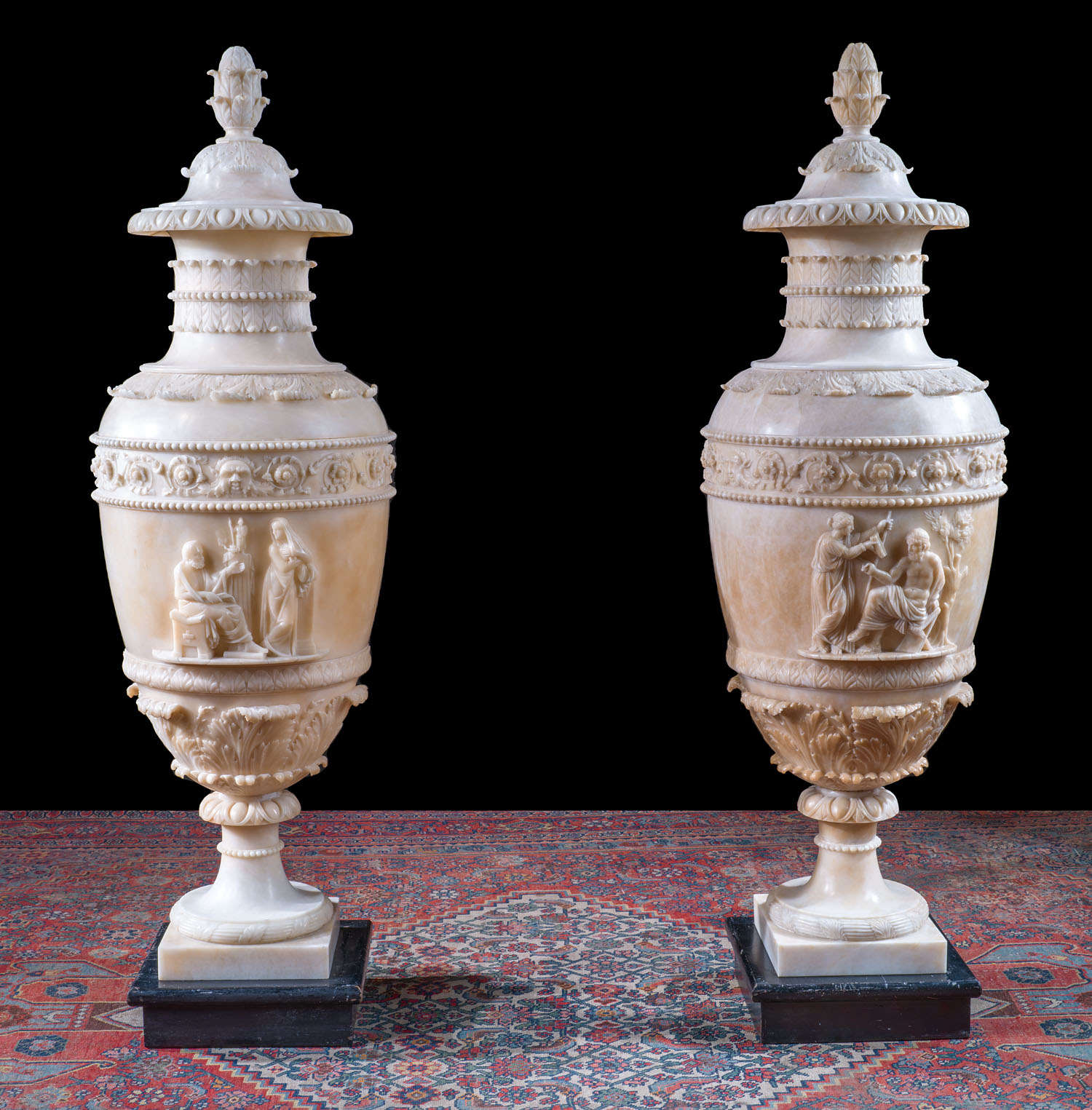
Below is an exceptional pair of large alabaster urns in the manner of Lorenzo Bartolini. The lidded urns of baluster form are finely carved from translucent alabaster, with the body of the vase depicting classical scenes.
Bartolini studied in Florence and at the Officina Inghirami in Volterra, a workshop established in 1791 which produced alabaster sculpture and objects in the neoclassical style for Grand Tourist and other wealthy patrons.
Other antiques inspired by the Grand Tour
The Grand Tour gave rise to modern travel writing, shaping both European culture and education for centuries.
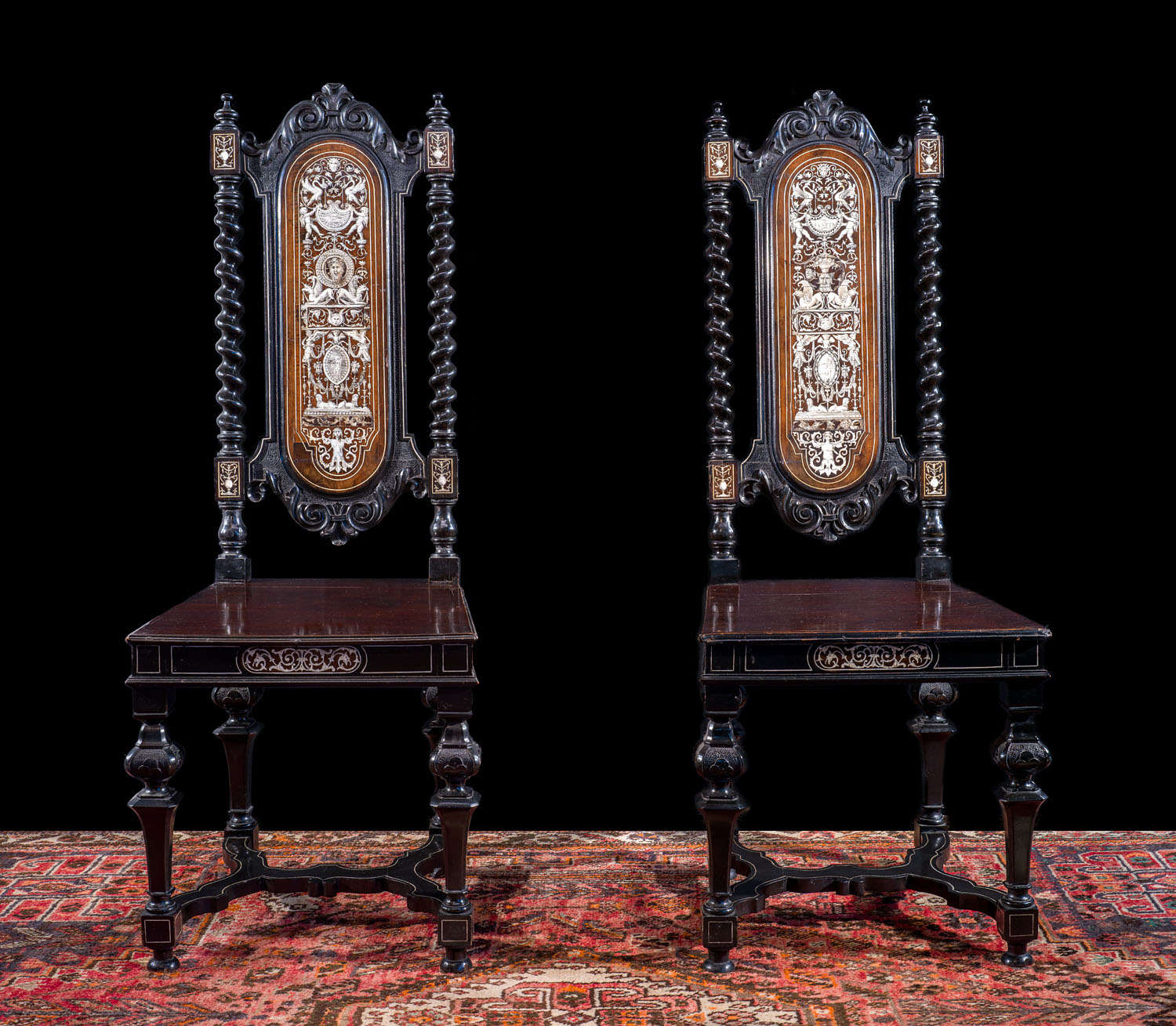
The superb pair of Northern Italian hall chairs in walnut, partially ebonised, inlaid with bone – below – is from c.1700.
Each chair has a foliate scrollwork top rail over barley twist supports which enclose beautifully inlaid panels with a number of mythological creatures shown within an arabesque border. The inlay continues below the seat and on the stretcher, which is supporting the four foliate clasped, turned legs.
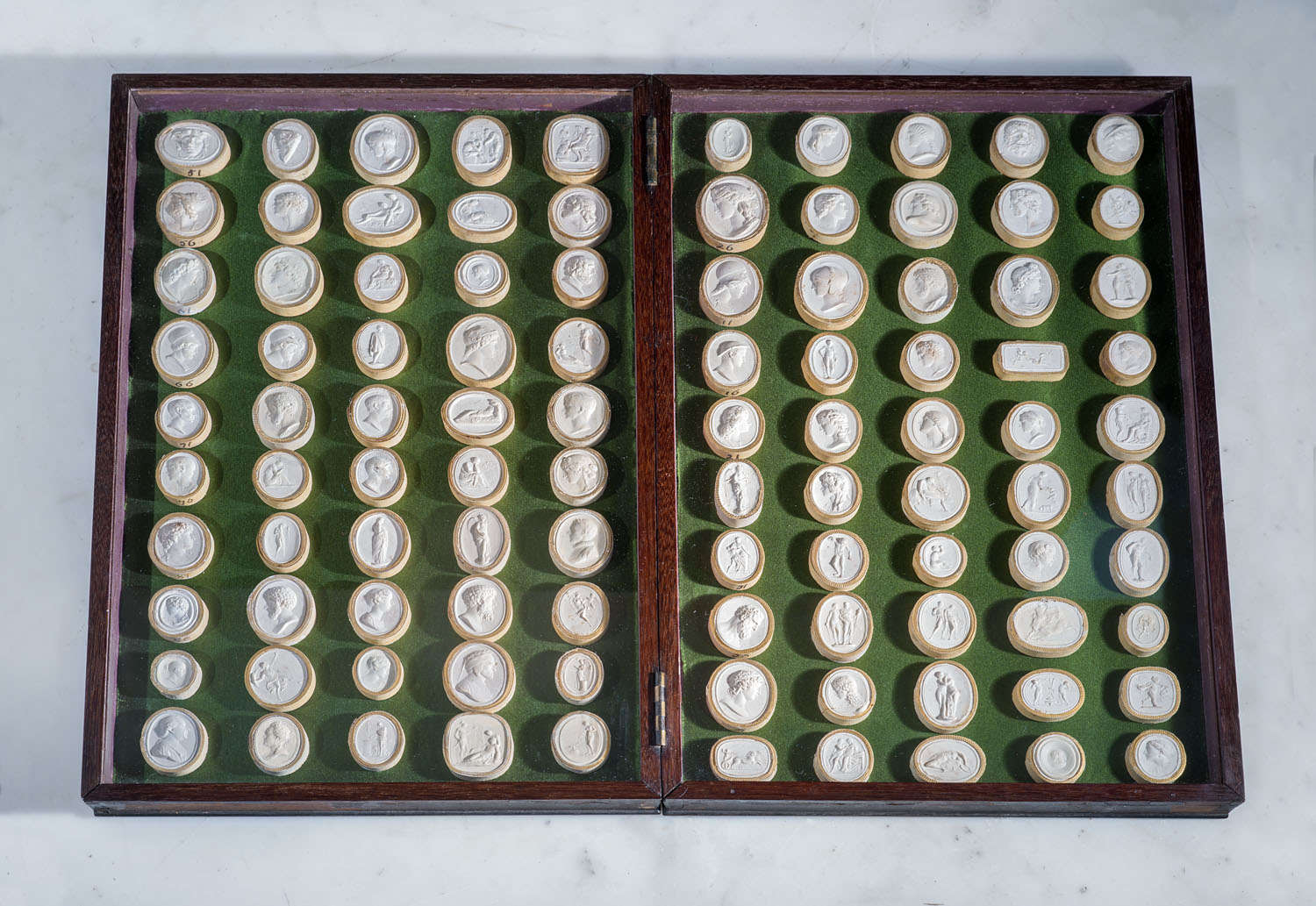
Last but by no means least, here is a fine and rare set of Grand Tour plaster intaglios, individually mounted on dark green silk within their original mahogany and crossbanded satinwood case, fashioned as a false book.
Some of the Intaglios have the impressed stamp for Nathaniel Marchant, who was the most well regarded gem engraver of the 18th century.
The tradition waned by the mid-19th century with the rise of railways, mass tourism and declining interest in classical antiquity.
Yet the Grand Tour gave rise to modern travel writing, shaping both European culture and education for centuries.
We hope you enjoyed this guide to the Grand Tour inspired antiques in our collection. If so, take a look through some of our other most popular articles, such as:
For well over 50 years, Westland London has specialised in fine period chimneypieces, fireplace accessories, furniture, lighting, decorations and architectural antiques.
If you have any queries about our antique fireplaces or any of our other antiques, please don’t hesitate to contact us.