Thomas Jeckyll Fireplaces And Other Antiques
30 September 2026
Anthony Bridgman
Thomas Jeckyll fireplaces tend to be cast iron or brass with Japanese-inspired circular roundels or mon with natural motifs, in particular sunflowers.
His work often featured geometric latticework, scalloped forms, concentric circles, waves and repeating patterns.
There is usually a strong central axis and relatively restrained architectural frame, with ornamentation integrated into the casting instead of featuring as separate decoration.
Finishes included japanned black, bronzed, polished or gilt brass, with painted or encaustic tilework.
He designed narrow slow-combustion grates to admit air through the front and burn coal more slowly or economically.
Read on to find out more about the designer’s influence on not only the Aesthetic Movement but Anglo-Japanese style in Great Britain.
Summary: Thomas Jeckyll
He was an influential English architect from Wymondham, Norfolk who designed furniture, fireplaces, stoves, interior fittings and gates.
His close collaboration with the Norwich ironfounders Barnard, Bishop & Barnards helped establish the company’s international reputation for innovative decorative metalwork.
Initially working in the Gothic Revival style, Jeckyll later became a leading figure in the Aesthetic Movement and Britain’s Anglo-Japanese style. He incorporated asymmetry, simple forms, flat patterns and Japanese-inspired decoration.
He is best known for designs including the Norwich Gates, the Four Seasons Gates, the original Peacock Room interior and a distinctive range of fireplaces featuring Japanese mons, circular rosettes, stylised foliage, birds and sunflowers.
His innovative approach continues to influence the appreciation and collecting of Victorian architecture, furniture and decorative arts.
Who was Thomas Jeckyll?
Jeckyll began working in a Gothic Revival style designing churches, schools, rectories and country houses.
Born in 1827, he was a renowned and highly influential English architect and designer from Wymondham in Norfolk.
The ironfounding firm Barnard, Bishop & Barnards, also based in Norwich, often produced his work which included furniture, fireplaces, stoves, interior fittings and gates.
Barnard, Bishop & Barnards were at the heart of Norwich's iron industry and the company gained an international reputation by collaborating with Jeckyll.
Jeckyll began working in a Gothic Revival style designing churches, schools, rectories and country houses.
It is likely that Jeckyll encountered Japanese design through exhibitions such as the 1862 International Exhibition and artistic circles, including the likes of James McNeill Whistler.
Later he became an important figure in the Aesthetic Movement and also in Britain’s Anglo-Japanese style. Learn more in our full guide to Aesthetic Movement antiques.
Japanese design typified asymmetry, simple forms, flat patterns and careful decoration. It suited the Aesthetic Movement, which was a reaction to the heavily ornamented Victorian style.
It is likely that Jeckyll encountered Japanese design through exhibitions such as the 1862 International Exhibition and artistic circles, including the likes of James McNeill Whistler.
His legacy remains as an influential, though once overlooked, designer of Victorian architecture, decorative arts and furniture.
In particular, he is famous for designing innovative and wrought cast-iron work, such as the Norwich Gates in 1862 and the Four Seasons Gates in 1867.
Widely recognised as one of the greatest surviving Aesthetic Movement interiors, he also designed the original Peacock Room at 49 Princes Gate, London which Whistler painted blue and gold in 1876-77.
His career was cut short by serious mental illness in 1876, and he spent his final years in asylums before dying in 1881.
However, his legacy remains as an influential, though once overlooked, designer of Victorian architecture, decorative arts and furniture.
Thomas Jeckyll fireplaces
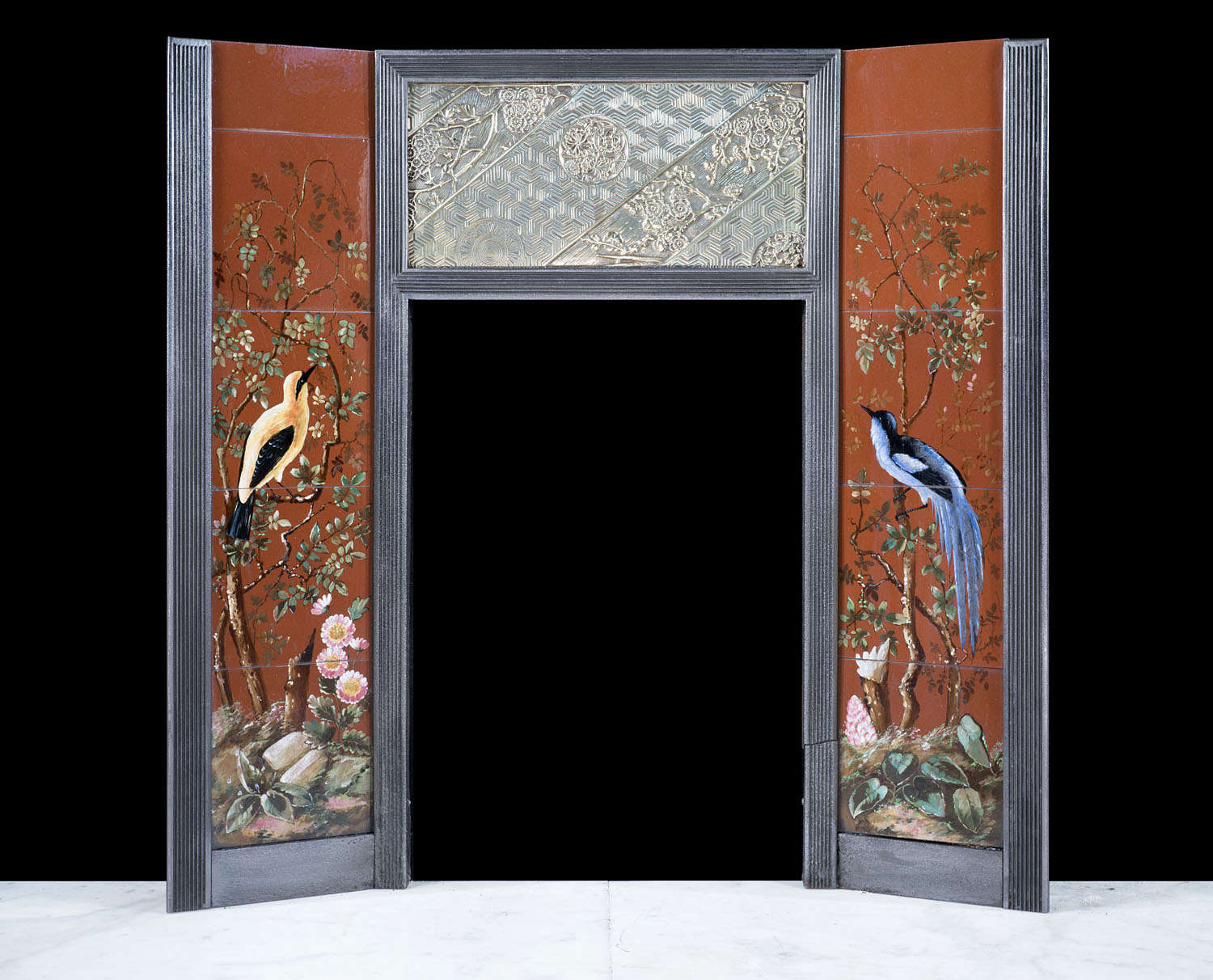
This is a stunning, rare Thomas Jeckyll tiled insert from circa 1870 designed for Barnard, Bishop & Barnards with striking, handpainted birds of paradise perching on stylised branches.
The insert is mounted with a cast brass panel, epitomising the Aesthetic Movement style, decorated with Jeckyll's signature use of Japanese mons.
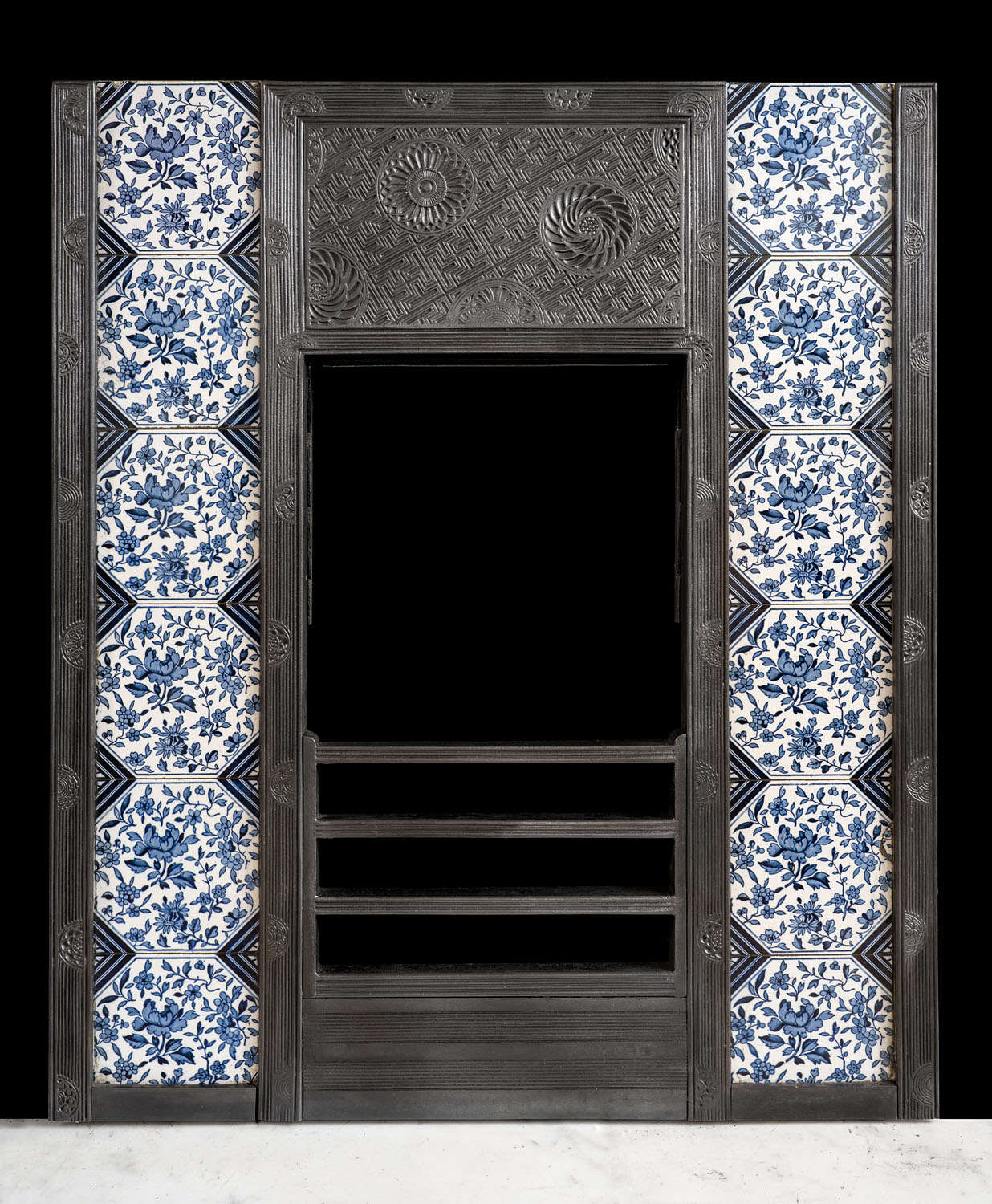
Featuring iron cast with Japanese inspired circular rosettes, this Thomas Jeckyll Aesthetic Movement tiled fireplace insert was also manufactured by Barnard, Bishop & Barnards.
Also from circa 1870, gorgeous blue and white tiles decorated with stylised flowers and foliage flank the cast ironwork.
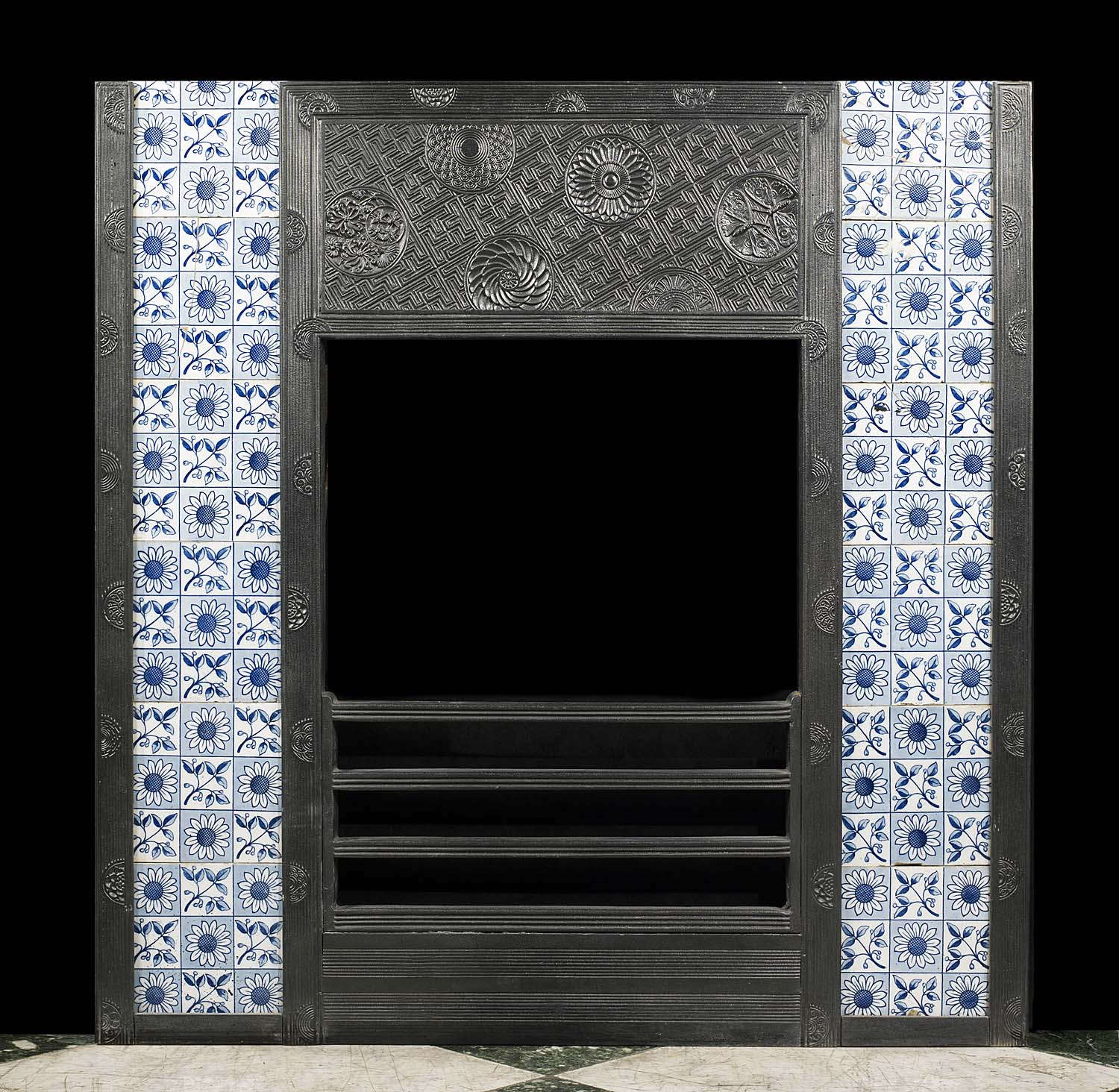
In a similar style, the below Aesthetic Movement Thomas Jeckyll insert features a sunflower motif which became a notable symbol of the movement. The andirons in the Peacock Room also have the shape of stylised sunflowers.
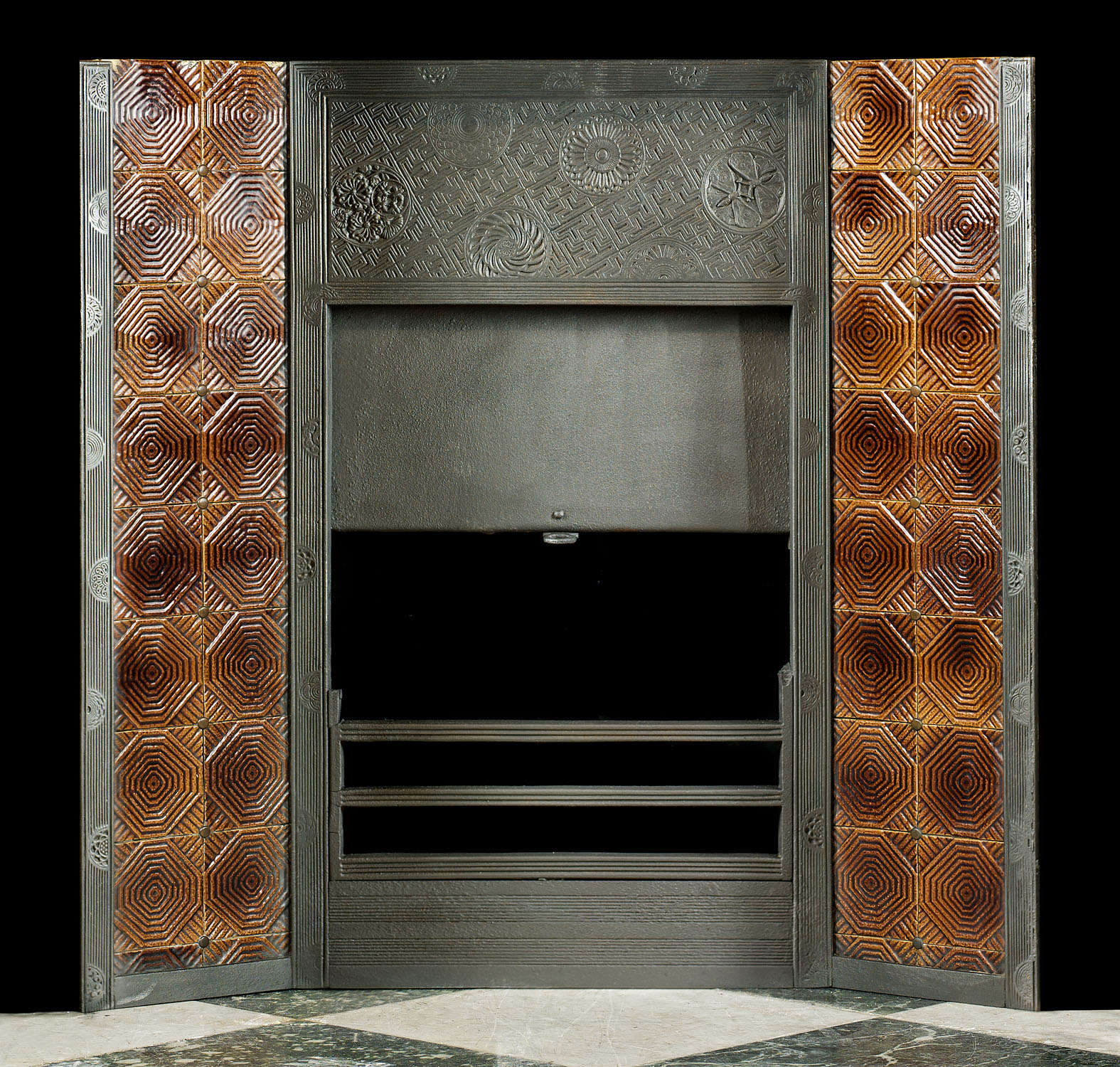
This next tiled Thomas Jeckyll register grate also has several motifs consistent with the era. It includes a repeated geometric pattern and a restrained metal frame.
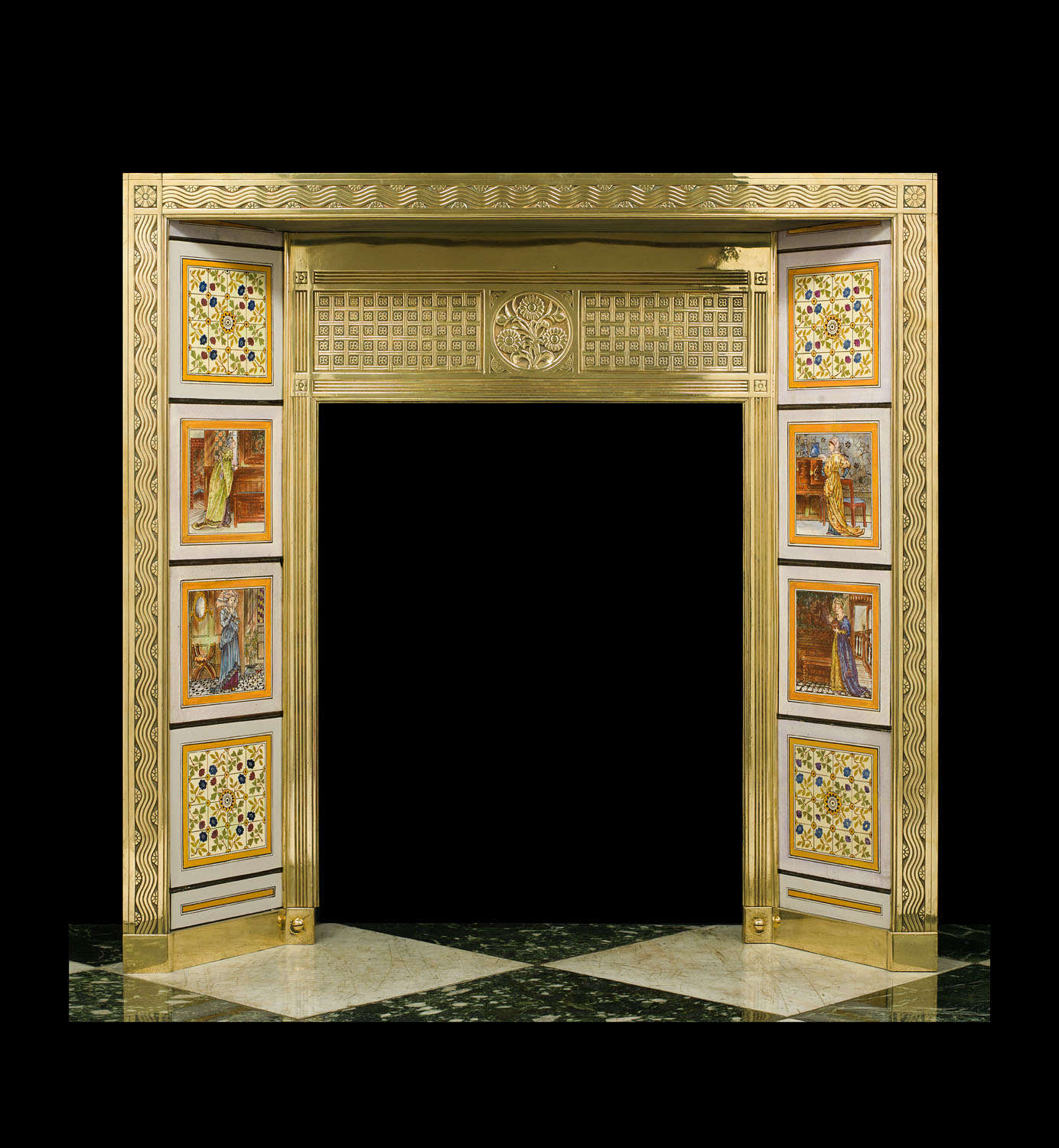
This fine Aesthetic Movement tiled brass insert below also has several features reminiscent of Thomas Jeckyll designs, such as the central brass panel surrounds.
There are eight hand-painted tiles, half with floral designs and the other half depicting medieval women in the home.
Other antiques
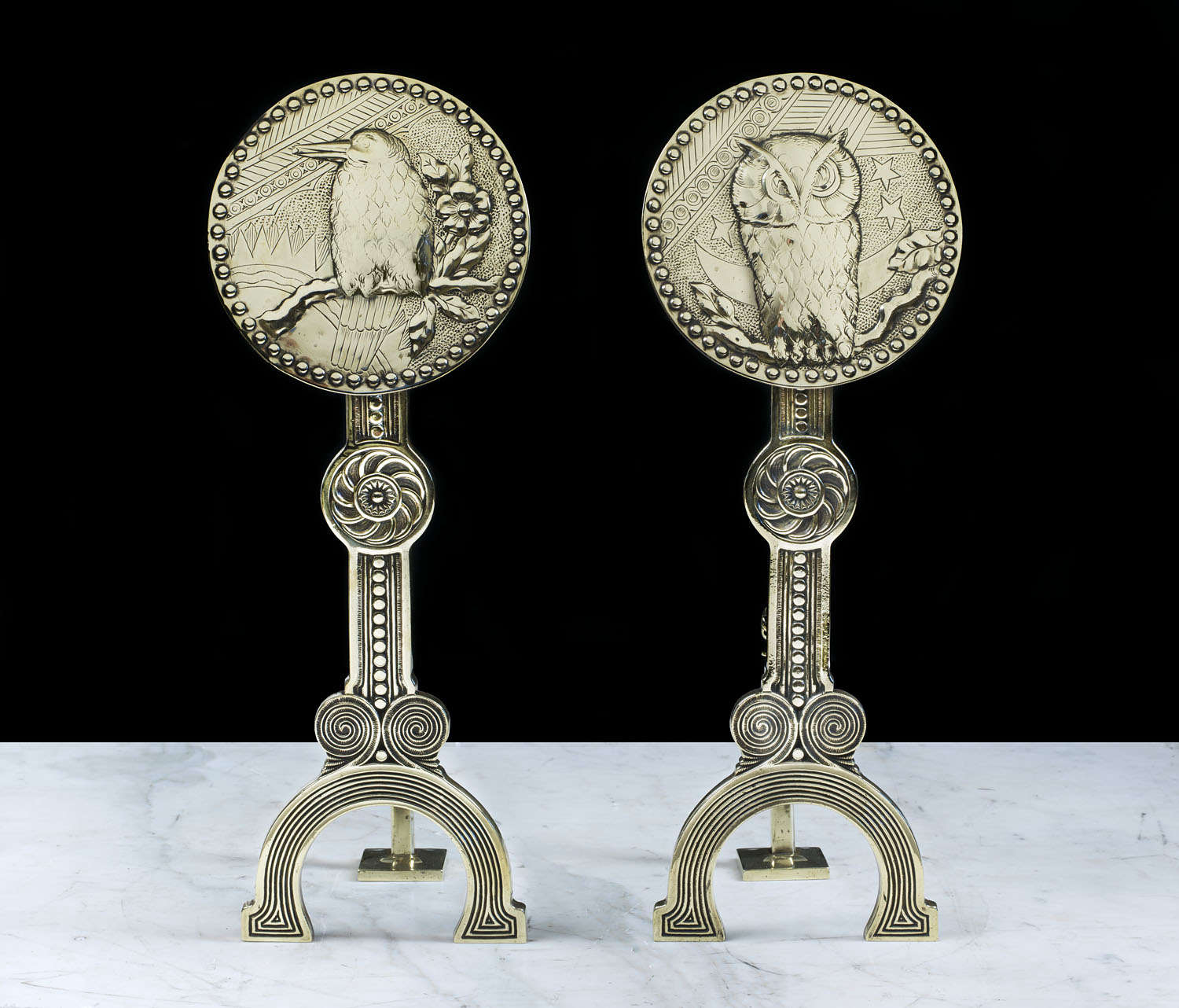
While unmarked, these Aesthetic Movement andirons from circa 1875 also have several signs of Jeckyll designs. It is also possible that Barnard, Bishop & Barnards produced these.
They feature his signature use of Japanese mons within the decoration. The rosettes symbolise night and day, with the kingfisher on a branch representing the day or dawn, the sun rising behind it and the owl representing the night, surrounded by stars.
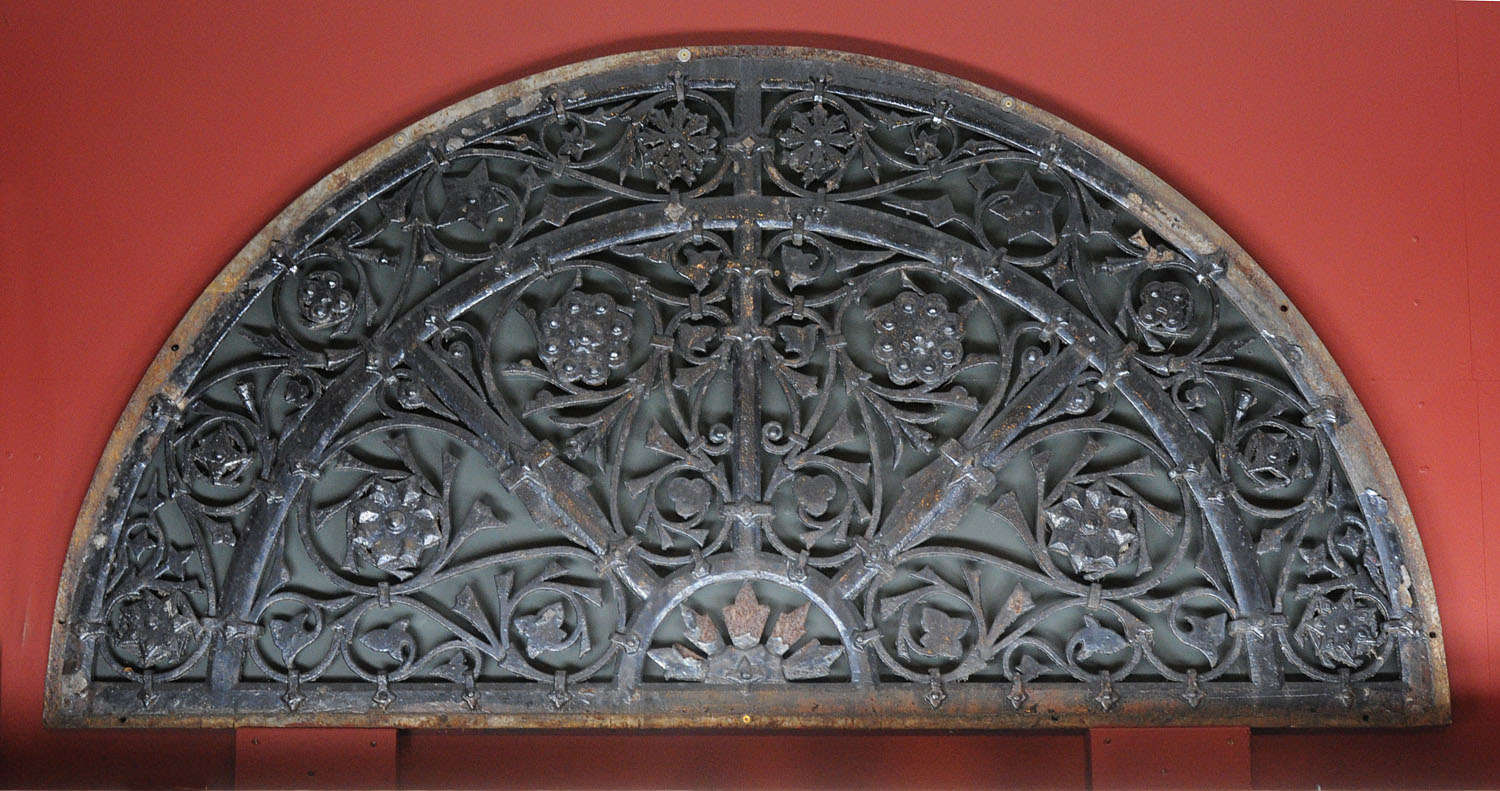
Lastly, this Arts & Crafts wrought iron fan light from the late 19th century is also in the manner of Jeckyll, with a repeating floral motif and pierced ironwork.
While similar, Arts and Crafts had an underlying emphasis on usefulness and education – learn more in our guide to Arts & Crafts Movement furniture. In contrast, the works associated with the Aesthetic Movement were ‘art for art's sake' above all else.
Final thoughts
If you enjoyed this guide, you may like some of our other most popular articles, such as:
Westland London has specialised in period chimneypieces, fireplace accessories, furniture, lighting, decorations and a wide range of other stunning architectural antiques for more than 50 years.
If you have any queries about our antique fireplaces or anything else in our collection, please don't hesitate to contact us.