Antique Garden Furniture: Ornaments, Statues & Fountains
Our collection of antique garden furniture, antique fountains, outdoor ornaments and garden statues.
-
 Sold
Sold
Stock: 16756
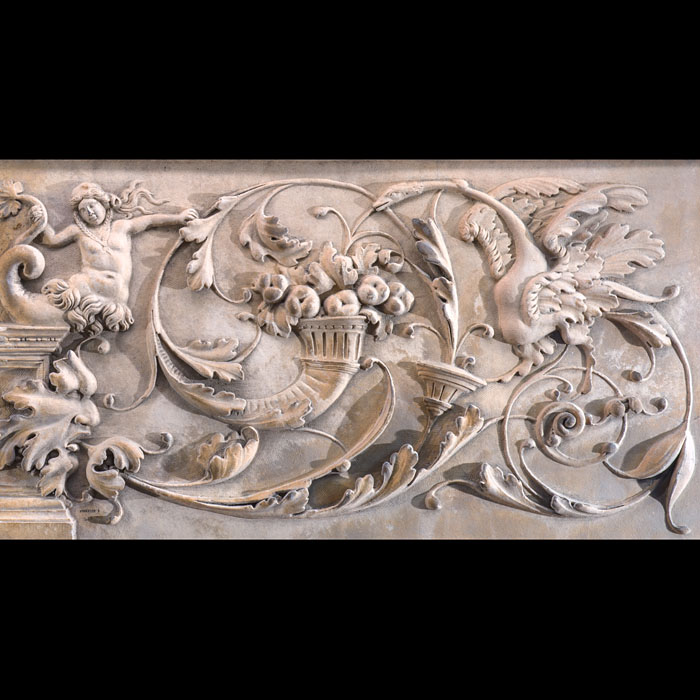
A fine and very large pair of grogged terracotta rinceaux panels. Originally installed on the facade of a palazzo in Florence, the panels are Renaissance in style, with a spiralling design of scrolling leaves, cornucopia and mythical beasts. The motif is centred by two tritonesses with entwined tails.
Designs such as these can be seen on many of the great Renaissance buildings, and indeed inside them. One particularly fine example was carved for Ascanio Sforza's tomb at Santa Maria del Popolo, in Rome and a cast of this can be found in the Victoria and Albert Museum. This style of low relief carving was popularised after the discovery of the Ara Pacis in Rome in 1568. This great altar was erected in Rome between 14 and 9 B.C.
Italian, early 19th century.
(PLEASE NOTE, WE HAVE TWO PAIRS AVAILABLE SEE STOCK NO. 16791)
Grogged terracotta was the Italian answer to Coade, popularised in England in the 18th century and favoured for its weather resistant finish and ability to be modelled with great detail.
View our collection of: decorative antiques and furnishings
|
Length |
Height |
Depth |
| Each Panel |
37"
94 cms |
23 5⁄8"
60 cms |
2 3⁄16"
5.5 cms |
|
|
|
|
-
 Sold
Sold
Stock: 16625
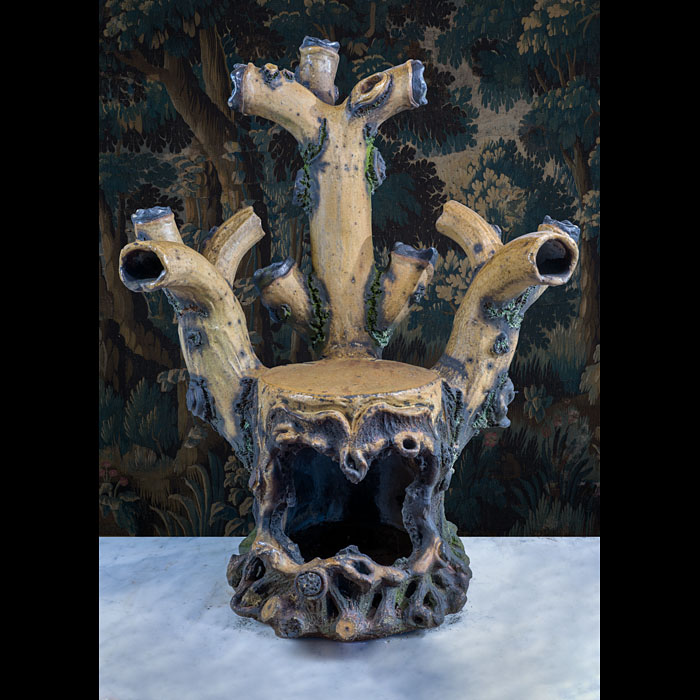
A large and impressive salt glaze faux bois garden chair. This large chair could also be used as a planter, the naturalistic branches hollowed out for planting, including a large area of the trunk. Would look fabulous planted with ferns, or even strawberries. This chair would be just as impressive used as an interior decoration.
Scottish, c. 1880.
Faux Bois garden ornamentation first emerged in France in the mid-19th century. A gardener named Joseph Monier first developed a technique using Portland cement (invented in England) and a metal armature, to make frost proof garden ornamentation, bridges and planters. This popular new art from spread to England, and large potteries used their frost proof salt glaze and stoneware to manufacture garden chairs and planters in this whimsical new style.
View our collection of: Antique, old vintage fountains, sculptures, garden furniture and statuary
|
Width |
Height |
Depth |
|
35 3⁄16"
89.5 cms |
42 7⁄8"
109 cms |
30 1⁄4"
77 cms |
|
|
|
|
-
 Sold
Sold
Stock: 16746
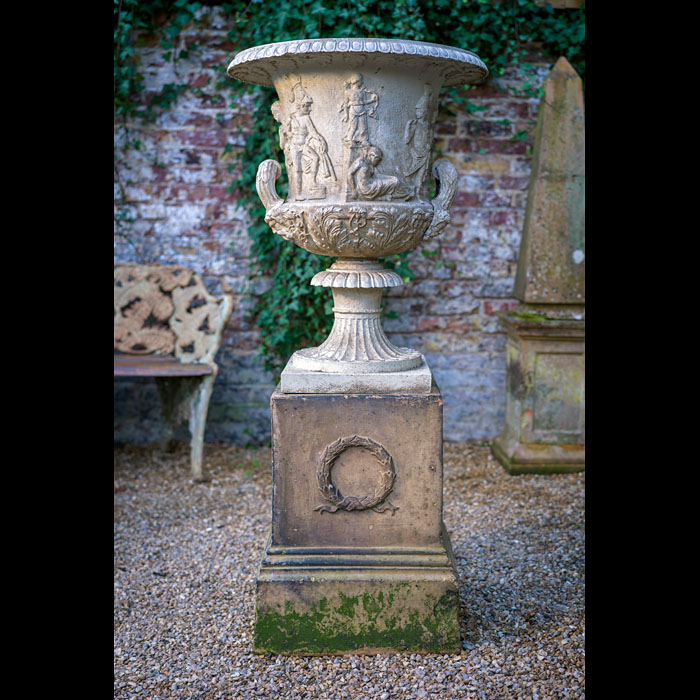
A rare cast iron Handyside urn after the the Medici Vase. This beautiful urn was manufactured by the renowned Andrew Handyside & Co Foundry, and as illustrated in the catalogue. This Medici Vase, now on display at the Uffizi in Florence, is decorated with the iconic bas-relief design running around the bell shaped krater. It follows the Renaissance tradition of making copies of archaeological discoveries for grand tourists and other wealthy patrons. The industrial revolution allowed such copies to be made in greater numbers in cast iron.
English, c.1851.
Pedestal base 15786 not included in the price.
Notes: The Handyside Foundry exhibited this model at the Great Exhibition of 1851, as it was, and still remains, one of the most popular subjects from antiquity.
The Handyside Foundry: Having returned from his uncle's engineering business in Russia, the young engineer Andrew Handyside took over the Britannia iron works in Derby in 1848, a foundry that was known for the quality of its casting, owing to the fine sand that could be found in the region. He made a wide range of materials in cast iron, from garden ornaments, to iron buildings and bridges.
View our collection of: Antique, old vintage fountains, sculptures, garden furniture and statuary
|
Diameter |
Height |
|
|
23 13⁄16"
60.5 cms |
31 1⁄8"
79 cms |
|
| Base 15786 |
17 11⁄16"
45 cms |
23 3⁄16"
59 cms |
|
-
 Sold
Sold
Stock: 16628
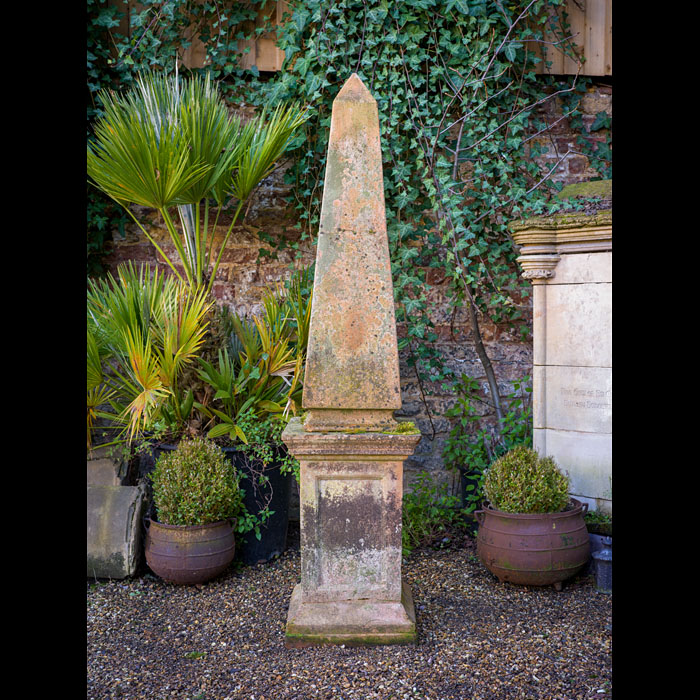
A large 19th century obelisk in a buff terracotta, with its original plinth. The surface of the obelisk has developed a beautiful patina, and it would make the most perfect garden centrepiece.
English, mid-19th century.
View our collection of: Antique, old vintage fountains, sculptures, garden furniture and statuary
|
Width |
Height |
|
|
15"
38 cms |
63 13⁄16"
162 cms |
|
|
|
|
|
-
 Sold
Sold
Stock: 12781
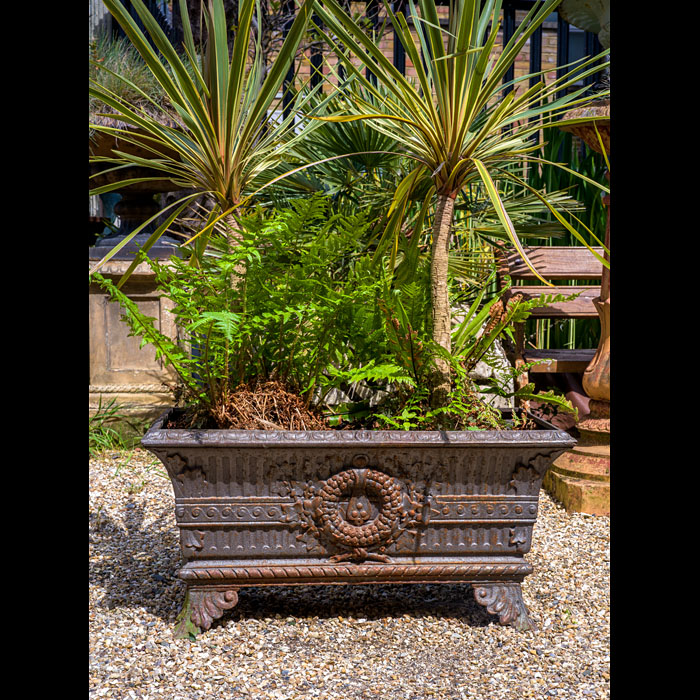
A near pair of antique cast iron plant holders or jardinières in the Roman Revival manner, with raised cast detail of olive branch, laurel wreath and ribbons on one, and raised cast wreath and ivy leaf on the other, each rests on four acanthus style feet.
English Victorian mid 19th century.
View our collection of: decorative antiques and furnishings
|
Width |
Height |
Depth |
|
29 1⁄2"
75 cms |
13 3⁄8"
34 cms |
14 3⁄16"
36 cms |
|
|
|
|
-
 Sold
Sold
Stock: 16556
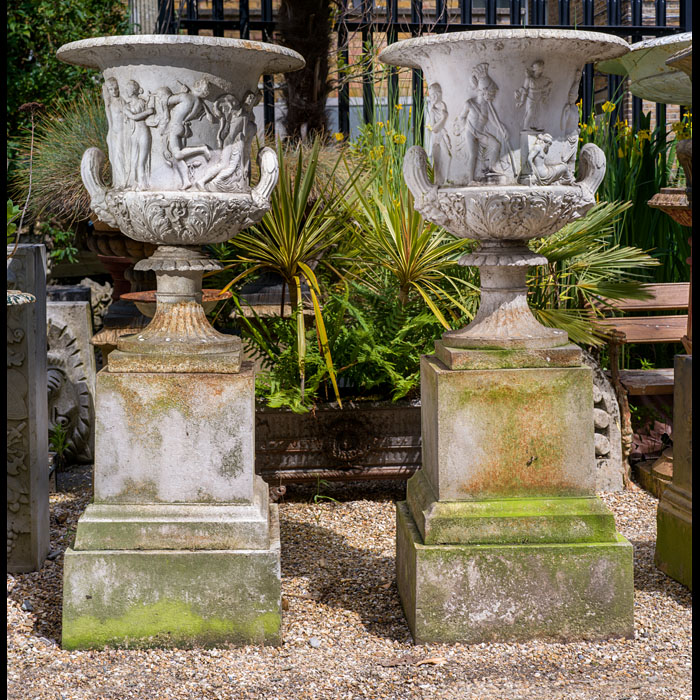
A rare pair of large cast iron Handyside urns after the the Medici Vase. These urns were manufactured by the renowned Andrew Handyside & Co Foundry, and as illustrated in the catalogue, are a near pair, with a different subject to the bas-relief friezes. The right is a faithful copy to the original Medici Vase, now on display at the Uffizi in Florence. Both are mounted on their original pedestals.
English, c.1851.
Notes: The Handyside Foundry exhibited this model at the Great Exhibition of 1851, as it was, and still remains, one of the most popular subjects from antiquity.
Having returned from his uncle's engineering business in Russia, the young engineer Andrew Handyside took over the Britannia iron works in Derby in 1848, a foundry that was known for the quality of its casting, owing to the fine sand that could be found in the region. He made a wide range of materials in cast iron, from garden ornaments, to iron buildings and bridges.
View our collection of: decorative antiques and furnishings
|
Width |
Height |
Depth |
| Urn & Base |
23 5⁄8"
60 cms |
54 1⁄4"
138 cms |
23 5⁄8"
60 cms |
| Base |
19 1⁄4"
49 cms |
24"
61 cms |
|
-
 Sold
Sold
Stock: 6560
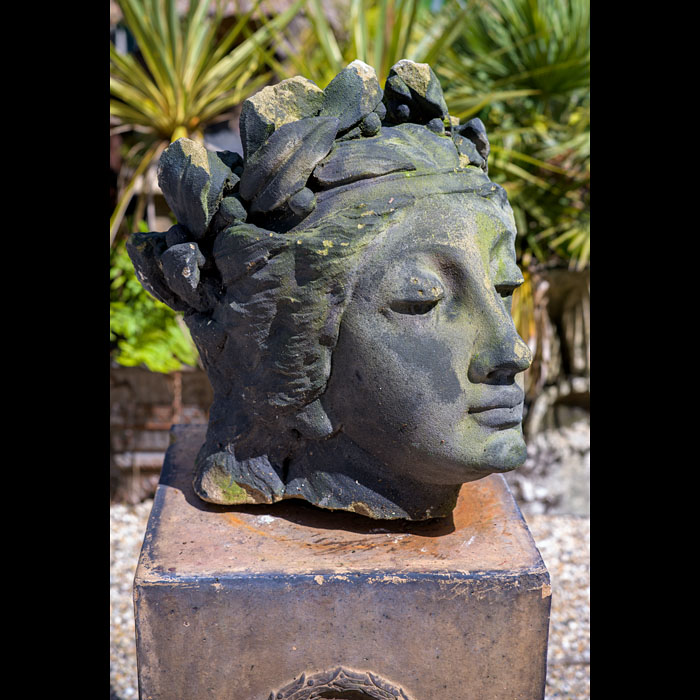
A large boldly carved stone head of a classical figure wearing a laurel wreath. Originally mounted on the parapet of a building in Glasgow, built in the Greek Revival style, now demolished.
Very much in the style of - or perhaps even designed by - the great Scottish architect Alexander 'Greek' Thomson.
Scottish,19th Century.
View our collection of: Antique sculptures, carvings, bronzes, plaques and tablets
|
Width |
Height |
Depth |
|
15"
38 cms |
17 11⁄16"
45 cms |
15 3⁄8"
39 cms |
|
|
|
|
-
 Sold
Sold
Stock: 16530
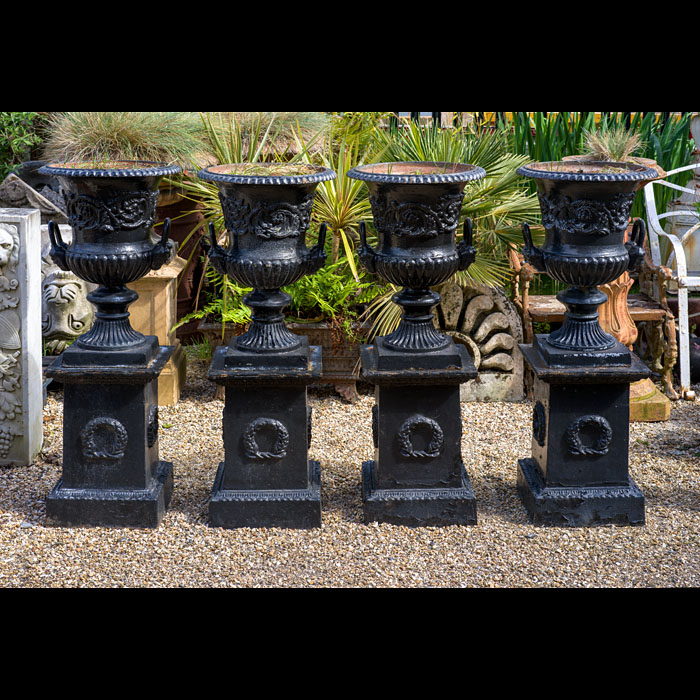
A set of two black painted cast iron garden urns on stands, attributed to the Handyside Foundry. This set of campana urns with flared lobed rims, have lovely acanthine foliate embellishments to the body, over gadrooned socles. They are mounted with mask and loop handles. The plinths are simply decorated with bound laurel wreaths.
English, mid 19th century.
Notes: The renowned American landscape gardener, writer and horticulturalist Andrew Jackson Downing (October 31, 1815 – July 28, 1852) speaks fondly of the garden urn stating,“There are few objects that may, with so much good effect, be introduced into the scenery of pleasure grounds, surrounding a tasteful villa, as the vase in its many varied forms.”
View our collection of: decorative antiques and furnishings
|
Width |
Height |
Depth |
| Urn & Base |
17 1⁄4"
44 cms |
44"
111.8 cms |
17 1⁄4"
44 cms |
| Base |
13 5⁄8"
34.5 cms |
19 13⁄16"
50.3 cms |
|
-
 Sold
Sold
Stock: 16182
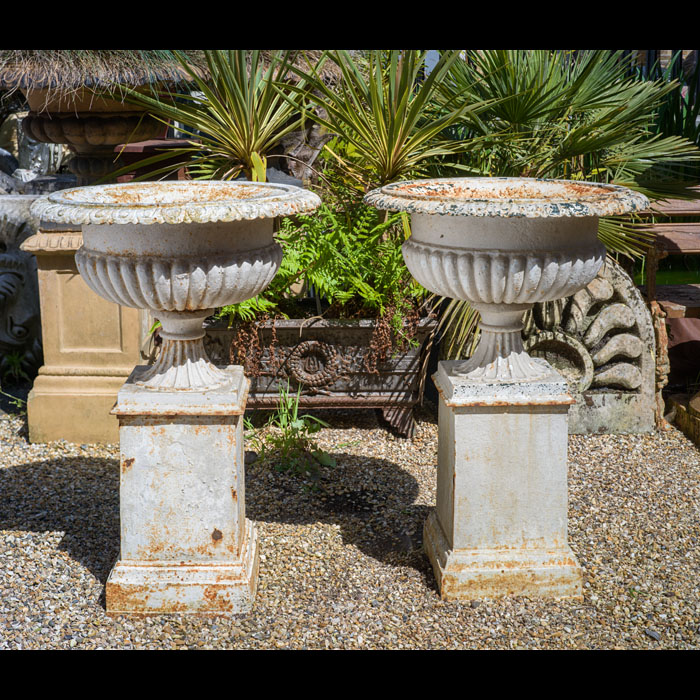
A pair of Victorian painted cast iron garden urns or planters, with scrolled rims over gadrooned bodies, raised on cast iron plinths.
Victorian, c.1890.
View our collection of: Antique, old vintage fountains, sculptures, garden furniture and statuary
|
Diameter |
Height |
|
|
21 1⁄4"
54 cms |
31 1⁄2"
80 cms |
|
|
|
|
|
-
 Sold
Sold
Stock: 16401
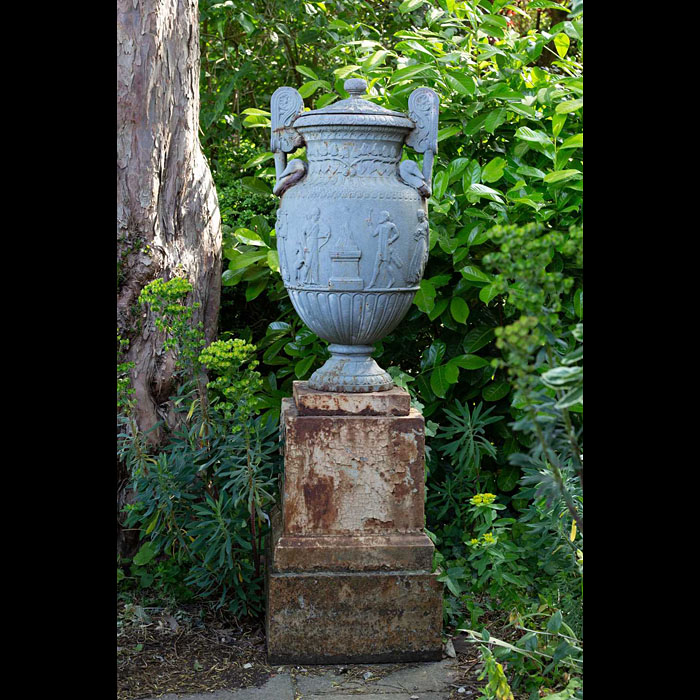
A fine 19th century copy of the Sosibios vase by Handyside & Co in cast iron, with its original stepped plinth base. This was originally retailed by the Handyside foundry at £4 in 1880.
Notes:
This cast iron urn is modelled on a white marble urn from antiquity by Sosibios, a Greek sculptor working in Rome around 50 BC. An English version of the model was later in the 1874 catalogue of A. Handyside and Co. of Derby and London. A set of four painted cast-iron urns of this model sold at Christie's Wrotham Park, 4 June 1991 lot 120. .
View our collection of: Antique, old vintage fountains, sculptures, garden furniture and statuary
|
Width |
Height |
Depth |
|
16 7⁄8"
43 cms |
33 1⁄8"
84 cms |
|
| Overall |
|
57 1⁄8"
145 cms |
|
-
 Sold
Sold
Stock: 15738
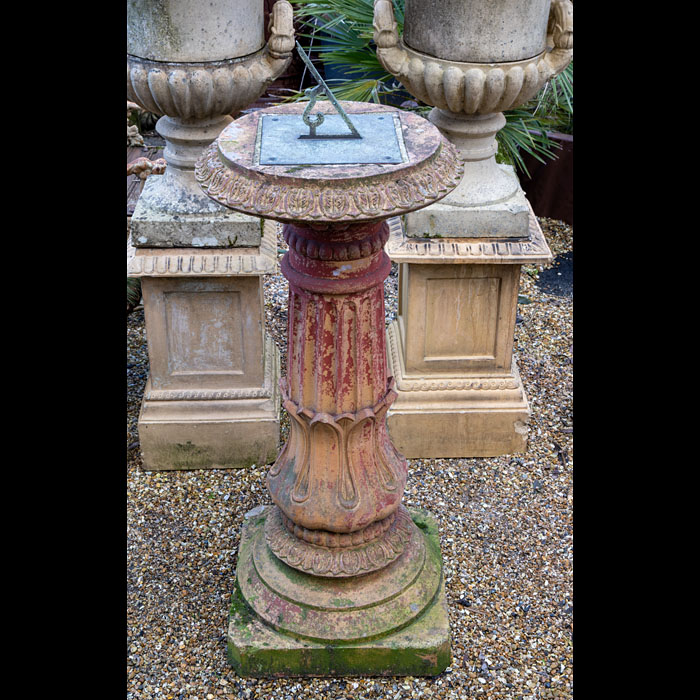
A Victorian Sundial with a gardrooned fireclay pedestal, possibly Garnick. An associated bronze sundial that is a perfect fit.
English or Scottish, c. 1880.
View our collection of: Antique, old vintage fountains, sculptures, garden furniture and statuary
-
 Sold
Sold
Stock: 4506
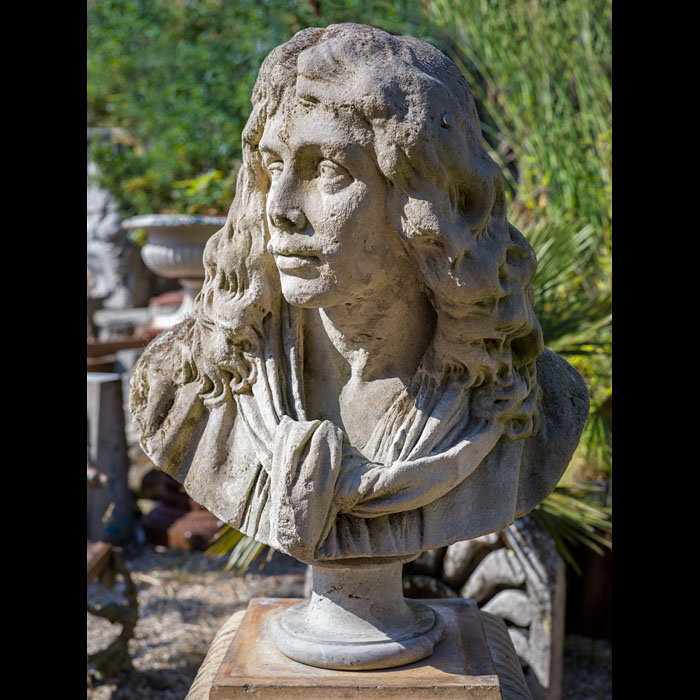
A weathered carved stone bust of Moliere, the 17th century French playwright (1622 - 1673) looking to dexter.
French, circa 1720.
Link to: Antique sculptures, carvings, plaques, tablets, coats of arms and panels
|
width |
height |
|
|
21"
53.3 cms |
25"
63.5 cms |
|
|
|
|
|
-
 Sold
Sold
Stock: 15739
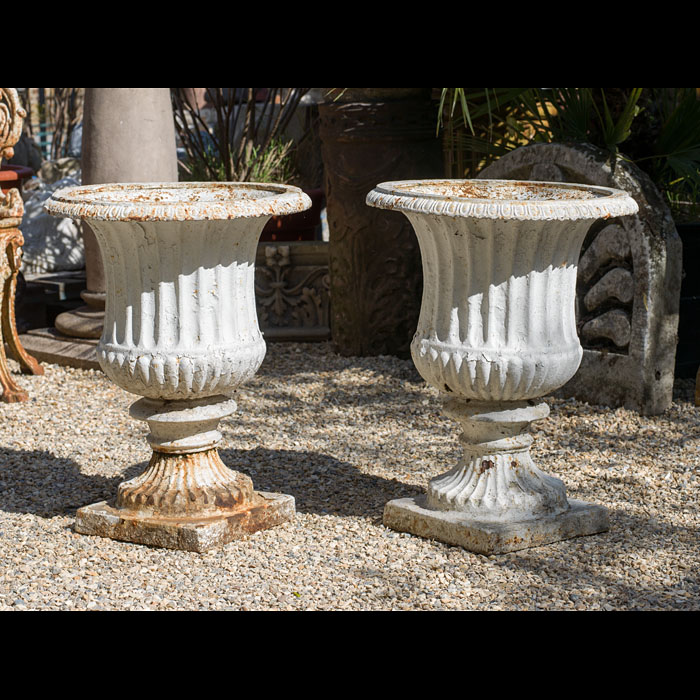
A pair of Victorian cast iron campana garden urns with gadrooned fluted bodies on square bases.
English, c.1880.
View our collection of: Antique, old vintage fountains, sculptures, garden furniture and statuary
|
Diameter |
Height |
Base |
|
16 1⁄8"
41 cms |
20 1⁄2"
52 cms |
9 5⁄8"
24.5 cms |
|
|
|
|
-
 Sold
Sold
Stock: 15936
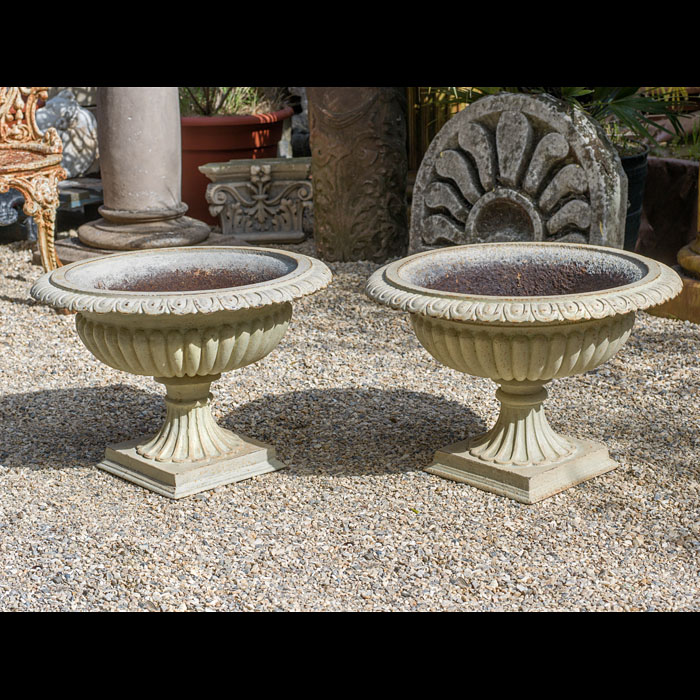
A pair of elegant nineteenth-century cast iron garden urns, each with a flared egg and dart rim over a gadrooned body mounted on a square base. Perfect as planters on plinths or perhaps a wall.
English c.1880.
View our collection of: Antique, old vintage fountains, sculptures, garden furniture and statuary
|
Diameter |
Height |
Base |
|
22"
56 cms |
15"
38 cms |
10"
25.3 cms |
|
|
|
|
-
 Sold
Sold
Stock: 15818
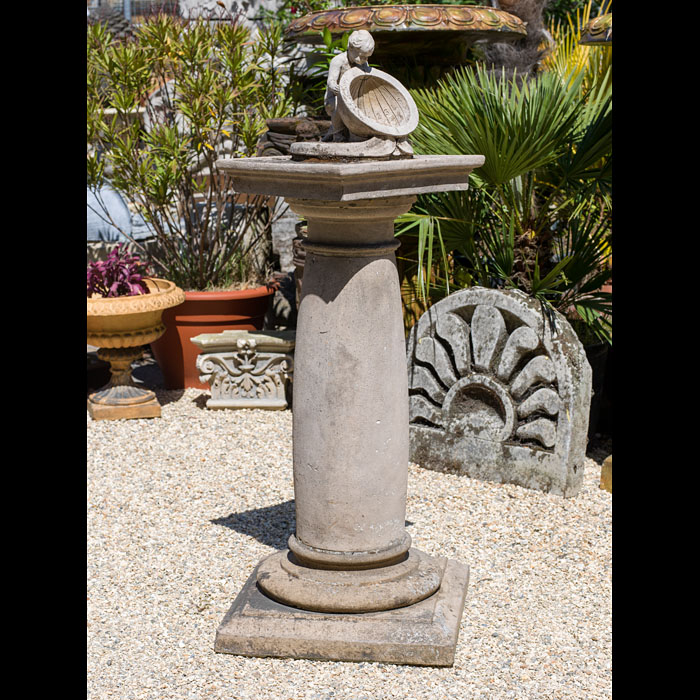
A rare antique terracotta sundial attributed to the Compton Pottery of Guildford. The sundial comprises a putto holding the dial and this is mounted on a Tuscan column.
A Sundial of this type would have been used by garden designers such as Gertrude Jeckyll for her Arts and Crafts style gardens, and would look fabulous in a number of settings.
English, c. 1910.
Photo before restoration.
Notes: The Compton Pottery was a well-regarded pottery specialising in garden pots and ornamentation. They received commissions from well known figures, including Lutyens, and their work was stocked at Liberty and Co. It was founded by Mary Watts in 1900, and they operated until 1956.
View our collection of: Antique, old vintage fountains, sculptures, garden furniture and statuary
|
Width |
Height |
Depth |
|
18 7⁄8"
48 cms |
48"
122 cms |
18 7⁄8"
48 cms |
|
|
|
|
-
 Sold
Sold
Stock: 13151
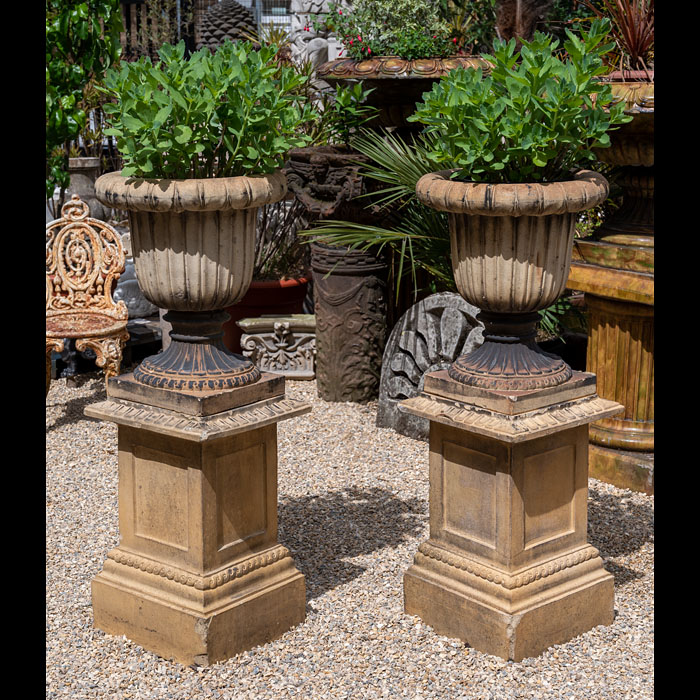
A pair of Victorian terracotta campana garden urns on Doulton plinths, the urns with scalloped and fluted sides and rims mounted on elegantly understated plinths.
English Circa 1870.
View our collection of: Antique, old vintage fountains, sculptures, garden furniture and statuary
|
Width |
Height |
|
| urns |
17 11⁄16"
45 cms |
21 1⁄4"
54 cms |
|
| bases |
15"
38 cms |
23 3⁄16"
59 cms |
|
-
 Sold
Sold
Stock: 9191
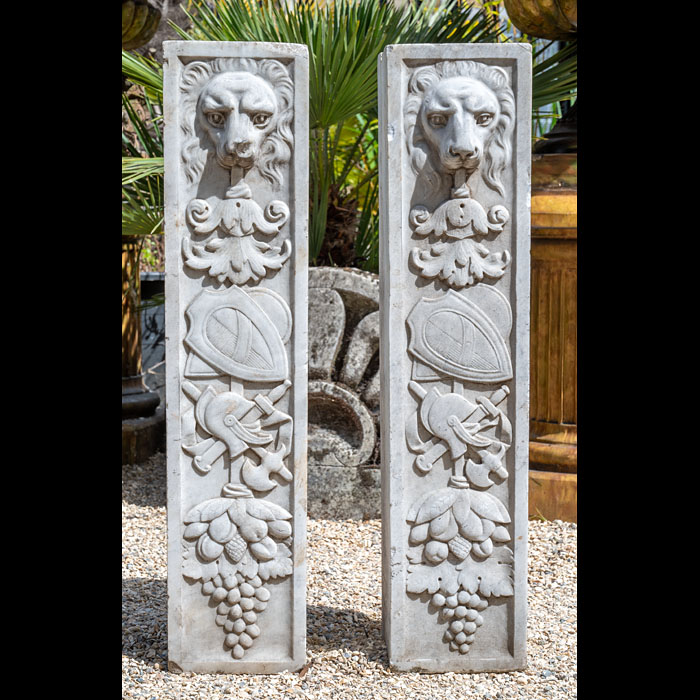
A pair Carrara marble plinths, carved in low relief, with lion masks, armorial shields and foliate motifs. Would work wonderfully as garden ornaments, or as plinths for urns or other statuary.
Italian, 19th century.
View our collection of: Antique, old vintage fountains, sculptures, garden furniture and statuary
|
Width |
Height |
Depth |
|
7 13⁄16"
19.8 cms |
35 3⁄8"
90 cms |
7 1⁄8"
18 cms |
|
|
|
|
-
 Sold
Sold
Stock: 15831
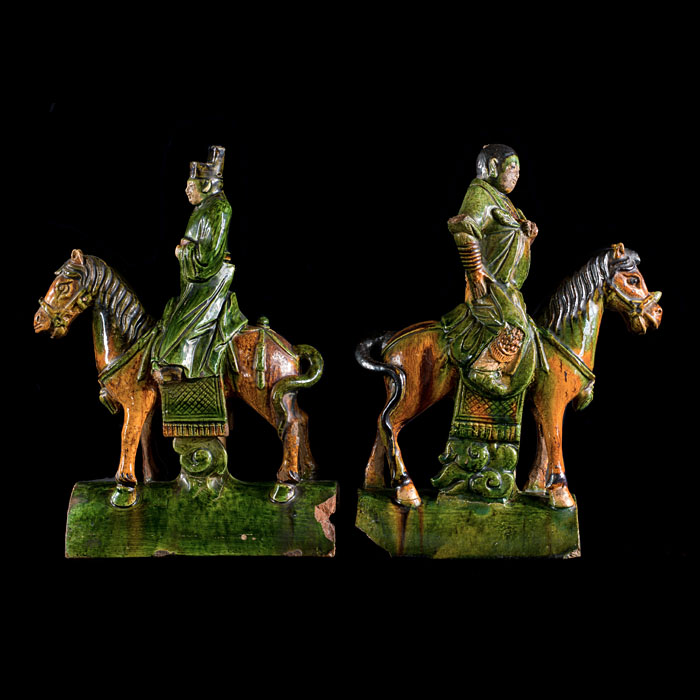
A pair of Chinese Ming Dynasty (1368-1644) sancai-glazed ridge tiles modelled as horse and rider. Both tiles are glazed in rich green and amber, the horses in a rich amber and the riders wearing green robes.
Tiles of this kind were often used on public and private buildings to ward off evil spirits. The work of glazed tiles is known in China as Liuli Wa, literally `roof-tile of glass`, a term dating back to the Tang Dynasty. According to traditional Chinese beliefs, roofs are a platform of communication between the world of the living and the realm of the spirits.
Chinese, late 15th - early 16th century.
Sancai means three glazes, the basic colours of this glaze are green, cream and amber, but more colours were sometimes used. It was a lead glaze and the addition of metal oxides created the limited palate of green and amber and sometimes blue. In the Tang Dynasty (618 to 907 AD), grave goods were often glazed in this manner and there was a resurgence in popularity for this glaze in the Ming period.
View our collection of: decorative antiques and furnishings
-
 Sold
Sold
Stock: 15786
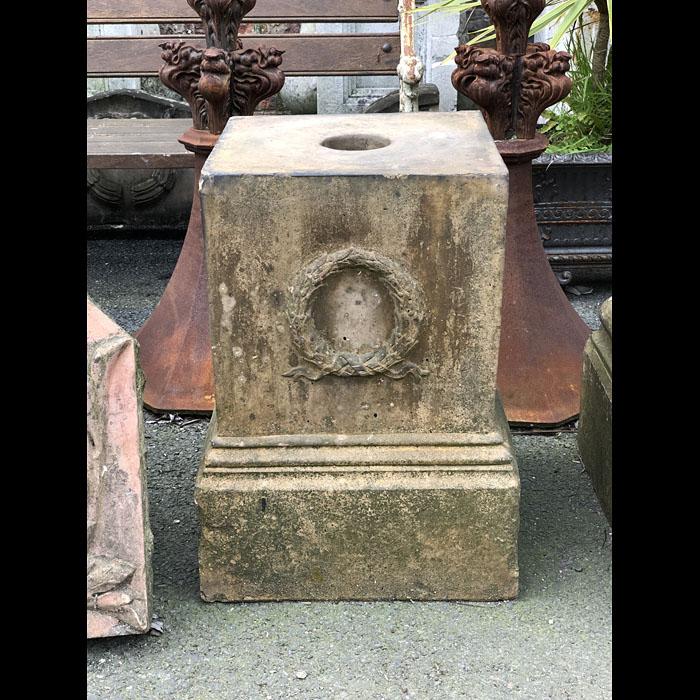
A moulded terracotta garden pedestal.
|
Width |
Height |
Depth |
| Top |
15"
38 cms |
23 3⁄16"
59 cms |
15"
38 cms |
| Bottom |
17 11⁄16"
45 cms |
|
|
-
 Sold
Sold
Stock: 15724
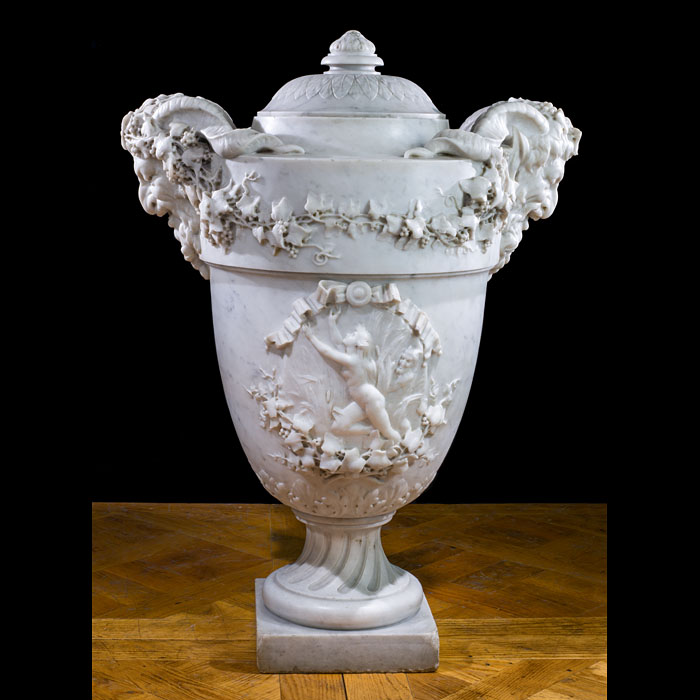
A large and finely carved 19th century Italian marble lidded urn, decorated with trailing grape vines and and dramatic handles, modelled as grinning and horned satyrs. The body of the urn is carved with two cartouches, one depicting a nymph bathing in a pool whilst a satyr observes, hidden by bullrushes. The other depicts an a satyr and a goat in an amorous and playful embrace. After the antique.
Italian, c.1850.
Could be situated in a sheltered spot in a garden or courtyard, but equally suited to an interior setting.
View our collection of: decorative antiques and furnishings
|
Width |
Height |
Depth |
|
28"
71 cms |
40"
101.5 cms |
19 11⁄16"
50 cms |
|
|
|
|
-
 Sold
Sold
Stock: 15598
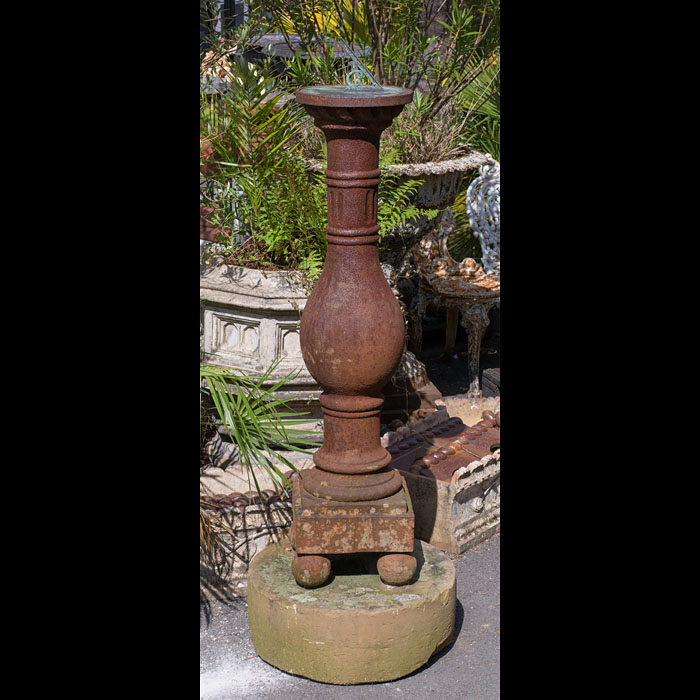
An 18th century bronze sundial, the dial plate inscribed Bywater Dawson & Co. Liverpool, on a substantial 19th century cast iron base, mounted on a millstone.
English, 18th century with 19th century base.
View our collection of: Antique, old vintage fountains, sculptures, garden furniture and statuary
|
Width |
Height |
Depth |
| without stone base |
12 5⁄8"
32 cms |
53 1⁄8"
135 cms |
12 5⁄8"
32 cms |
| with stone base |
19 11⁄16"
50 cms |
61"
155 cms |
|
-
 Sold
Sold
Stock: 15516
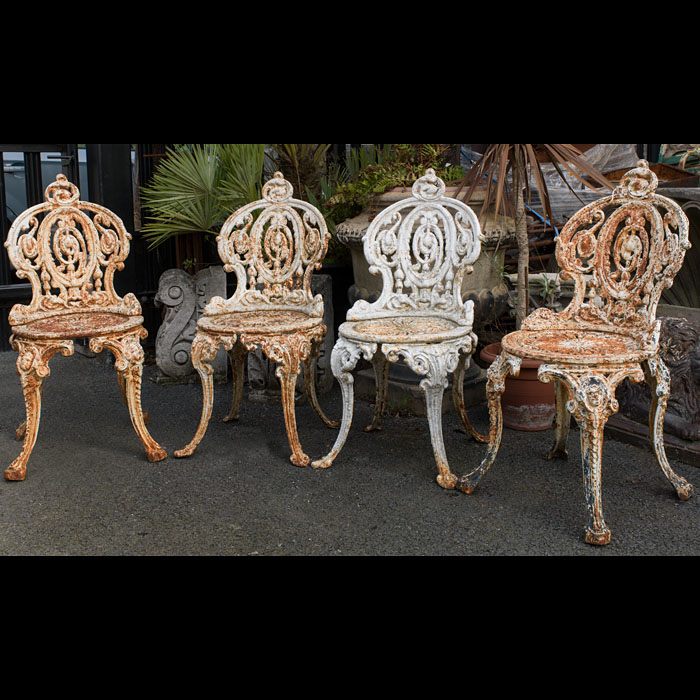
A set of four Victorian cast iron garden chairs, with spoon backs featuring crisply cast decoration above circular seats cast with a radiating circular pattern and resting on elaborate cabriole shaped legs. This is not an identical set, as is formed form 2 very similar pairs. Very much in the Coalbrookdale style, and would work well as a patio set as they are very heavy.
English, c.1880
Photographs before restoration.
View our collection: Antique, old vintage fountains, sculptures, garden furniture and statuary
|
Width |
Height |
Depth |
|
16 1⁄2"
42 cms |
32 1⁄4"
82 cms |
20 1⁄2"
52 cms |
|
|
|
|
-
 Sold
Sold
Stock: 12480
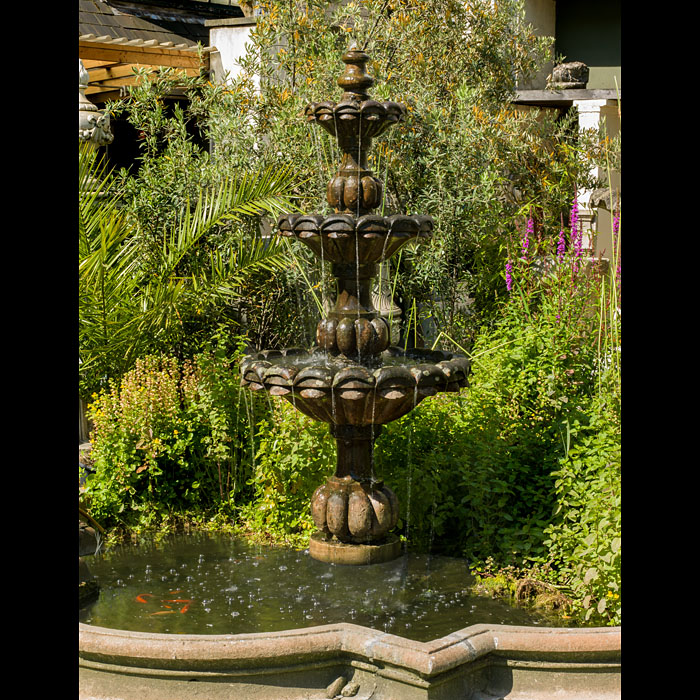
A rather fine Baroque style three tier garden fountain carved in patinated Doddington Sandstone. The three strongly carved ascending bowls each rest on ornate and sturdy baluster stems. As the water flows the air is filled with the soothing and gently tinkling sounds of a babbling brook. Shown with clover shaped basin SNo 12697 not included. French, mid 19th century
Link to: Antique, old vintage fountains, sculptures, garden furniture and statuary
|
Width |
Height |
Depth |
|
39 3⁄8"
100 cms |
83 1⁄2"
212 cms |
39 3⁄8"
100 cms |
|
|
|
|
-
 Sold
Sold
Stock: 8638
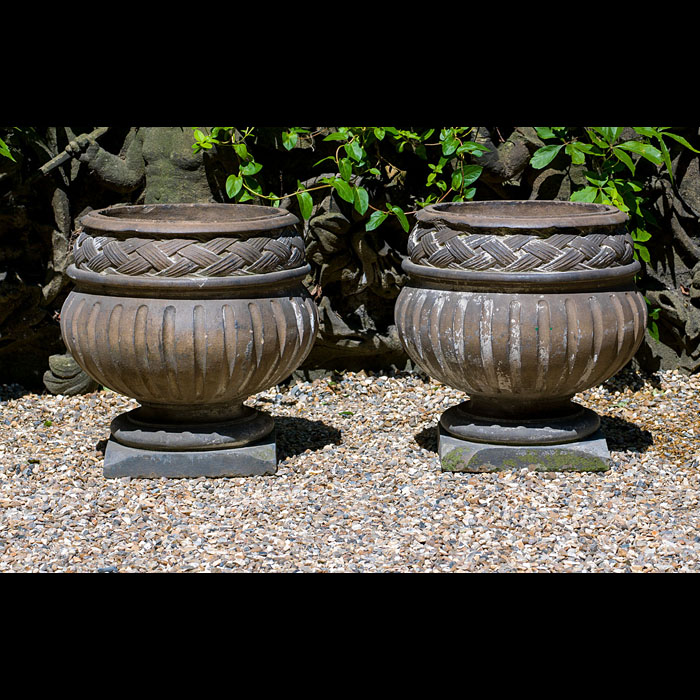
A pair of large, early 20th century, terracotta garden urns in the Baroque manner with gadrooned bowls and plaited basket weave band collars around the necks.
English, circa 1930.
Link to: Antique, old vintage fountains, sculptures, garden furniture and statuary
|
width |
height |
|
|
16 1⁄8"
41 cms |
15 11⁄16"
40 cms |
|
|
|
|
|
-
 Sold
Sold
Stock: 7814
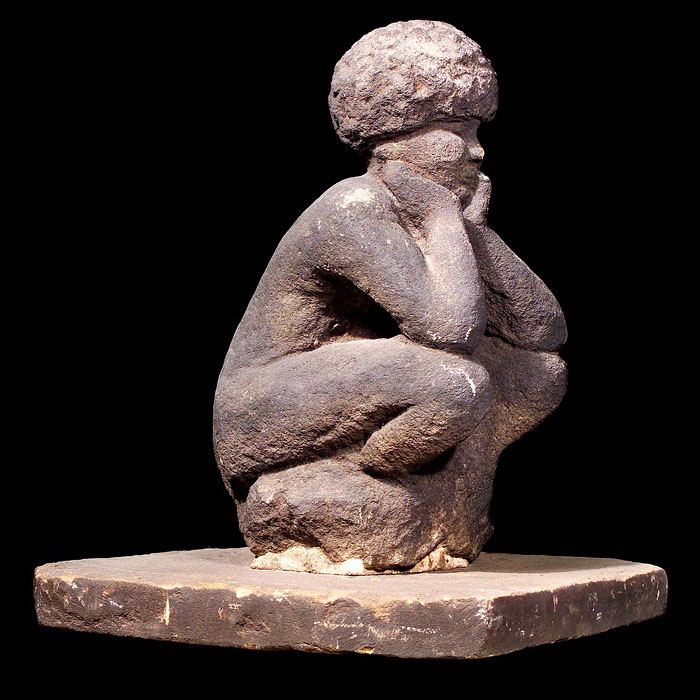
A small Victorian, crudely carved mill stone grit garden figure of a seated, mop headed boy.
English, circa 1880.
Link to: Antique, old vintage fountains, sculptures, garden furniture and statuary
|
width |
height |
depth |
|
14 13⁄16"
37.5 cms |
18"
45.7 cms |
15 11⁄16"
40 cms |
|
|
|
|
-
 Sold
Sold
Stock: 12733
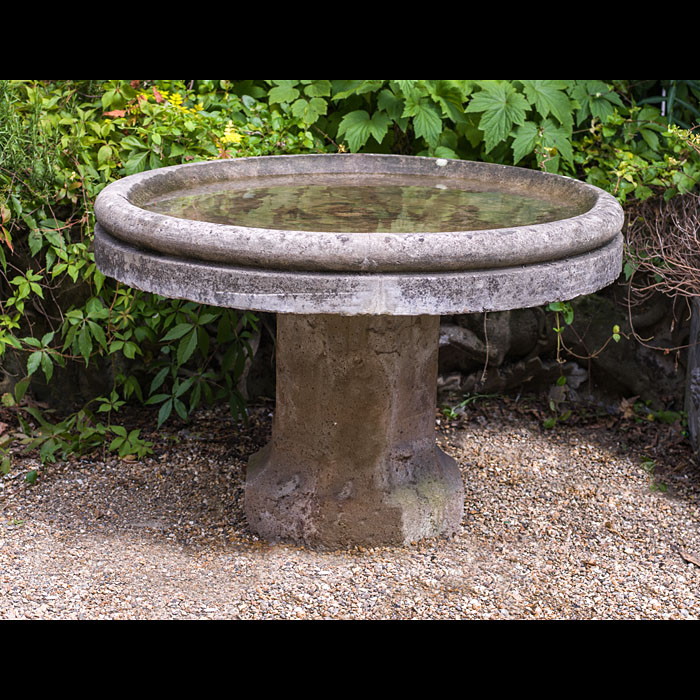
A large, early 20th century composition stone garden bird bath. The deep, round bowl is raised on an octagonal pedestal.
English, circa 1920.
Image before restoration.
Link to: Antique, old vintage fountains, sculptures, garden furniture and statuary
|
Width |
Height |
|
| top |
48"
122 cms |
32 1⁄4"
82 cms |
|
| base |
19 11⁄16"
50 cms |
|
|
-
 Sold
Sold
Stock: 15138
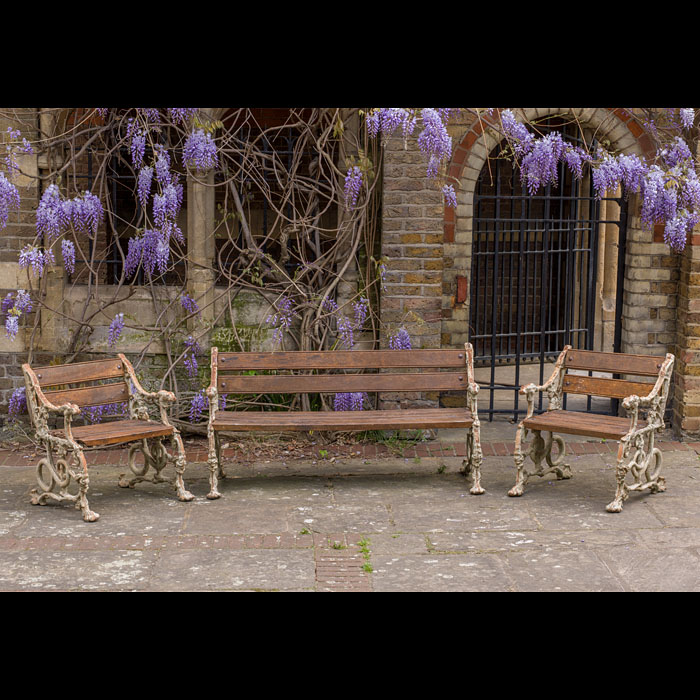
A suite of 20th century Coalbrookdale style garden seats consisting of a pair of chairs and a two seater bench. Entwined serpents and vines enhance the cast iron bench ends with hand rests terminating in hound dog heads. The back and seats are hardwood possibly mahogany. English, mid 20th century.
Photo before restoration.
Link to: Antique, old vintage fountains, sculptures, garden furniture and statuary
|
Width |
Height |
Depth |
| Larger |
56 1⁄4"
143 cms |
28 1⁄4"
72 cms |
23 5⁄8"
60 cms |
| Smaller |
25 5⁄8"
65 cms |
28 1⁄4"
72 cms |
|
-
 Sold
Sold
Stock: 15245
A very large 20th century bronze fountain. Water spouts from the mouths of four grotesque masques, mounted at the top on a large gadrooned urn, and tumbles down into a wide bowl. From there it falls out of the mouths of twelve lion mask heads and down into a basin.The great bowl is held aloft by four elegant classical female figures with the names MERANIE, LALOIRE, LASAONE & VERONIC carved into the base of each figure. Two of these names may be referring to the French rivers the Saone and the Loire.
French, 20th century. .
Shown with clover shaped basin SNo 12697 not included.
Link to: Antique, old vintage fountains, sculptures, garden furniture and statuary
|
Diameter |
Height |
|
|
60 3⁄16"
153 cms |
84 1⁄4"
214 cms |
|
|
|
|
|
-
 Sold
Sold
Stock: 14778
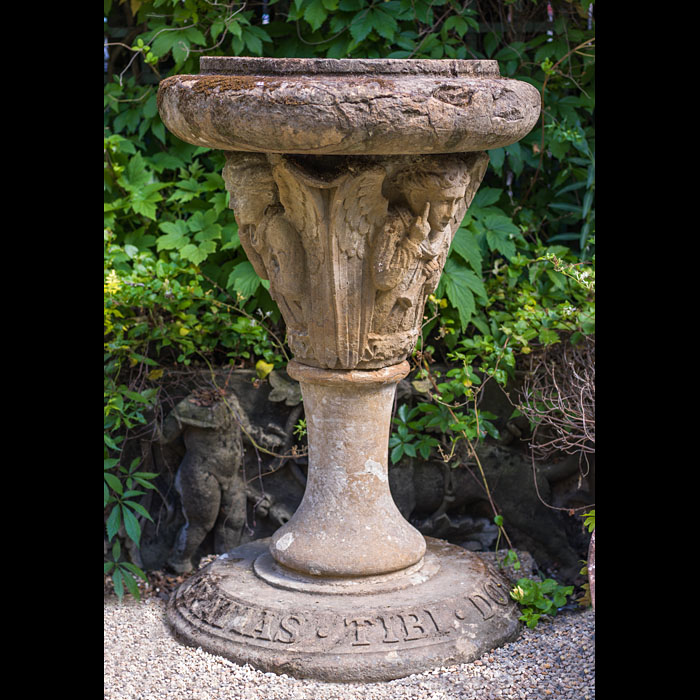
An Arts and Crafts stone bird bath or garden ornament. The wide bowl rests on carved effigies of three angels pointing to heaven supported by a stone socle plinth. Around the foot of the plinth are the Gratias Tibi Domine (Thanks be to God) and the initials G K & D.
English, 19th century.
Photos before restoration.
Link to: Antique, old vintage fountains, sculptures, garden furniture and statuary
|
Width |
Height |
Depth |
|
31 1⁄2"
80 cms |
49 5⁄8"
126 cms |
31 1⁄2"
80 cms |
|
|
|
|
-
 Sold
Sold
Stock: 14081
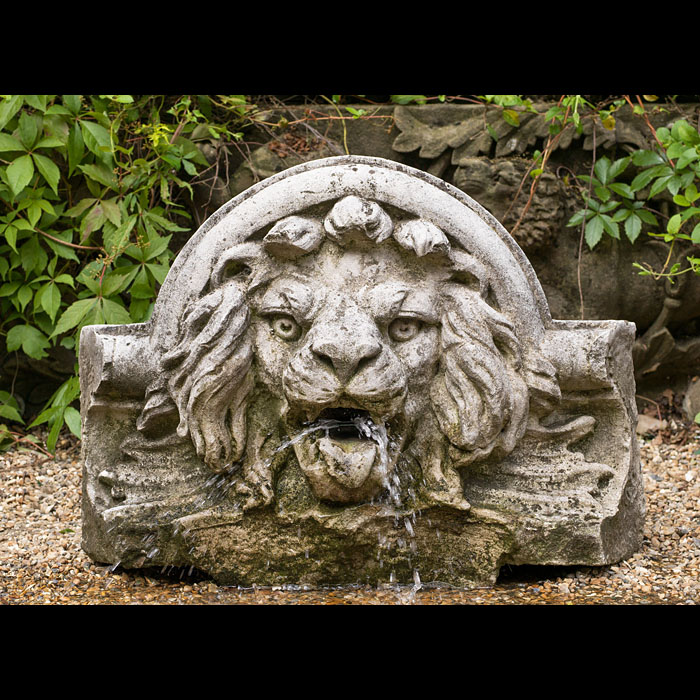
A large Victorian carved Portland Stone antique lion fountain head.
English mid 19th century.
Link to: Antique, old vintage fountains, sculptures, garden furniture and statuary
|
width |
height |
depth |
|
31 1⁄8"
79 cms |
22 13⁄16"
58 cms |
16 1⁄2"
42 cms |
|
|
|
|
-
 Sold
Sold
Stock: 7347
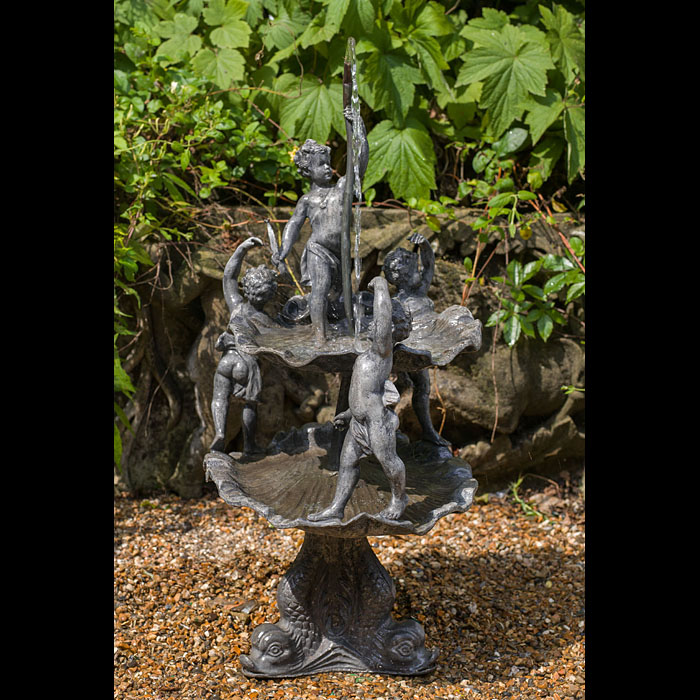
A small Baroque style replica lead water fountain with two tiered scalloped basins surmounted by four playful putti on a tri-dolphin base. English, late 20th century.
Link to: Antique, old vintage fountains, sculptures, garden furniture and statuary
|
width |
height |
depth |
| External |
20 1⁄2"
52 cms |
33 1⁄2"
85 cms |
15 11⁄16"
40 cms |
|
|
|
|
-
 Sold
Sold
Stock: 13277
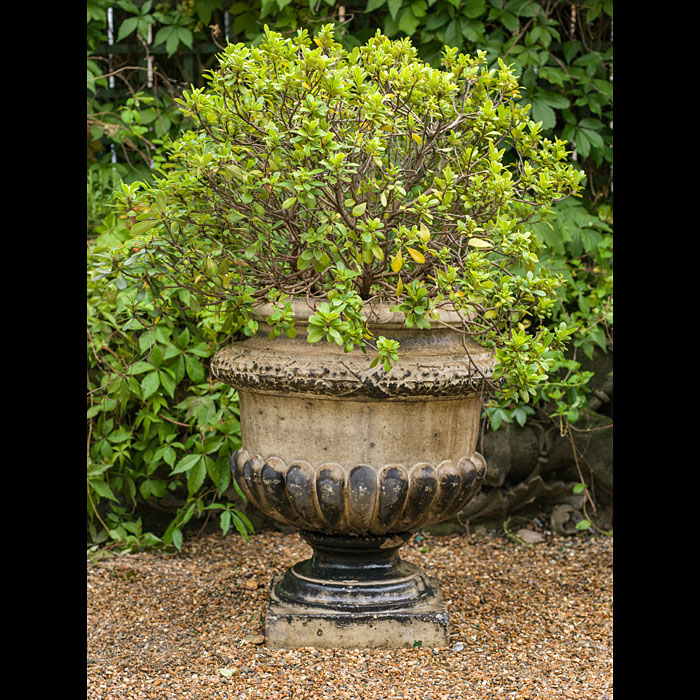
A large Edwardian terracotta garden urn attributed to the Garnick Fireclay Company, Lanarkshire, Scotland. The body with ribbon-tied oak leaf bands on lobed undersides above a waisted socle and square section base, the base stamped with the name Garnick. Probably once one of a pair.
Scottish, early 20th century.
Link to: Antique, old vintage fountains, sculptures, garden furniture and statuary
|
Width |
Height |
Depth |
|
26 3⁄8"
67 cms |
30 1⁄4"
77 cms |
|
|
|
|
|
-
 Sold
Sold
Stock: 14868
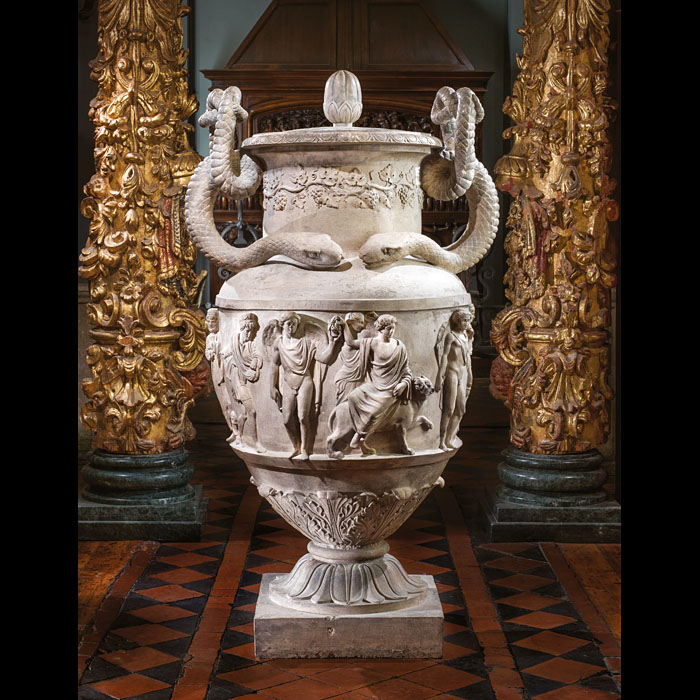
A monumental Regency stoneware urn, in the manner of the antique. This magnificent urn recalls the form of an Ancient Greek krater - a large vessel for mixing wine. The entire urn is dedicated to the God of Wine Bacchus (Dionysus), with a band of fruiting vines to the neck, underneath which is high-relief frieze depicting a Bacchic procession or thiasus, with revellers carrying cups of wine, bunches of grapes and the other trappings of a hedonistic feast. The serpents fashioned into handles are characteristic of Bacchic iconography and they are often associated with Bacchus, as Maenads - female followers of the God - wore snakes in their hair.
This urn is unlike any other we have come across, but echoes the popularity of themes from classical antiquity, made even more popular by the phenomenon of the Grand Tour. The great engraver and antiquarian Giovanni Battista Piranesi even produced an engraved volume solely dedicated to the designs of urns in the antique style. He then manufactured urns in his Italian workshops. In England, the famous manufacturer Eleanor Coade and designers such as Thomas Hope also produced urns in the antique manner for an eager public.
The urn is made from a weather impervious stoneware, similar to the famous Coade stone. Restoration to the handles has been carried out.
Link to: Antique, old vintage fountains, sculptures, garden furniture and statuary
|
Width |
Height |
Depth |
|
29 7⁄8"
76 cms |
57 7⁄8"
147 cms |
32 11⁄16"
83 cms |
| Base |
18 1⁄2"
47 cms |
|
|
-
 Sold
Sold
Stock: 7604
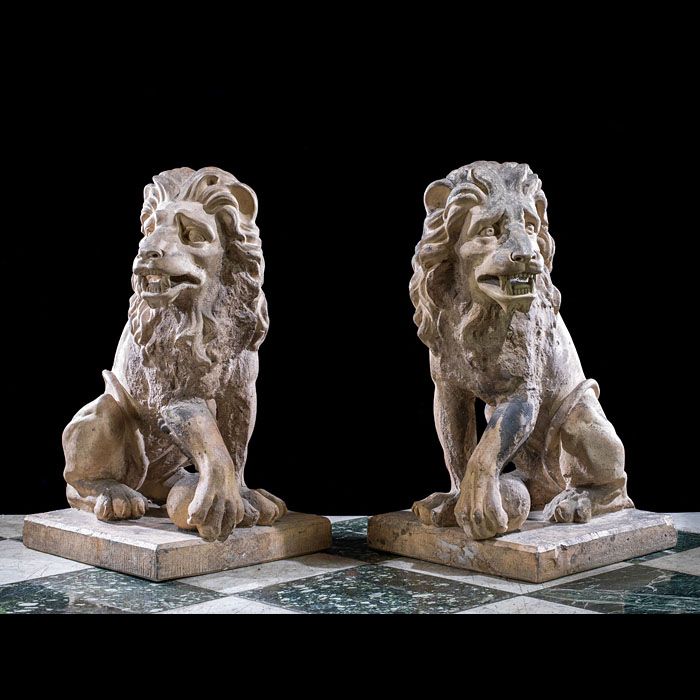
A pair of large restored terracotta lions modelled in the Baroque manner, seated on bases which are stamped, ‘Fabrique de Lapujade, Ouvriers Associes, Ses de Negrier, Toulouse.’ With restorations. French, 19th century.
Link to: Antique, old vintage fountains, sculptures, garden furniture and statuary
|
width |
height |
depth |
|
18 1⁄2"
47 cms |
33"
83.8 cms |
20"
50.8 cms |
|
|
|
|
-
 Sold
Sold
Stock: 15004
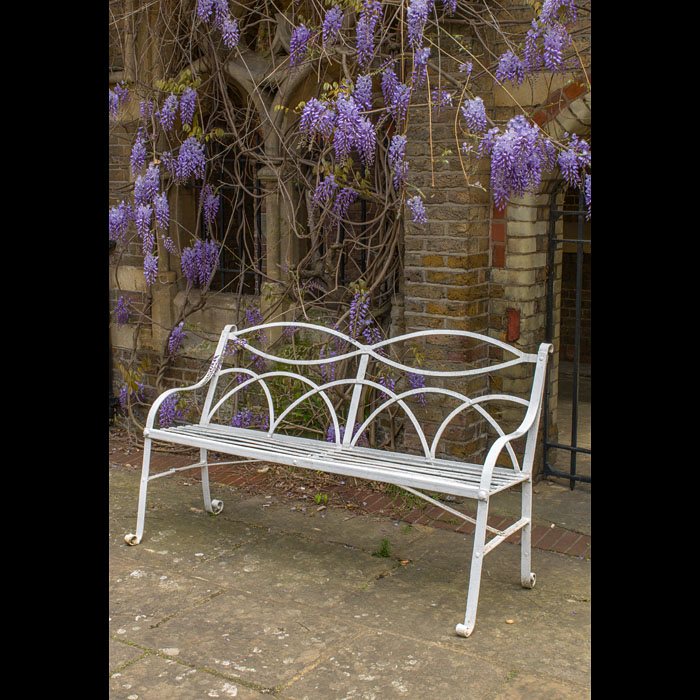
An elegant white painted Regency wrought iron garden seat with an oval and arched sectioned back above a slatted seat with curled feet and a bowed cross-stretcher. English, early 19th century.
Link to: Antique, old vintage fountains, sculptures, garden furniture and statuary
|
Width |
Height |
Depth |
|
70 1⁄8"
178 cms |
38 5⁄8"
98 cms |
29 7⁄8"
76 cms |
|
|
|
|
Antique Garden Furniture
Antique garden furniture and ornamentation is a great way to introduce character to an outside space, whether a sprawling garden, a small patio or even a balcony.
Antique garden furniture was built to last almost without exception, with both the materials and the craftsmanship involved being of a far greater quality than we expect from the modern equivalents.
If you are looking for a focal point it can be created with antique garden ornaments. The practice of garden embellishment originated with the Romans, who displayed copies of Greek statues in their villa gardens. Later, during the Renaissance period, Roman statuary was recovered to be incorporated into Italian gardens.
There is an enormously diverse range of garden furniture styles. Antique cast iron garden furniture goes far beyond the ornate Rococo style to the elegance of Regency design. There are also examples of gothic, arts and crafts and aesthetic pieces to name but a few! These are often sturdier and longer lasting than antique wooden garden furniture and they can also be painted in any colour of choice, or even leave the patina from decades of use.
Gardens can be intriguing places as well as places of leisure, rest and contemplation. Antique garden statues can create a focus or point of interest in a garden scheme. For example, Antique garden urns reflect the Roman and Greek vases of old. They are often made from terracotta, cast iron, stone and marble which all weather to develop a patina over the centuries. These can very quickly evoke the elegance and intrigue of a classical garden.
Our selection of Antique stone garden ornaments are often reclaimed from historic buildings, stately homes or important landmarks that have either been demolished or remodelled.
Perhaps the most dramatic of all garden ornamentation is the antique garden fountain. Not only do they create visual impact, but they can also create a variety of sounds, from the merest trickle of water in the background to a majestic cascade. Whichever one you choose, it is bound to be a showstopper.
Antique garden accessories, as you can see, come in all shapes and sizes, so if you are looking for something to fit a specific space in your garden, please do not hesitate to contact us for assistance.