Victorian Mirror Guide: How To Identify An Antique Victorian Mirror
17 March 2026
Anthony Bridgman
Summary: Victorian mirrors and how to identify them
Victorian mirrors were grand, featuring intricate carving and rich decoration, often with Gothic or foliage motifs.
Most were large, rectangular, overmantel mirrors using dark woods such as mahogany, walnut, or rosewood.
Their designs often combined previous historical styles in contrast to the more restrained Georgian or Regency mirrors.
Victorian glass usually looks slightly wavy or imperfect, with signs of natural ageing such as cloudy silvering, dark specks, or edge foxing.
Victorian mirrors
During the reign of Queen Victoria, 1837-1901, mirrors were grand and elaborate. They tended to be heavily carved and featured bold decoration.
While the Victorians did not solely favour gilt, they often chose wooden materials such as mahogany or rosewood.
They were often overmantel mirrors, ornate with well-decorated frames. The mantelpiece was the heart of the home in 19th century England and a place to display precious objects, often set above a Victorian fireplace of equally grand design.
During the Victorian era, mirrors often showed signs of styles from previous periods. For more details, read our full guide on: The history of the mirror and its evolving style through the ages.
The earlier Regency overmantel mirrors were often horizontal in form and more modest in design. Compared to later Edwardian mirrors, Victorian mirrors tend to look heavier and more imposing, with large rectangular frames in dark woods or rich gilding and busier, more eclectic decoration.
Edwardian mirrors are generally lighter and more understated, often in paler woods, with simpler carving and more varied shapes such as ovals and shields. Victorian pieces tend to feel grand and densely ornate, while Edwardian designs moved towards cleaner lines and a less imposing presence.
Some of the Victorian mirrors in our collection
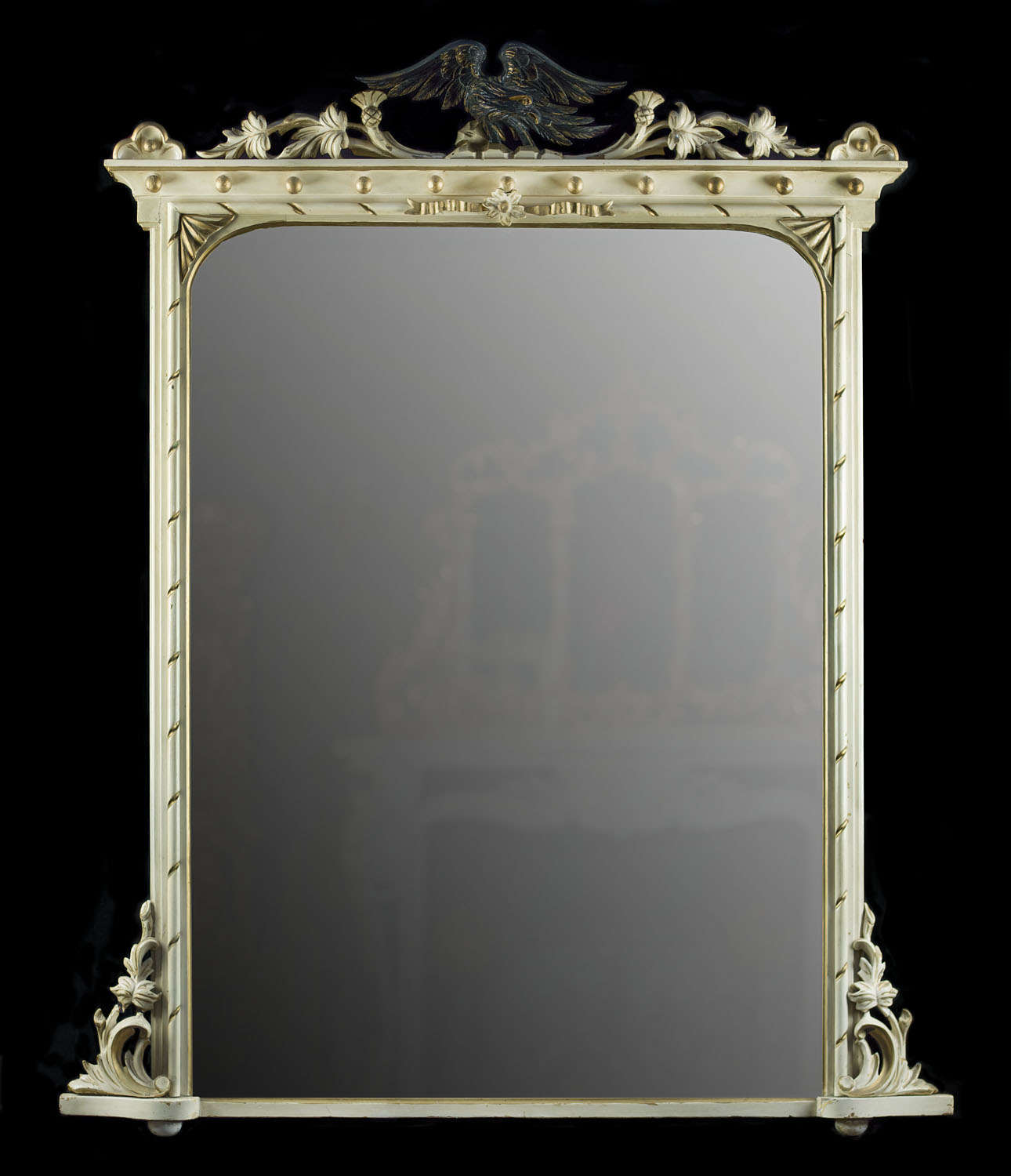
Here is a painted and gilded Victorian mirror from the mid-19th century that has a carved eagle perched between thistles above the decorative foliate detailed frame:
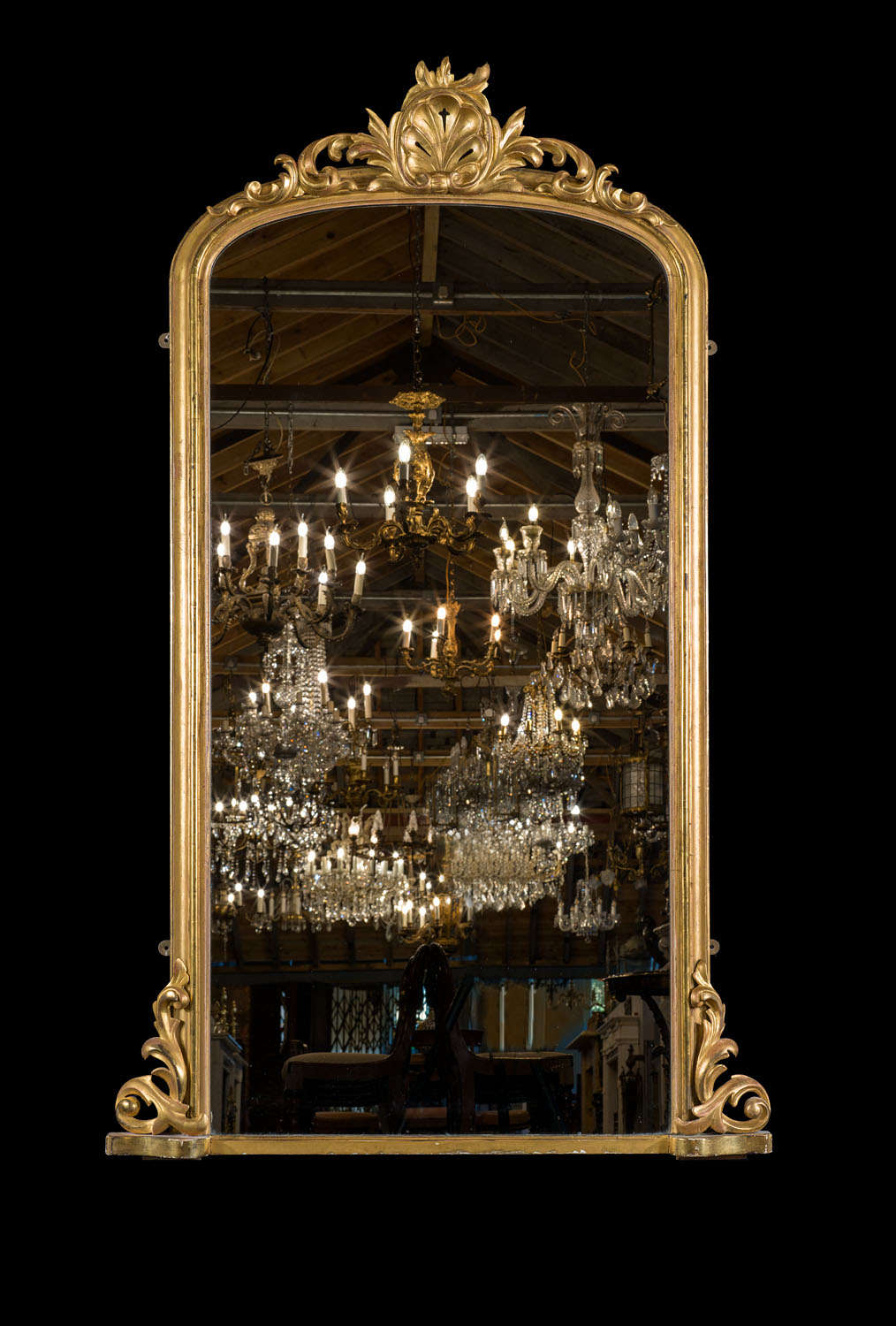
This is a charming Victorian Rococo giltwood arched overmantel mirror from c.1860. The arched frame is mounted with an acanthine and shell surmount, with this decoration echoed underneath too:
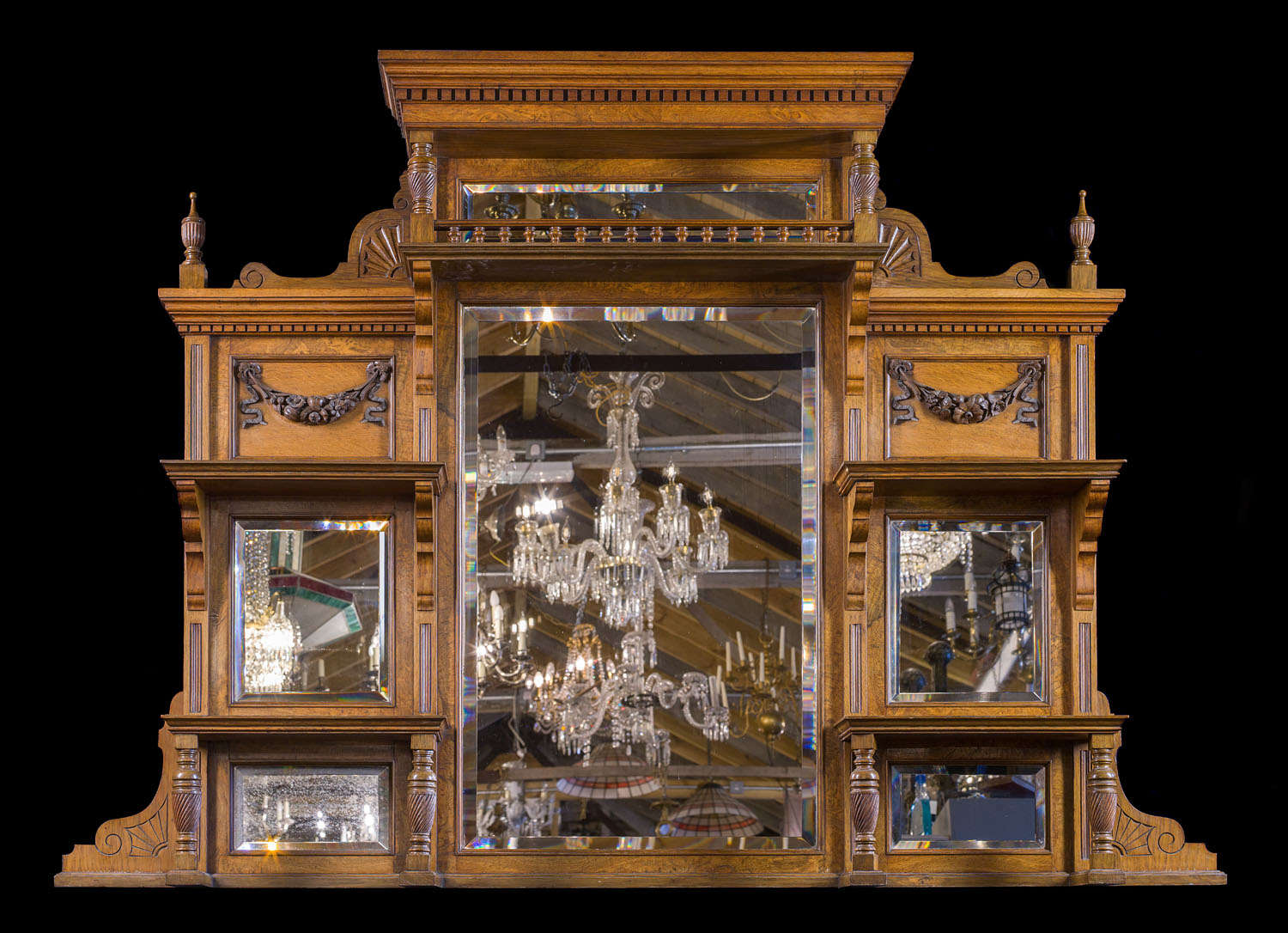
This is a fine, large Victorian pollard oak overmantle mirror from c.1870 – it has a galleried pediment, and four further shelves, each separated by bevelled mirrors:
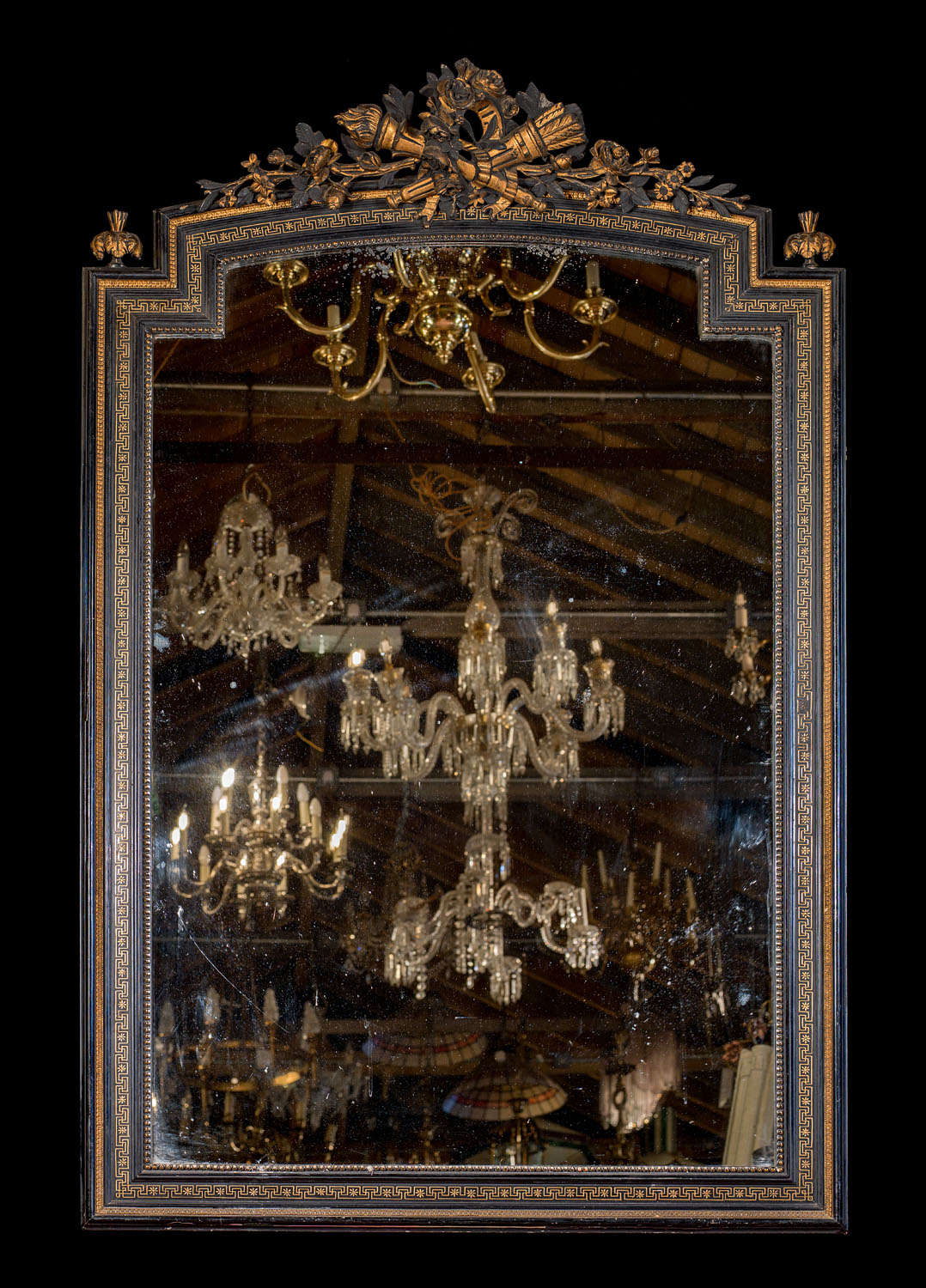
Here is a Victorian ebonised overmantel mirror from c.1880 – adopting French Louis XVI decorative motifs, such as the crossed quiver and torchere, but paired with a backdrop of gesso roses in the English taste:
This stunning, large Victorian mahogany overmantel mirror from 1880 is in the Neoclassical manner with bevelled glass, with an attractive frame of etched and cut foliate detail.
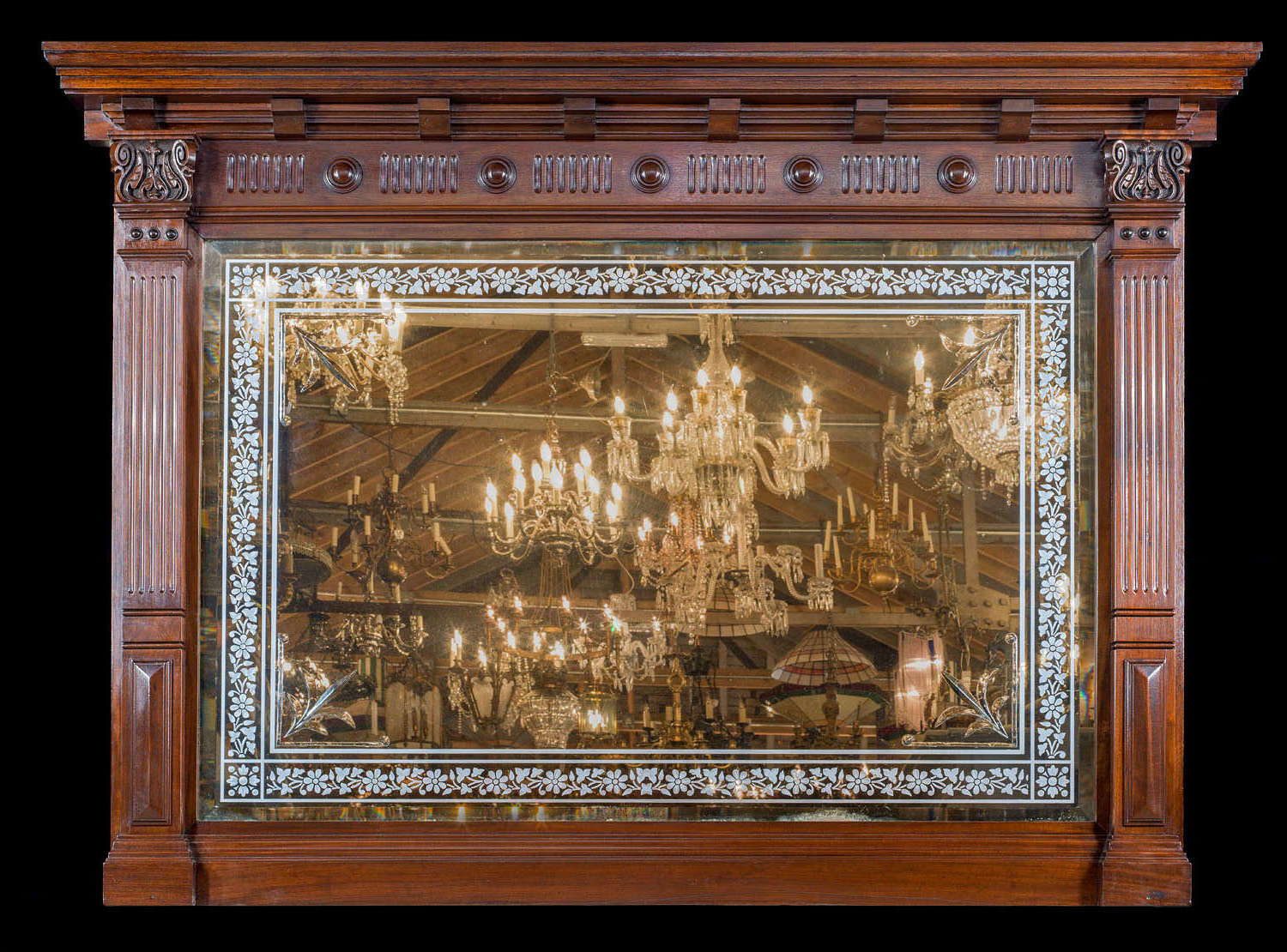
From the famous Greyhound pub in London, a renowned music venue in the 1970s and 80s, this mirror has also had an interesting later life in the 20th century. This pub played host to bands such as Thin Lizzy, The Stranglers and The Jam.
How to identify Victorian mirrors
Typical features include bold, elaborate frames with heavy carving, scrollwork, foliage or Gothic-inspired motifs, often giving a very grand feel.
Typical features include:
Bold, elaborate frames with heavy carving, scrollwork, foliage or Gothic-inspired motifs, often giving a very grand feel.
Typically rectangular overmantel or wall mirrors, often oversized in proportion compared with earlier, neater Georgian or Regency pieces.
Frames in dark woods such as mahogany, walnut or rosewood, sometimes ebonised, or finished in gilt or painted composition plaster over wood.
Designs that freely mix historical styles, rather than the more restrained, symmetrical look of Georgian mirrors.
In terms of the glass and overall condition, look for slightly wavy or imperfect glass, sometimes with small ripples or distortions, as plate glass from the 19th century is rarely perfectly flat.
In terms of the glass and overall condition, look for:
Slightly wavy or imperfect glass, sometimes with small ripples or distortions, as plate glass from the 19th century is rarely perfectly flat.
Ageing to the silvering at the back – cloudy patches, dark speckling or edge ‘foxing’ – this is consistent with long-term oxidation rather than an even, modern distress finish.
Old hand-cut or early machine-cut screws, oxidised nails and original wooden backboards, often with age cracks or dark patina.
No modern safety stickers, barcodes, or MDF back panels – these are usually indications of a reproduction or later replacement.
Look for dark hardwood or old gilding with honest wear, chips and softened edges rather than sharp, crisp modern mouldings.
When you’re inspecting a Victorian mirror, check the frame first. Look for dark hardwood or old gilding with honest wear, chips and softened edges rather than sharp, crisp modern mouldings.
Find out how to identify your antique mirror’s value with our guide.
Final thoughts: Victorian mirrors
If you’re looking for a beautiful antique mirror, we have a wide and varied selection – browse our collection of antique mirrors.
And if you enjoyed this guide, you may like some of our other most popular articles, such as:
For more than 50 years, Westland London has specialised in period chimneypieces, fireplace accessories, furniture, lighting, decorations and a wide range of other stunning architectural antiques.
If you have any queries about our antique fireplaces or anything else in our collection, please contact us.