Tudor Fireplace Guide: Tudor Revival Style Antiques
19 February 2026
Key takeaways: Tudor Revival style antiques
Architectural traits include a late Gothic perpendicular style, evolving into Renaissance influences – with steeply pitched roofs, half-timbering, prominent chimneys and Tudor arches.
Leaded glass and more brickwork were also typical features – later, there was a shift to more symmetrical Elizabethan designs in grand houses and cottages.
Tudor Revival fireplaces from the 19th to early 20th century often had limestone surrounds with carved spandrels and oak motifs.
Revival pieces can also combine Tudor elements such as the arch or carvings with the robustness of a Victorian fireplace and occasional Greek Revival motifs.
What was the Tudor style?
Henry VII was victorious at the Battle of Bosworth in 1485 (defeating Richard III, concluding the civil war called the Wars of the Roses) and so began the Tudor period.
It lasted for 118 years and saw the reigns of Henry VII, Henry VIII, Edward VI, Mary I and Elizabeth I, who had no heir. Therefore the crown passed to her cousin King James IV of Scotland (who became James I of England) ushering in the Stuart era in 1603.
Tudor architecture showed signs of late Gothic perpendicular style with early Renaissance influences. Traits included steeply pitched roofs, decorative half-timbering and prominent chimneys.
There was a shift toward more comfortable, large-windowed manor homes with asymmetrical layouts, leaded glass windows and – by the Elizabethan era – more ornate masonry and brickwork.
Doorways frequently featured a flattened arch, known as the ‘Tudor arch’. There was more use of brick, due to improved kiln technology, alongside stone and timber, with the wealthier homes showing more signs of intricate carving.
The style was clear to see in grand country houses and smaller, cosy cottages, with the latter half of the period – the Elizabethan era – introducing more symmetry and Renaissance-inspired decoration.
Famous landmarks showing the Tudor influence include Hampton Court Palace, with its red brick and elaborate chimneys.
Tudor Revival style fireplaces
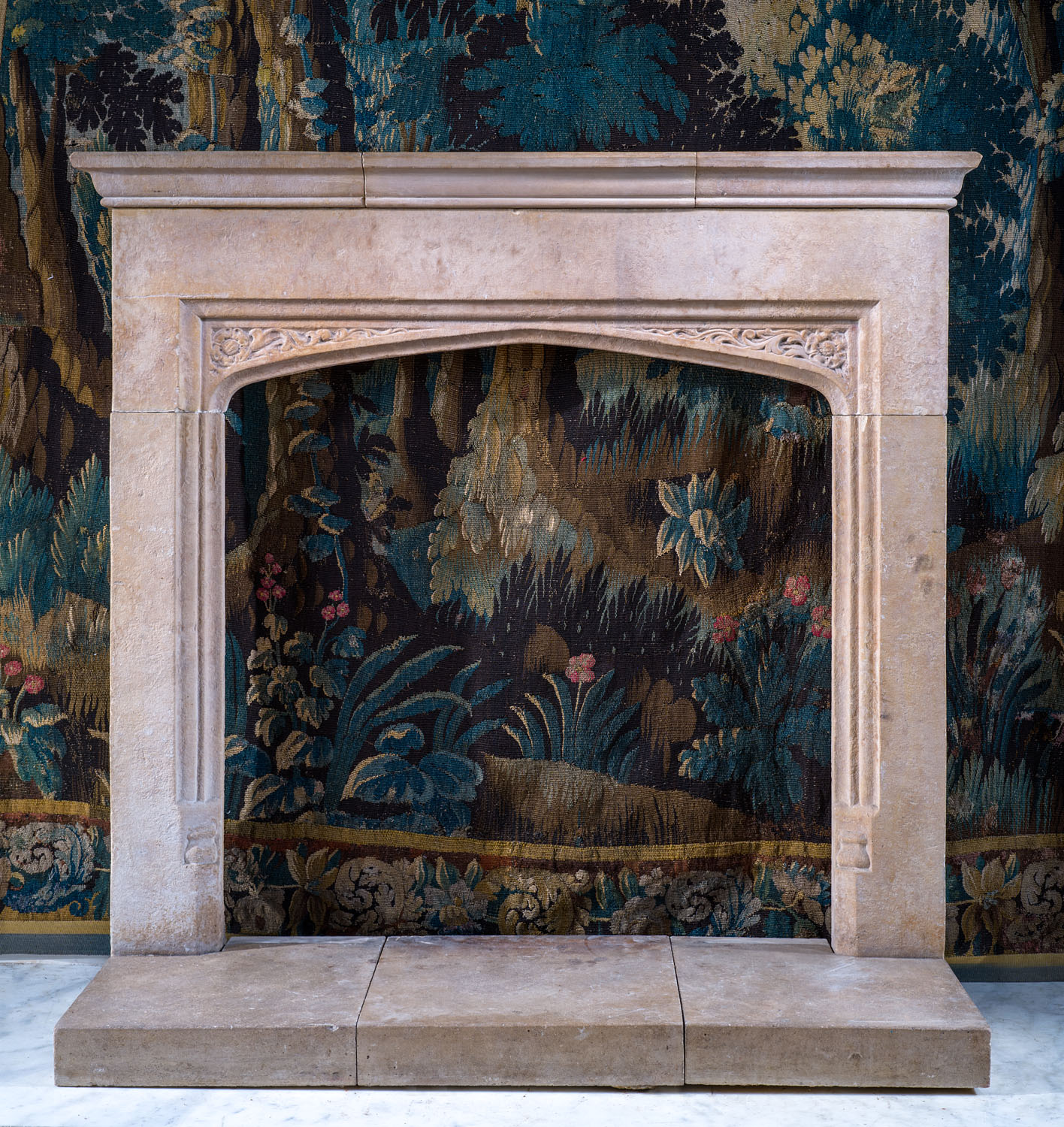
This is a Tudor style limestone fireplace surround from the 19th century with a moulded, stepped shelf above a typical Tudor arch opening. It also features oak leaf and acorn carved detail on the spandrels.
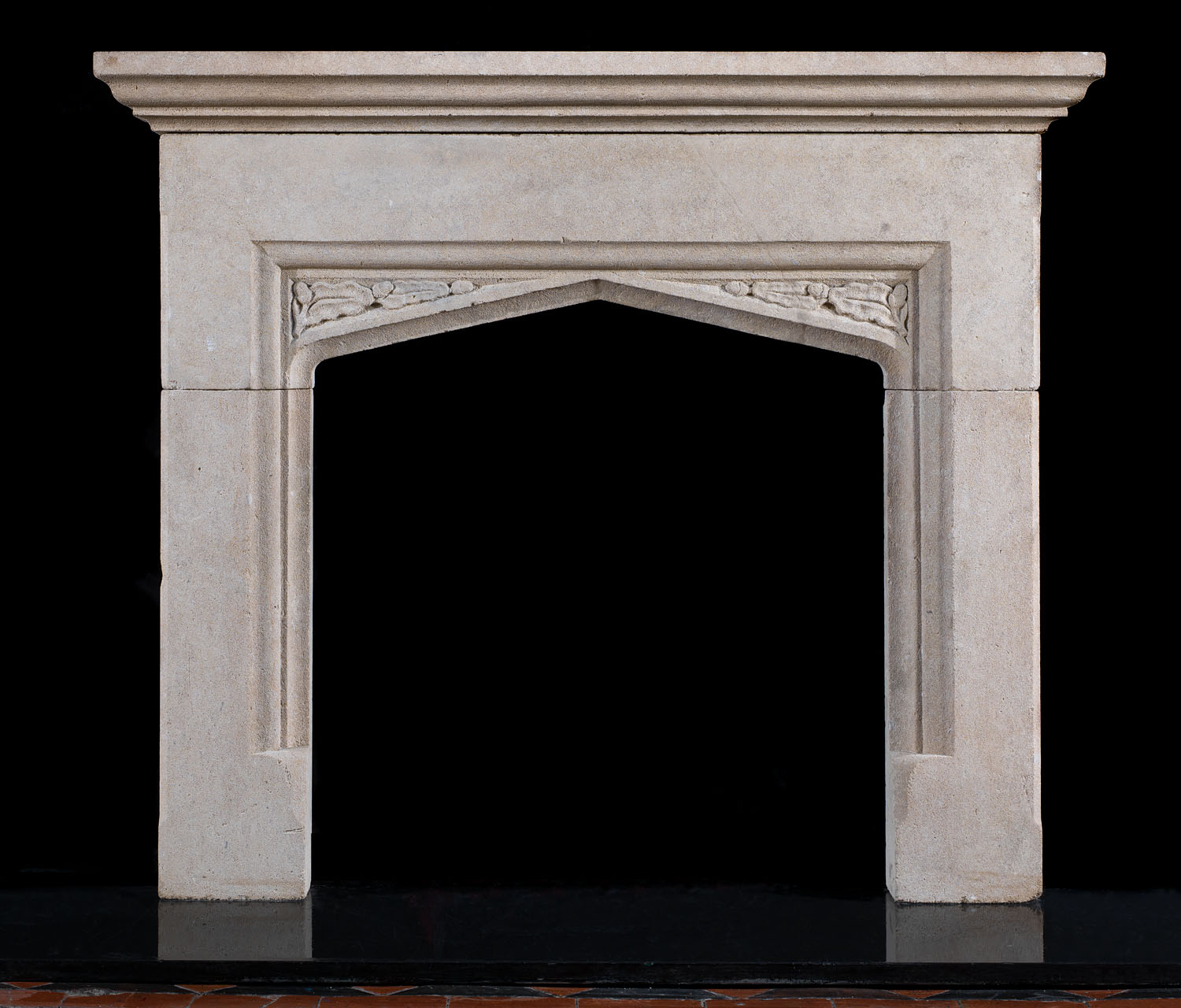
Below is a stunning, large stone trumeau fireplace from c.1860 – a grand, monumental early Victorian chimneypiece in the Renaissance Revival style.
From the Shropshire-based Hinton Old Hall, this fireplace with a blockwork trumeau is centred by an armorial and rests on a large frieze carved with floral spandrels in the Tudor style, over cantilevered, moulded jambs.
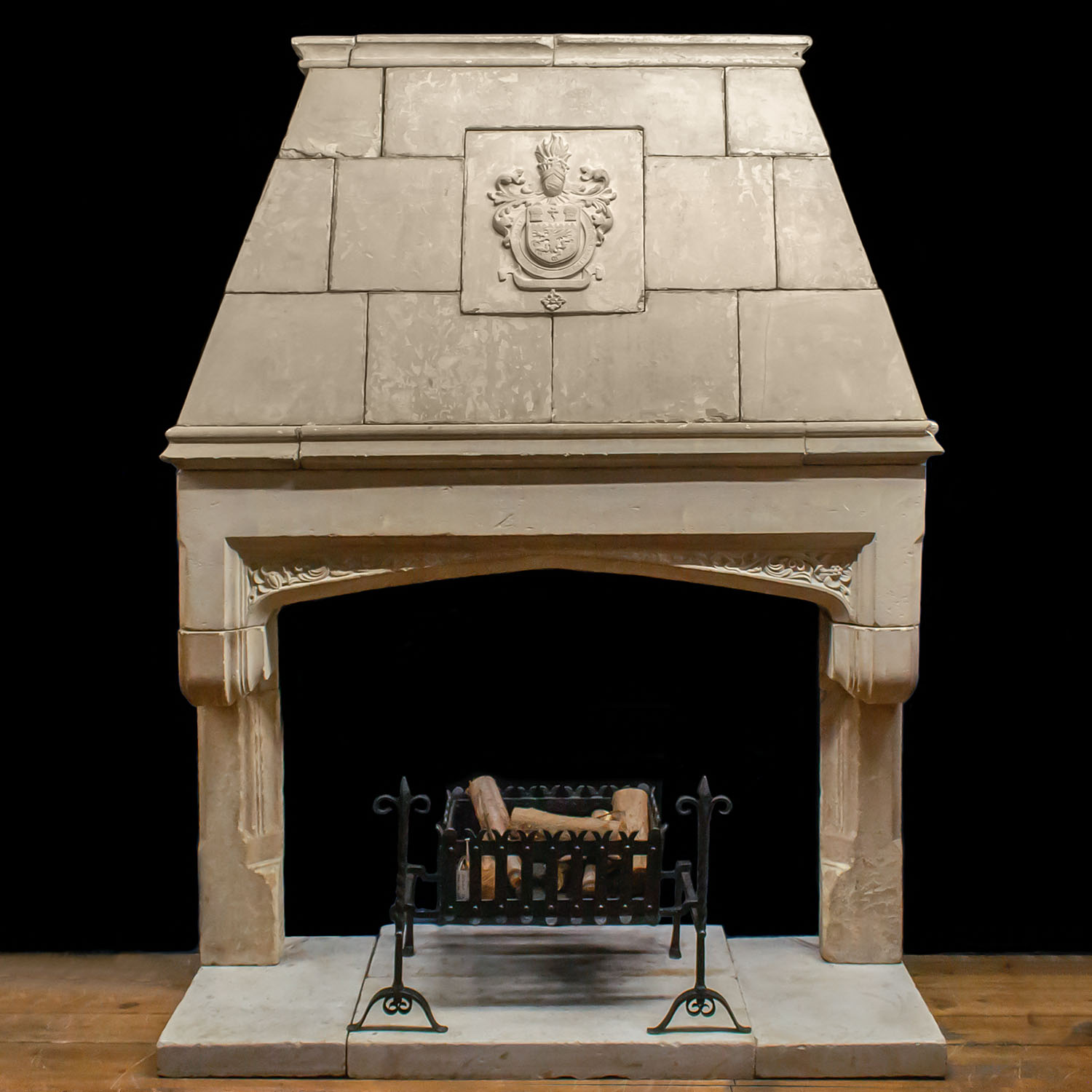
Next is a wonderful Tudor Revival stone fireplace, also from c.1860 – it is a robust Tudor Revival fireplace in a warm hued limestone, constructed from substantial blocks of stone.
Carved spandrels border the typical Tudor arch opening. Such a fireplace is usually set into the wall, surrounded by panelling.
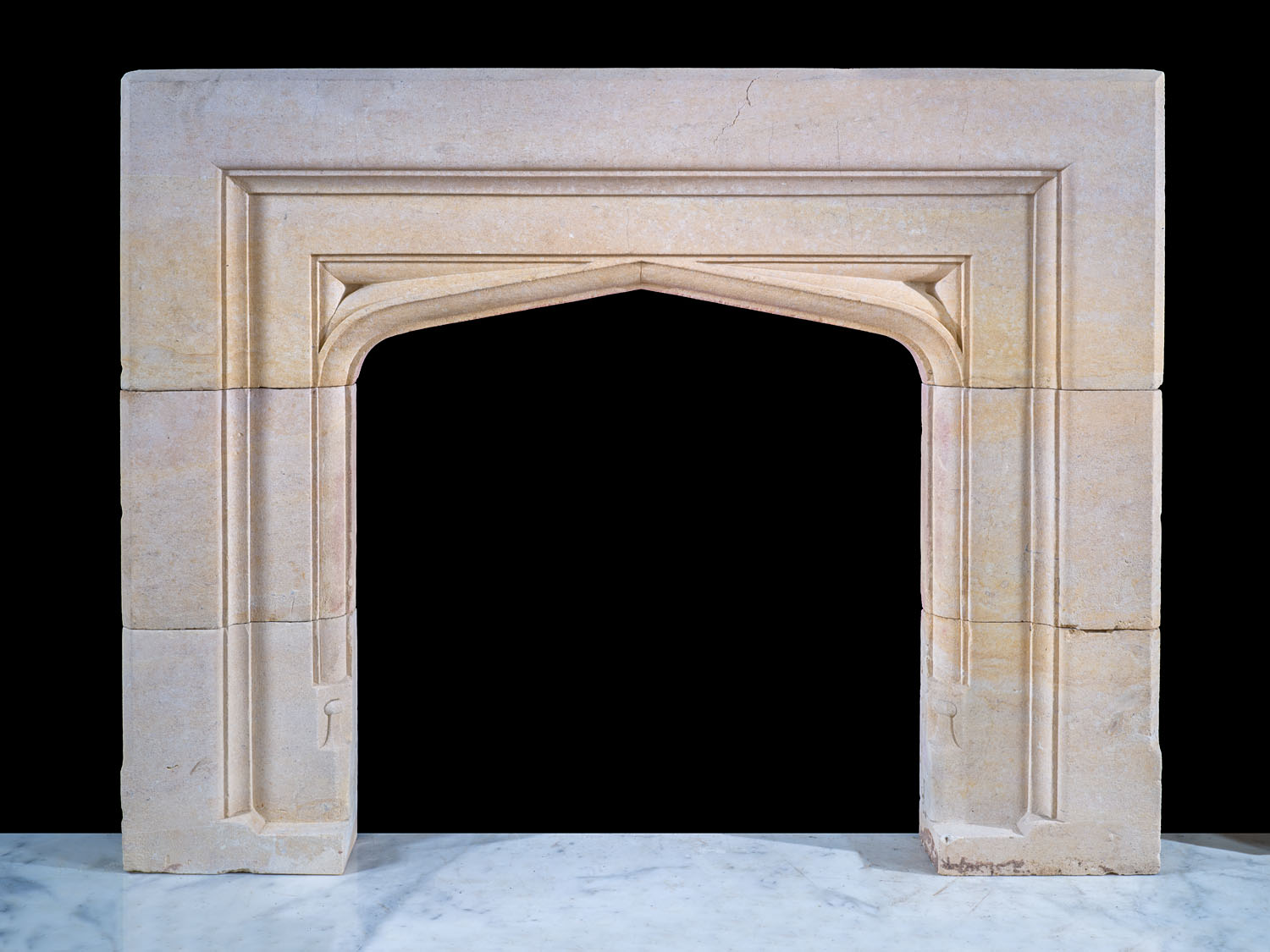
From slightly later in c.1910, this fine Tudor Revival fireplace in limestone has a useful shelf, a rare feature for fireplaces of this style.
It rests over the frieze with its rose and acanthus spandrels, following the form of the Tudor arch.
Other antiques: Tudor revival style
Popular in the 19th century, register grates fit into the hearth and help to control the air supply, reducing heat loss and often reflecting
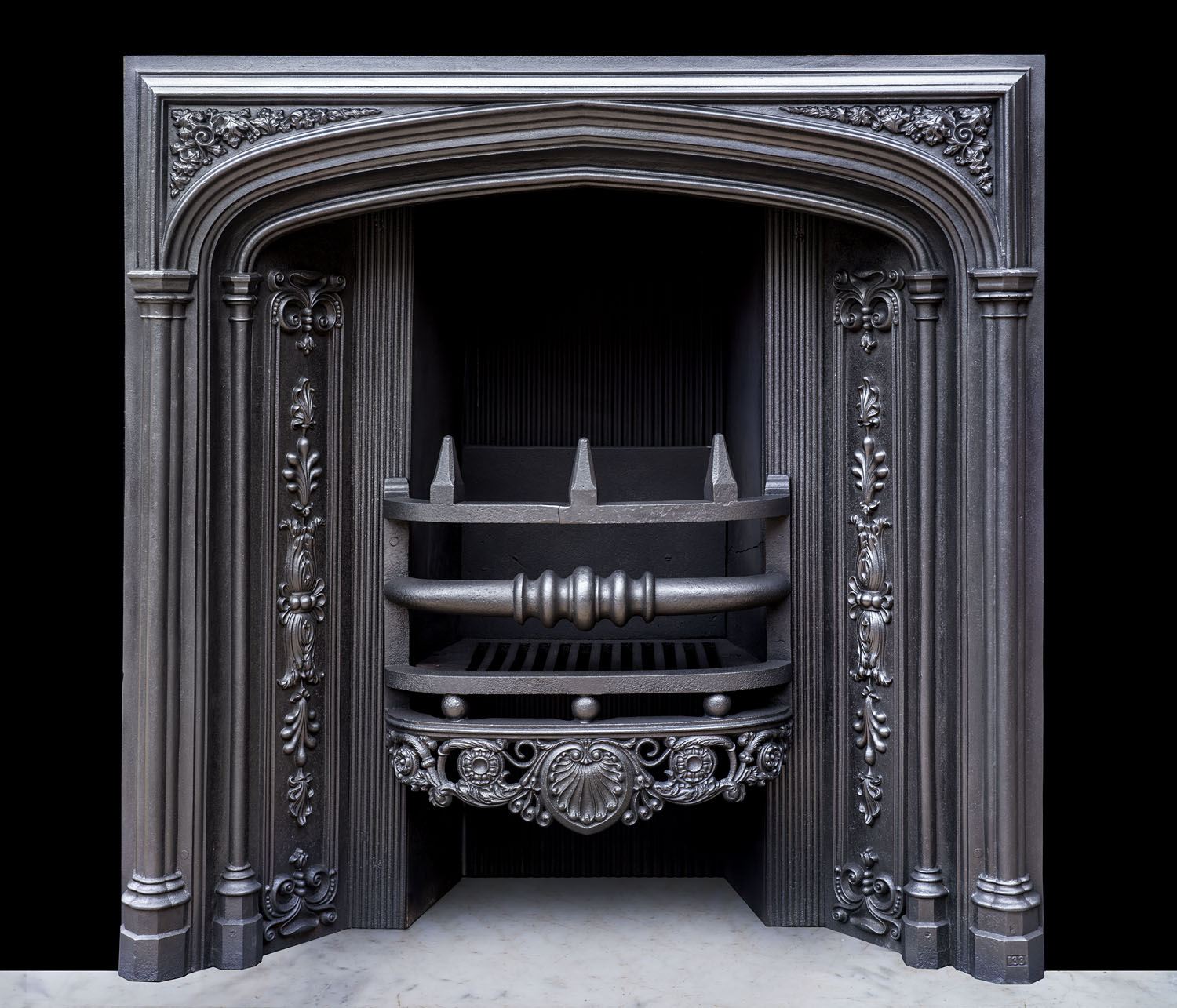
Carron Company was an ironworks established in 1759 on the banks of the River Carron near Falkirk, which is in Stirlingshire, Scotland. The foundry had a key role in the Industrial Revolution and was one of the largest 19th century ironworks in Europe.
This grate has the slow arch, spandrels and cluster pilasters of the Tudor Revival style, with some decoratively cast panels aligned with the Greek Revival style too.
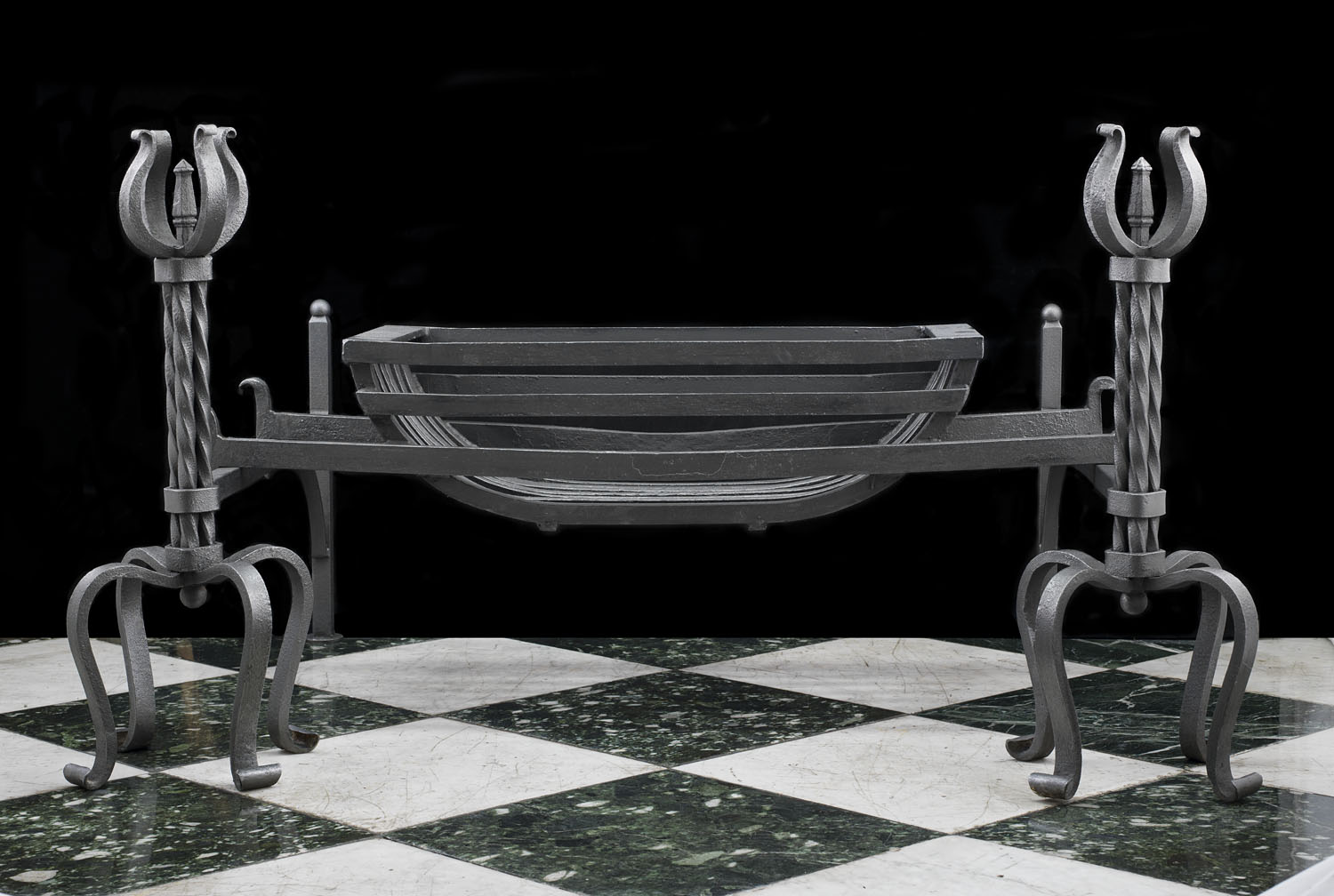
Above is a Tudor Revival wrought iron grate with andirons from c.1920. This scoop-shaped fire basket is mounted on a pair of andirons with elegant twisted shafts and sculptural claw finials, on tall arched leg supports.
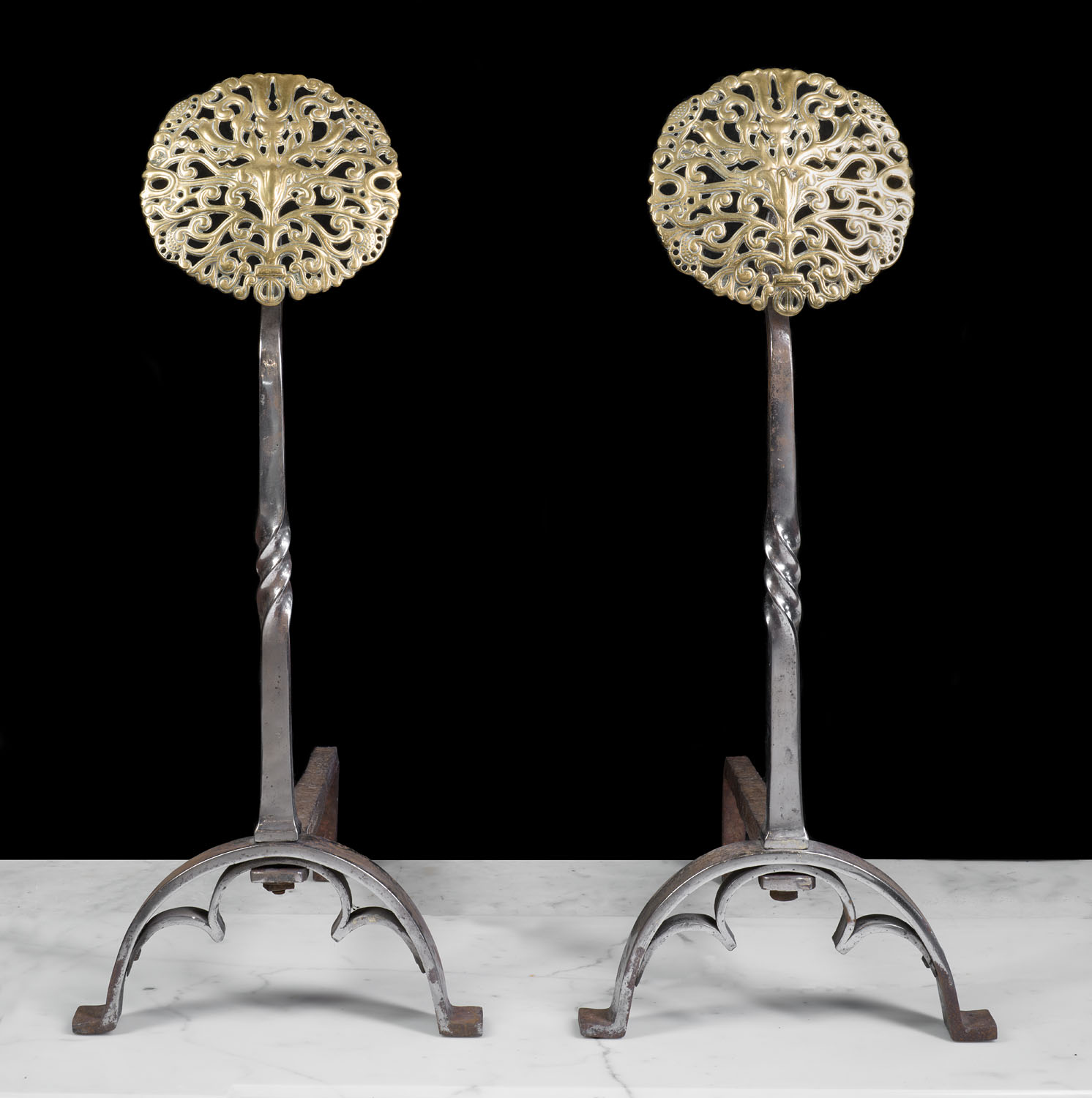
These andirons in the Arts and Crafts style are designed in the manner of Ernst William Gimson – one of the most influential designers of the movement.
Gimson drew a pair of 17th century brass and iron andirons that he admired at Haddon Hall, the Tudor manor house in Derbyshire
Gimson drew a pair of 17th century brass and iron andirons that he admired at Haddon Hall, the Tudor manor house in Derbyshire, before commissioning them for manufacture. For more information on the style, we recommend reading this guide – What Is Arts And Crafts Movement Furniture?
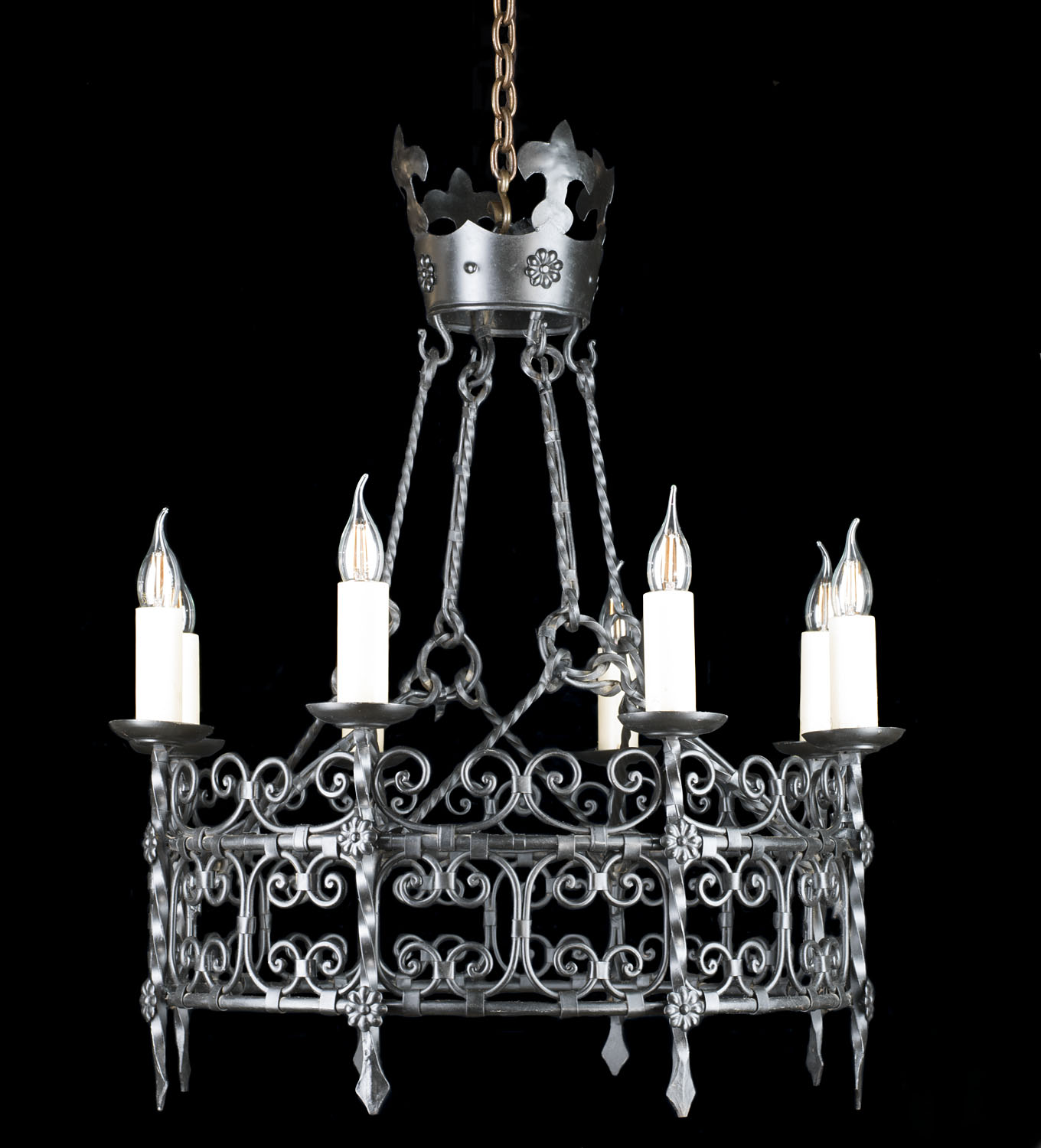
Lastly, here is a Tudor Revival style iron chandelier with eight candles, from the early 20th century.
The intricately scrolled gallery, mounted with pairs of rosettes, hangs on rigid iron rods from the crown corona.
Final thoughts: Tudor Revival style antiques
If you enjoyed this guide, you may like some of our other most popular articles, such as:
For more than 50 years, Westland London has specialised in period chimneypieces, fireplace accessories, furniture, lighting, decorations and a wide range of other stunning architectural antiques.
If you have any queries about our antique fireplaces or anything else in our collection, please contact us.