Royal Doulton: Our Guide Including Doulton Lambeth Marks And Numbers
22 October 2025
Anthony Bridgman
Summary
John Doulton established the pottery in 1815 and it soon moved to Lambeth and a second factory opened in Burslem, Stoke-on-Trent, the centre of English pottery in 1882.
King Edward VII granted Doulton Lambeth a royal warrant in 1901, allowing the use of “Royal” in the name.
Royal Doulton is famous for its elegant and high-quality luxury ceramics, tableware and collectibles.
What is Doulton Lambeth?
Doulton Lambeth is a style of decorative stoneware produced by the Doulton company at their Lambeth pottery in London. John Doulton established the pottery in 1815 in Vauxhall before moving to Lambeth.
The pottery gained a reputation for artisanal stoneware starting around 1871, when local artists from the nearby Lambeth School of Art began decorating its salt-glazed brown stoneware. In 1882 it opened a factory in Burslem, Stoke-on-Trent, the centre of English pottery.
Henry Doulton led the artistic direction and employed artists such as Hannah, Arthur and Florence Barlow, as well as Frank Butler and George Tinworth. The company signed many pieces with the artist's initials or monogram, often dating them.
Lambeth stoneware became known for its unique designs and high quality. Production of these ornamental stonewares peaked in the late 19th century with nearly 370 artists working at Lambeth around 1890.
What is Royal Doulton?
King Edward VII granted Doulton Lambeth a royal warrant in 1901, allowing the use of “Royal” in the name – this recognition helped the firm build a reputation for exceptional artistry and craftsmanship.
Demand for highly decorated stoneware declined and the number of artists steadily decreased through the early 20th century.
The Lambeth pottery continued producing stoneware in a more contemporary style until the 1950s, when the studio closed in 1956.
Lambeth stoneware remains highly collectible for its diversity, quality and artistic value.
Doulton Lambeth antiques in our collection
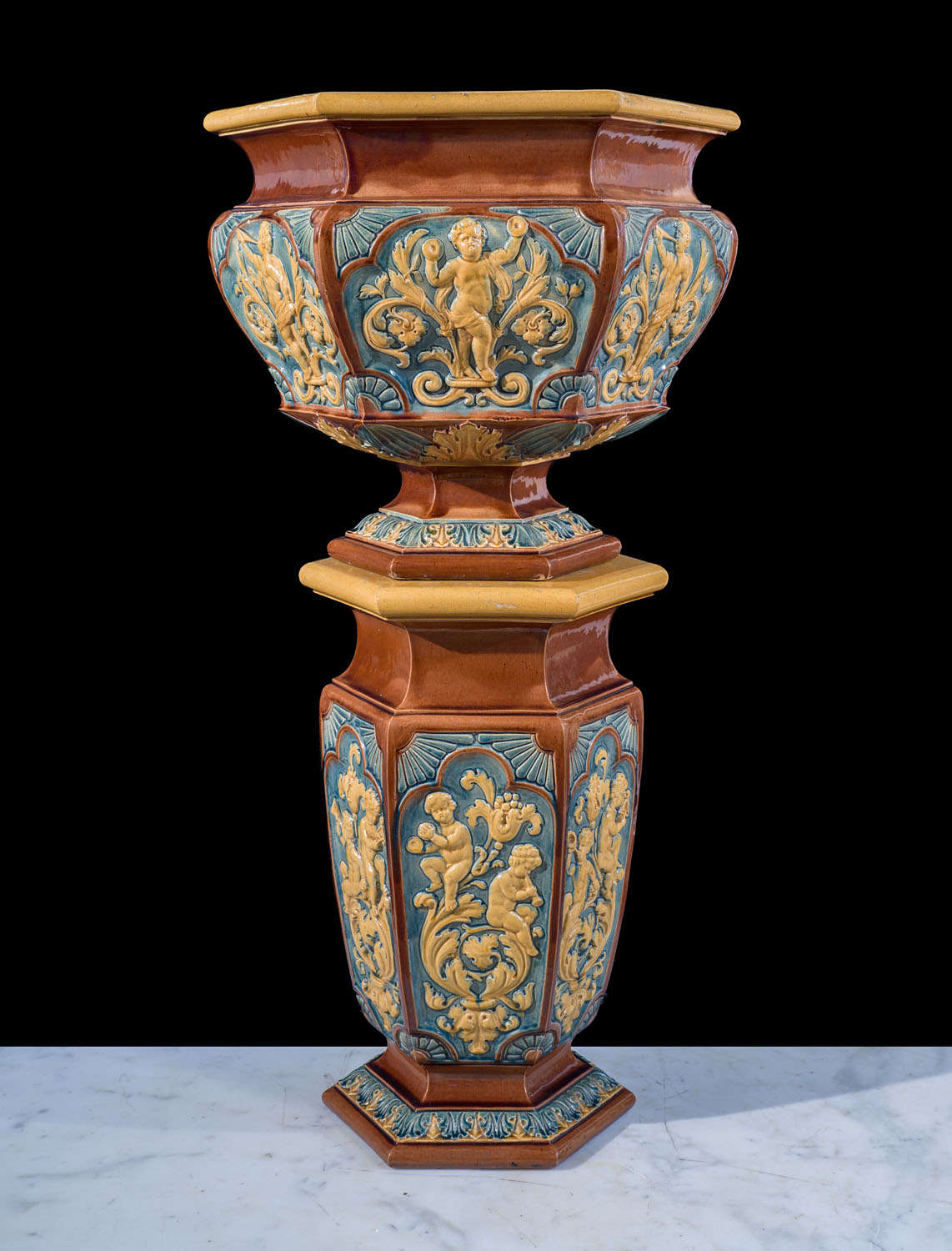
Below is a large Doulton Lambeth faience jardiniere stoneware jardinière and stand of hexagonal form. It is decorated in the Renaissance revival style with relief panels depicting putti musicians and an impressed mark, from circa 1890.
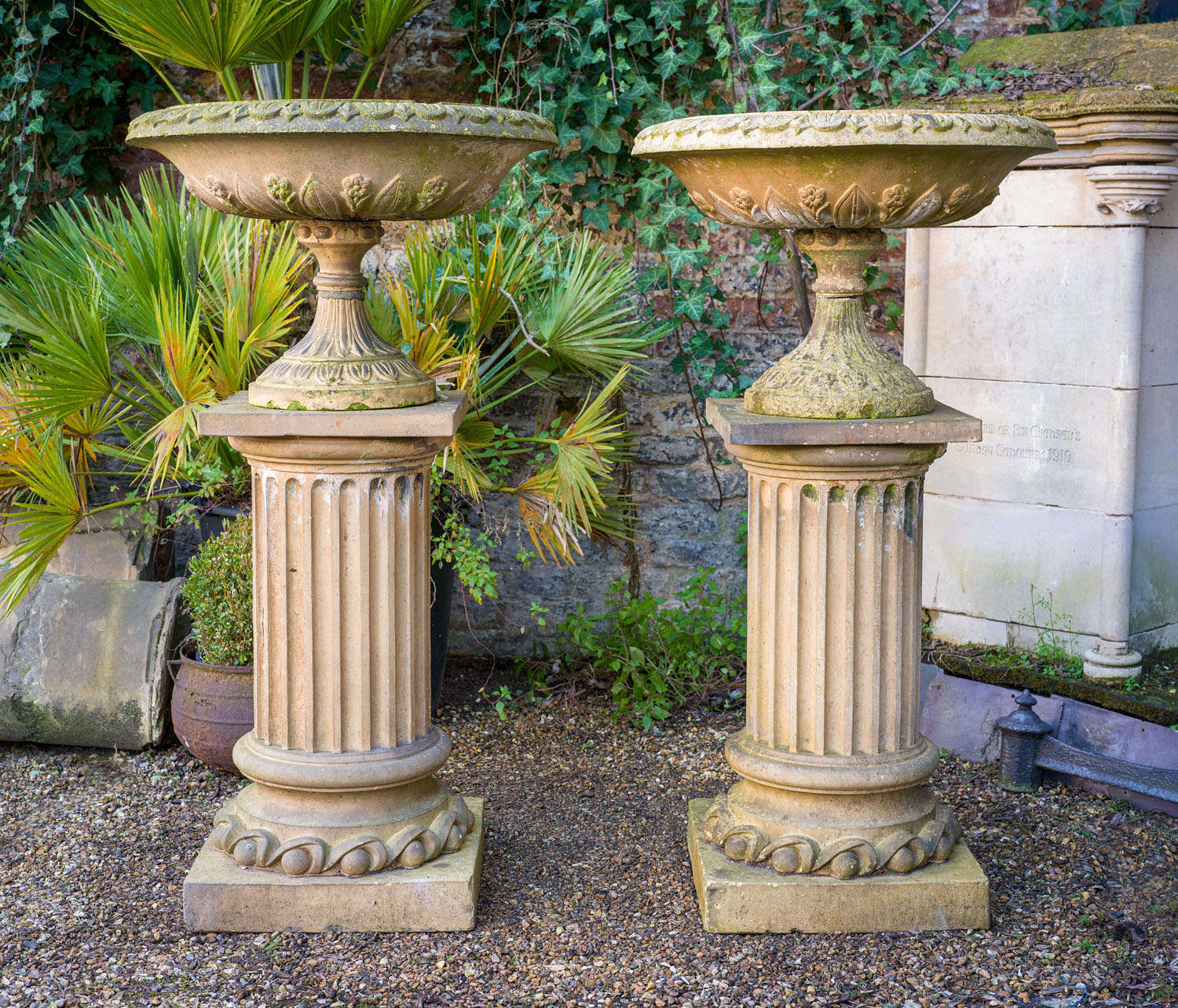
Here is a pair of Doulton Lambeth tazza urns with pedestals from circa 1860. They feature a floral and stiff leaf decoration in low relief over slender socles, resting on elegant fluted column pedestals, with a dynamic egg and dart rim to the base.
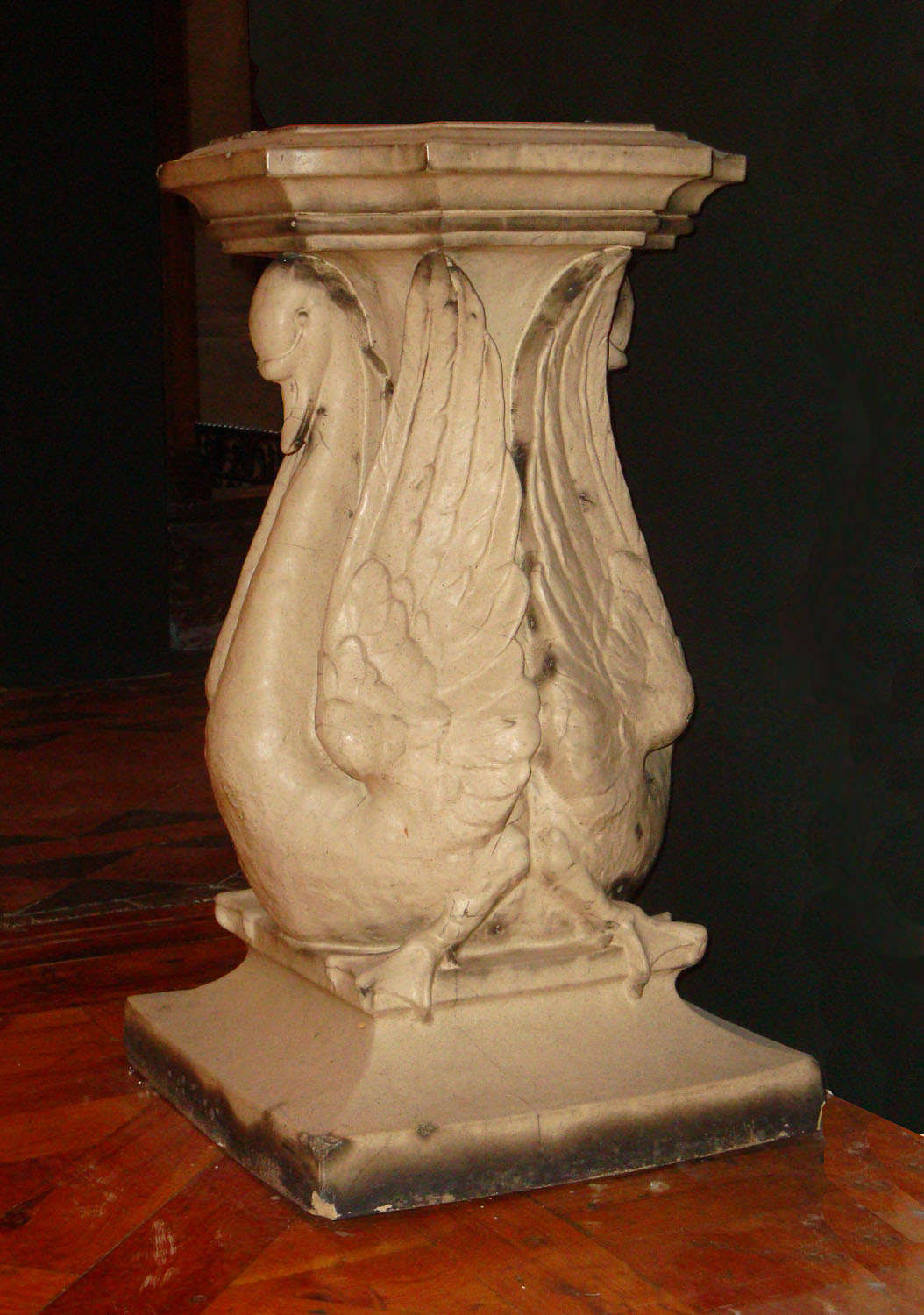
This is a rare Doulton Lambeth garden plinth from the late 19th century with scalloped corners over a column moulded as two swans, each with upswept wings, on a raised base.
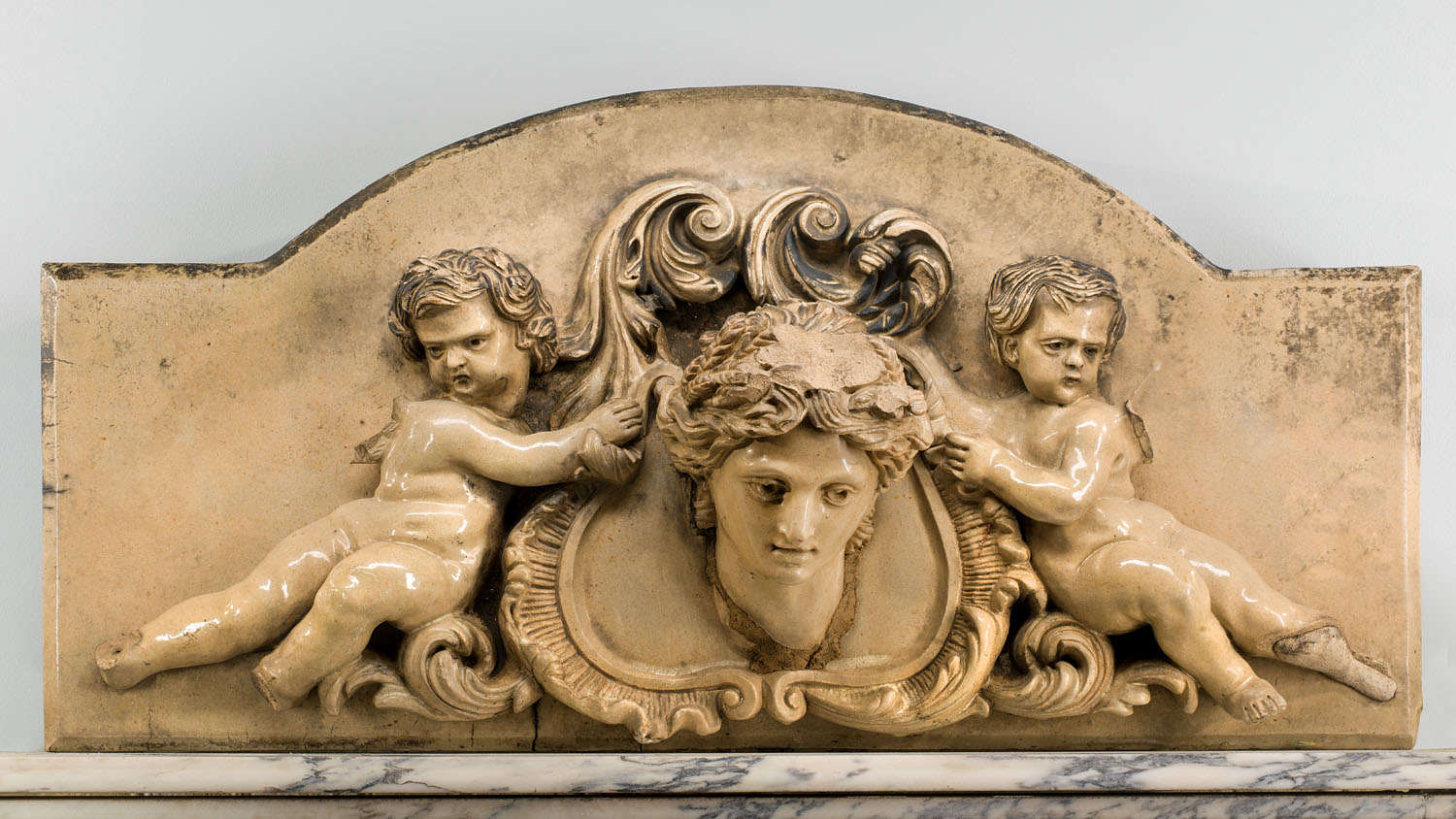
And here is a large Renaissance style Doulton plaque from circa 1860, a ceramic showing a female head with two putti.
Doulton Lambeth marks and numbers
Throughout its history, there have been several different Doulton Lambeth marks and numbers that typically feature on the base of each piece. Furthermore, from 1901, there were Royal Doulton marks.
Makers typically added the date of production and many pieces show artist marks or initials, often next to the impressed or printed "Doulton Lambeth" stamp.
The marks evolved over time, but typical features include oval or circular impressed marks stating "Doulton Lambeth" along with a date or year code.
These marks also included pattern names, such as "Rouen" or "Kew" and numbering to help identify series or product types.
From 1882 to 1901, the base mark commonly displayed four interlocking Ds in a circular form alongside Doulton & Burslem.
In 1901 after receiving the royal warrant, Royal Doulton introduced a mark that shows a lion atop a crown and the quadruple D logo.
Between 1928 and 1954, pottery produced usually had printed pattern codes. The Burslem pottery added HN numbers to figurines to indicate artists as well as the production series, especially linked to Harry Nixon
Doulton Lambeth stoneware often carries numbers indicating a production year range, especially for the X series of Lambeth stoneware made between 1886 and 1930.
For example, numbers from 1 to 4000 correspond to 1886–1896, with higher numbers indicating later production years. For a full list of Doulton series and pattern numbers, The Old Stuff has a useful reference.
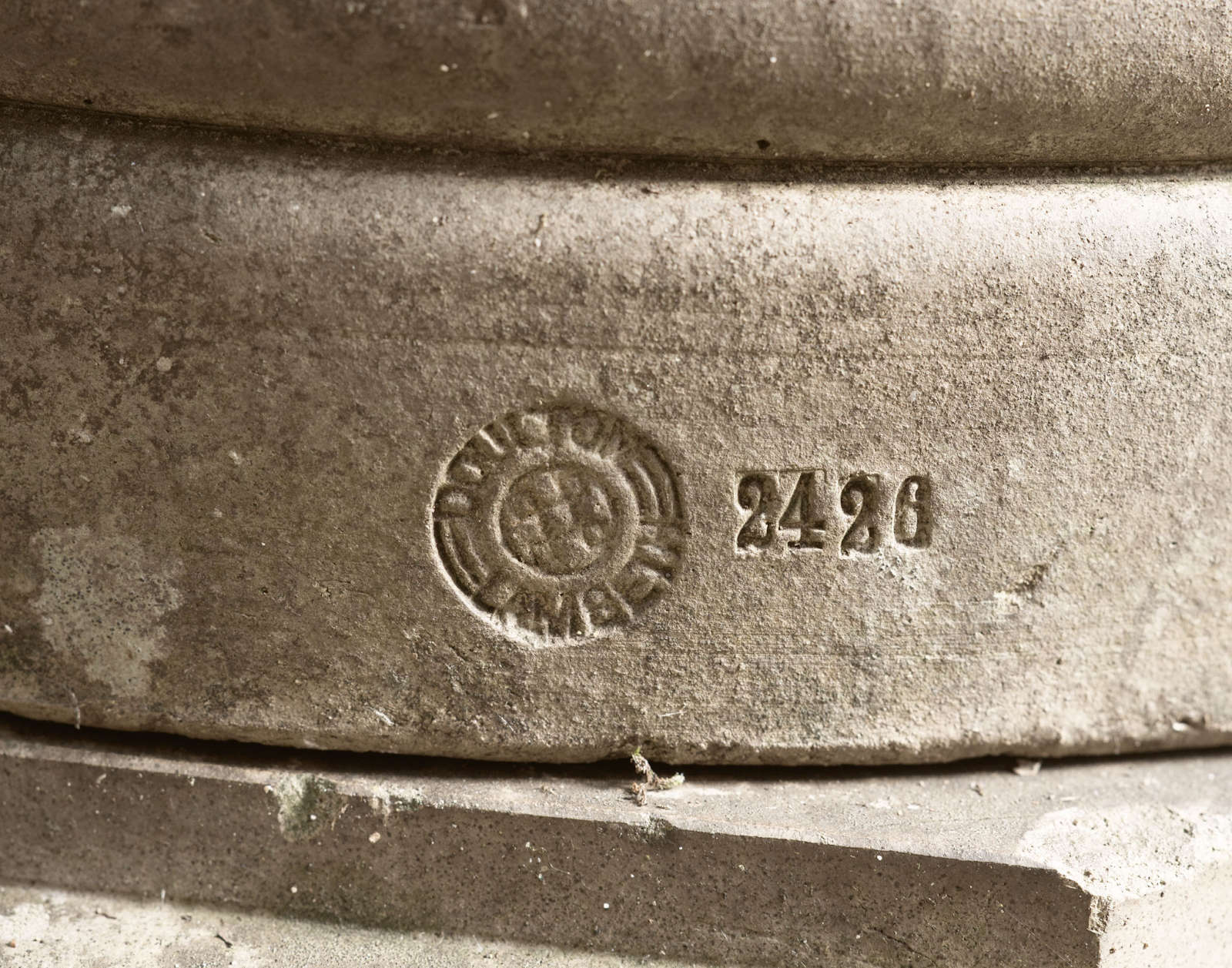
In the image below you can see the Doulton Lambeth stamp on our buff terracotta garden urns.
Final thoughts: Royal Doulton
Fiskars Group – the oldest company in Finland, founded in 1649 – now owns the Royal Doulton brand. In the recent James Bond films featuring Daniel Craig, the M character played by Judi Dench has a Royal Doulton "Jack the Bulldog" figurine on her desk at MI6.
Royal Doulton is widely regarded as a leading and iconic British name, famous for its elegant and high-quality luxury ceramics, tableware and collectibles. Doulton Lambeth antiques remain sought after with its earlier pottery products hard to find.
We hope you enjoyed this guide. If so, take a look through some of our other most popular articles, such as:
For well over 50 years, Westland London has specialised in fine period chimneypieces, fireplace accessories, furniture, lighting, decorations and architectural antiques.
If you have any queries about our collection of antiques or antique fireplaces, please don’t hesitate to contact us.